
Medical Terminology Daily (MTD) is a blog sponsored by Clinical Anatomy Associates, Inc. as a service to the medical community. We post anatomical, medical or surgical terms, their meaning and usage, as well as biographical notes on anatomists, surgeons, and researchers through the ages. Be warned that some of the images used depict human anatomical specimens.
You are welcome to submit questions and suggestions using our "Contact Us" form. The information on this blog follows the terms on our "Privacy and Security Statement" and cannot be construed as medical guidance or instructions for treatment.
We have 1983 guests online
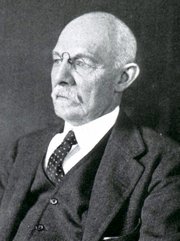
William S. Halsted, MD
(1852 – 1922)
American anatomist, teacher, and surgeon, William Stewart Halsted was born in New York City, USA to a wealthy family of English origin. His father was involved in charitable work and Governor and trustee to a city hospital. Not a brilliant student initially, Halsted took an undergraduate in Liberal Arts in Yale, CT., after which he entered the Medical College of Physicians at the Columbia College, where he excelled.
As a second-year medical student Halsted applied and obtained a position in surgery at a local hospital. In here he learned about Lister’s antiseptic technique and became an adamant proponent of it to reduce infection. In 1877 Halsted obtained his MD. After a short time as House Physician at the New York Hospital, Halsted traveled to Europe to further his education studying for two years at the Universities of Vienna, Leipzig, and W?rzburg.
Besides being at the forefront of surgical and antiseptic techniques (introducing the use of rubber gloves in surgery), Halsted was extremely concerned with the way medical students were taught in the US. He pioneered bedside clinical round discussions with the medical students after two years of basic sciences studies. Halsted developed the idea of a patient chart; he also developed the residency program for medical students in use today.
Halsted is probably the most influential researcher and surgeon at the turn of the century. He dedicated time to the study of intestinal anastomoses and the use of silk as a suture material. His experimental work in 1887 proved that the inclusion of the submucosa layer in an anastomosis was mandatory, as well that a single layered anastomosis was enough to attain closure. Perhaps Halsted’s most important contribution was the application and use of the scientific method to surgical questions. Halsted’s principles, also known as "Halsted's Rules of Surgery", set the standards used today in surgical suturing and surgical stapling.
He also pioneered the development and surgical techniques for radical mastectomy as a treatment for breast cancer.
As a side effect of this studied in anesthesia and the use of cocaine for anesthesia, Halsted became addicted to this substance, a problem that followed him through the years. Without impairing his capacity as a researcher and a surgeon, Halsted eventually recovered. He died in Baltimore in 1922 as a complication to surgery.
Sources:
1. Dubay, A. D., & Franz, G. M. (2003). Acute Wound Healing: The Biology of Acute Wound Failure. Surg Clin NA, 83, 463-481.
2. Halsted, W. S. (1887). Circular Suture of the Intestine - An Experimental Study. Am J Med Sci, 436-461.
3. “William Stewart Halsted: his life and contributions to surgery” Osborne, P. Lancet Oncol 2007; 8: 256–65
4. “William Stewart Halsted: Surgical pioneer” Burress, P Endoc Today (2010), 8: (2) 22
5. “William Stewart Halsted (1852–1922) Neurological stamp” Haas, LF J Neurol Neurosurg Psych 2000;69:641
Original image courtesy of "Images from the History of Medicine" at www.nih.gov

"Clinical Anatomy Associates, Inc., and the contributors of "Medical Terminology Daily" wish to thank all individuals who donate their bodies and tissues for the advancement of education and research”.
Click here for more information


- Details
- Written by: Efrain A. Miranda, Ph.D.
- Hits: 71135
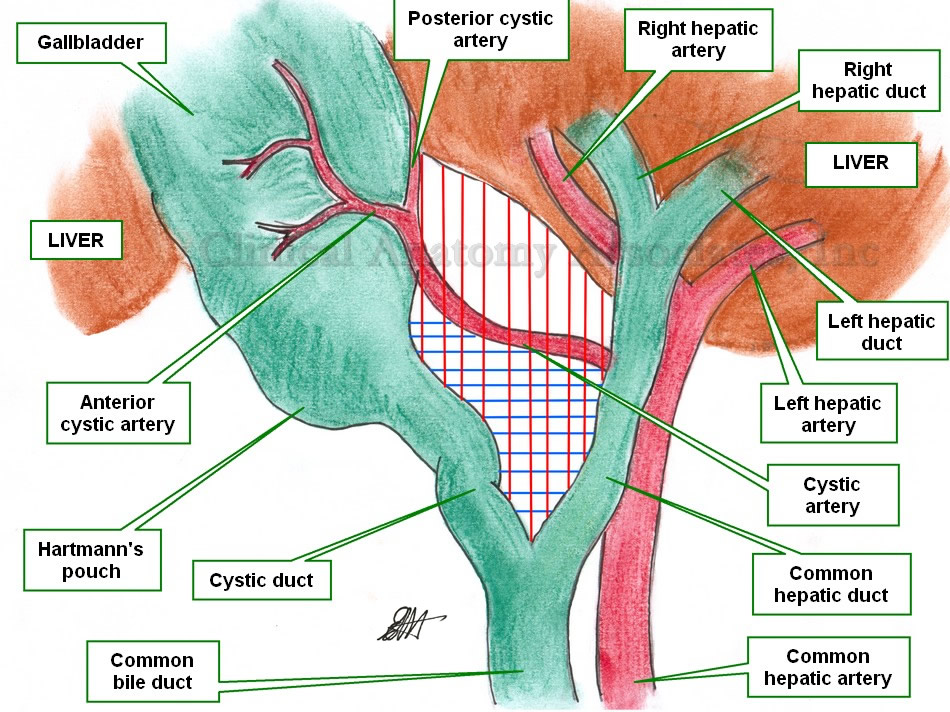
Image modified from the original
(Singh and Ohri, 2006
The [triangle of Calot], also known as the “cystohepatic triangle” is a triangular region found within the lesser omentum connecting the duodenum, stomach, and liver. It is an area bound superiorly by the inferior surface of the liver, laterally by the cystic duct and the medial border of the gallbladder, and medially by the common hepatic duct.
The surgical importance of this area is for a cholecystectomy. It is within this area that the surgeon will usually find the cystic artery, a critical structure that needs to be ligated in this procedure. I stress the term “usually” as the hepatobiliary tree is one of the areas in the human body that has the most anatomical variations. In fact, the anatomy in this region is considered to be “normal” only in 64% of the cases. The cystic artery may not be found in the triangle of Calot therefore careful dissection and identification of the structures is needed in every surgery.
The above description of the triangle of Calot is what some refer to as the “modern triangle of Calot”, as the original triangle described by Dr. Jean-Francois Calot (1861 – 1944) is different.
Calot’s original description of this triangle is: “Le triangle n’est pas exactement équilatéral, mais plutôt isocéle, les deux cotés supérieur et inférieur, représente par l’artére et le conduit cystique, étant seuls égaux, et un peu plus longs que la partie du canal hépatique qui entre dans la constitution du triangle’’ , which can be translated as: “ The triangle is not exactly equilateral, but rather an isosceles triangle. The superior and inferior sides, represented by the cystic artery and cystic duct, are equal and a little longer than the part of the hepatic duct, which enters into the formation of the triangle. (Abdalla, 2013).
In the accompanying image Calot’s original triangle is shown by horizontal blue lines while the modern version of the triangle of Calot is shown with vertical red lines.
Sources:
1. “Calot's triangle” Abdalla S, Pierre S, Ellis H. Clin Anat. 2013 May;26 (4):493-501
2. “Anatomic landmarks: their usefulness in safe laparoscopic cholecystectomy” Singh, K; Ohri, A. Surg Endosc (2006) 20: 1754–1758
3. “Surgical Anatomy” Deaver, J P. Blakiston's Son & Co. Philadelphia, 1901
4. "Tratado de Anatomia Humana" Testut et Latarjet 8th Ed. 1931 Salvat Editores, Spain
Image modified from the original (Singh and Ohri, 2006. Pastel sketch by Dr. E. Miranda
- Details
This article is part of the series "A Moment in History" where we honor those who have contributed to the growth of medical knowledge in the areas of anatomy, medicine, surgery, and medical research.
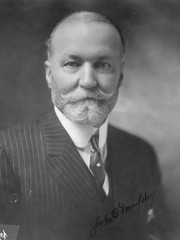
John Benjamin Murphy
Dr. John Benjamin Murphy (1857 – 1916). An American surgeon, John Benjamin Murphy was born in Appleton, Wisconsin in 1857. He studied anatomy and physiology in Appleton under the care of Dr. H.W. Reilly, a local physician, after which J.B. Murphy entered the Rush Medical College, receiving his degree in 1879.
Urged by the new trends in surgery and antisepsis, in 1882 Dr. Murphy he traveled to Vienna to study with Theodor Billroth (1829 – 1894), and then on to Heidelberg and Berlin. Upon his return, he started great advances in the surgery of the time. One of them was to propose the immediate extirpation of the vermiform appendix when acute appendicitis was diagnosed, as opposed to the common practice of waiting until the vermiform appendix ruptured.
In 1892 Dr. Murphy became professor of clinical surgery at the College of Physicians and Surgeons in Chicago. Dr. Murphy is one of the founders of the American College of Surgeons. His surgical endeavors span many specialties including abdominal, thoracic, peripheral vascular, orthopedics, neurosurgery, etc.
One of his well-known inventions was a metal sutureless compression anastomotic device, known to many as the “Murphy button”. Although in 1826 Denans and Henroz had created metal compression anastomotic devices with a similar concept, Murphy’s improvements on the device caused it to be used well into the 1900’s. The reason for this is the support the device had from the Mayo brothers, founders of the today well-known Mayo Clinic. Although not a stapler, the Murphy button established the need for anastomotic leakage control and the possibility of and end-to-end anastomosis. This makes Dr. Murphy's concept part of the history of surgical stapling. For an image of the Murphy anastomotic device click here, the link is courtesy of the Museum of Health Care at Kingston, Canada.
Murphy’s first use for his device was for a cholecystojejunostomy, the anastomosis of the gallbladder to the jejunum to allow drainage of the bile into the digestive system.
His name is remembered in many eponyms: Murphy’s button, Murphy’s drip, Murphy’s test, Murphy’s punch, and the Murphy-Lane bone skid.
Sources:
1. “Cholecystointestinal, gastrointestinal, enterintestinal anastomosis, and approximation without sutures” Murphy JB. Med Rec (1892) 42: 665
2 . “John Benjamin Murphy – Pioneer of gastrointestinal anastomosis” Bhattacharya, K., & Bhattacharya, N. (2008). Indian J. Surg., 70, 330-333.
3. “The Story of Surgery” Graham, H. (1939) New York: Doubleday, Doran & Co.. Inc.
4. “Compression Anastomosis: History and Clinical Considerations”Kaidar-Person, O, et al, e. (2008) Am J Surg, 818-826.
5. “Current Practice of Surgical Stapling” Ravitch, M. M., Steichen, F. M., & Welter, R. (1991) Philadelphia: Lea& Febiger.
6. “Rese¤as Históricas: John Benjamin Murphy” Parquet, R.A. Acta Gastroenterol Latinoam 2010;40:97
Image in the public domain. National Library of Medicine
- Details
The word [taphophile] arises from the Greek word [τάφος] (táfos) meaning “grave” or “sepulchre”, forming the root term [taph-]. It is completed with the suffix [(o)phile] which also arises from the Greek word [φιλία] meaning “friendship” or “affection”. A taphophile is a person who has affection for the study of graves or tombs. Probably a simpler way of describing this word is to say that a taphophile is a grave or a cemetery tourist. Our good friend Theo Dirix is a taphophile.
It must be understood that this is not a pathology, but rather personal development through the study of the meaning, markings, beauty, art, sculpture, topography, etc., of graves, tombs, tombstones, and cemeteries.
The root term [taph-] can also be found in the following words:
- Taphophilia: An attraction or liking for graves.
- Taphophobia: A pathological fear of graves and cemeteries. Also, the fear of being buried alive.
- Taphonomy: The study of decay, a subspecialty of anthropology.
Note: The links to Google Translate include an icon that will allow you to hear the pronunciation of the word.
- Details
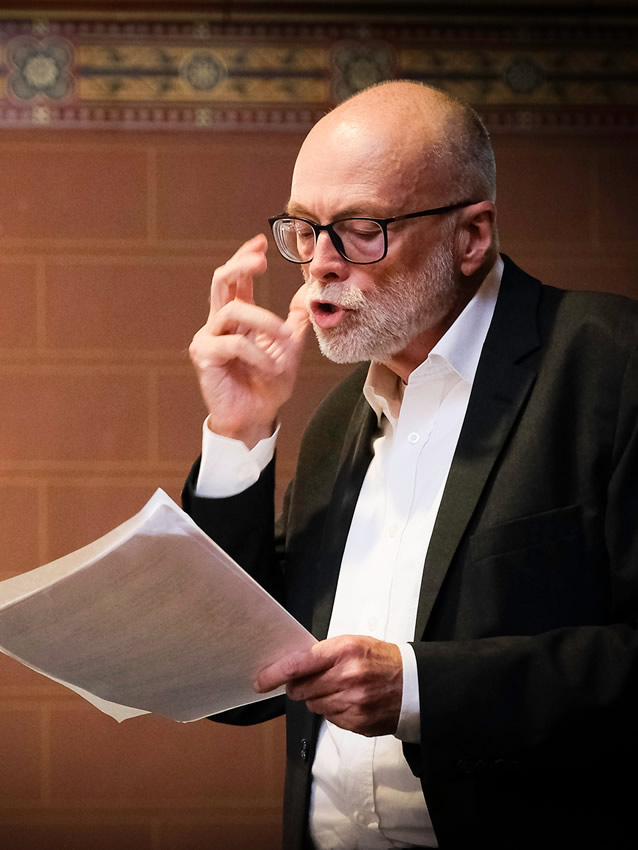
Theo Dirix
Theo Dirix is an author and taphophile. He has successively held the office of Consul in Embassies of Belgium in Tanzania, Saudi Arabia, Jordan, Canada, the United Arab Emirates and, since 2011, Greece. Before 1989, he worked for the Flemish Radio 3 and commented on (mainly Moroccan) literature. He is constantly writing travel stories of his visits to cemeteries and graves.
Theo Dirix became directly involved in the quest to find the grave of Andreas Vesalius on the island of Zakynthos in Greece and as the Consul of Belgium was critical to the realization of the 2014 Vesalius Continuum meeting on the same island.
The same year (2014) Theo Dirix published his book "IN SEARCH OF ANDREAS VESALIUS; The Quest for the lost grave", a detailed story of the process of zeroing on the location of the grave, the politics of the island tourism, and the history and research on Vesalius' death.
Andreas Vesalius did not die returning from Jerusalem on a deserted beach in the Ionian Sea, the only victim of a shipwreck. He did not travel to the Holy Land under pressure of the Inquisition, neither as penance nor escape: he went there as a devout pilgrim with the support of his employer. Weakened by his stay and by his unfortunate return journey, he died in Zakynthos where he was buried in the Santa Maria delle Grazie Church. This and many other details are found in his book and research.
Thanks to Theo Dirix for collaborating with "Medical Terminology Daily" with the article "In Search of Andreas Vesalius, The Quest for the Lost Grave - The Sequel" which he co-authored with Pascale Pollier and Dr. Sylviane Déderix. Here is a link to all the articles in this website where Theo is mentioned.
Following are some links to Theo Dirix's articles on the Internet:
The Quest for Andreas Vesalius' Grave
Visiting a cemetery
Theo Dirix at Academia.edu
- Details
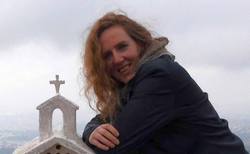
Pascale Pollier
Pascale Pollier is a sculptor/artist who is interested in the melding of art and science. A Belgian National, she studied fine art and Painting in St Lucas art school in Ghent, Blgium and subsequently postgraduate training with the Medical Artists Association, London UK.
She was president and co-founder of BIOMAB (Biological and Medical Art in Belgium) . In 2010 the international collaboration program "Art Researches Science" was created, organizing exhibitions, dissection drawing classes, collaborative art/science projects, symposiums and conferences. The International collaboration partners are: Universities of Antwerp, London, Dundee, Strasbourg and New York.
Pascale is also an external examiner for the medical art course at The Centre for Anatomy & Human Identification, University of Dundee. She is President of the AEIMS (Association Europeenes des lllustrateurs Medicaux et Scientifiques). She works and lives in London as an artist. You can visit her website "artem medicalis" here.
Her art can be best expressed in the words of Jac Scott in his book "Language of Mixed-Media Sculpture": "Pascalle Pollier creates poetic 3D renditions of anatomically referenced 'body maps' that celebrate human life and death. The immediacy of the subject matter and her ability to capture realism provoke reactions from quietly unsettling to outrage. Her work is not for the faint-hearted - its honesty in its clear intent confronts all who gaze at the wonder of the human form in its various states of undress - shedding clothes or skin.... Pollier approaches form a medical science perspective". For images of her work, visit MEDinART.
Her nationality and studies guided her to Andreas Vesalius and with Theo Dirix and other collaborators Pascale was instrumental in the realization of the 2014 Vesalius Continuum meeting on the island of Zakynthos, Greece.
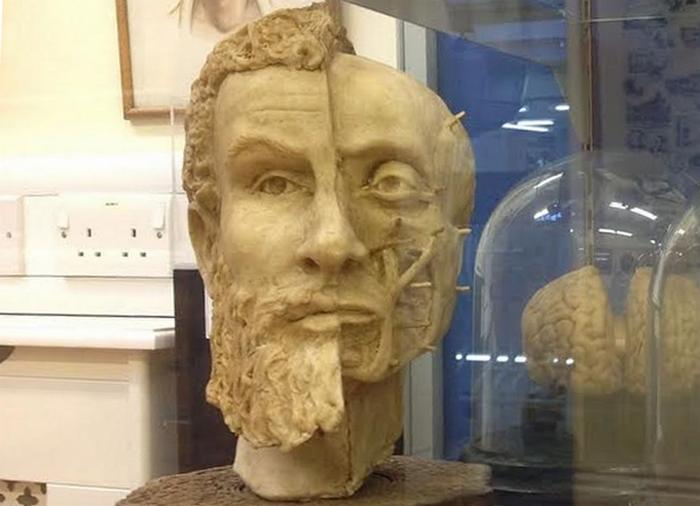
Click for a larger image
Thanks to her vision and collaborative work, now there is a new bronze sculpture on the island celebrating the famous Flemish (Belgian) anatomist. She is also deeply involved in the quest to find Vesalius' grave on the island. To this effect, and based on the few images we have of Andreas Vesalius, Pascale created a reverse-engineered bust of Vesalius which depicts what his skull might look like. Several bronze copies of this piece of art are today in exhibits in libraries and museums around the world. To fund the on-going research to find Vesalius' grave, Pascale is offering five wax copies of the bust for sale.
Thanks to Pascale Pollier for collaborating with "Medical Terminology Daily" with the article "In Search of Andreas Vesalius, The Quest for the Lost Grave - The Sequel" which she co-authored with Theo Dirix and Dr. Sylviane Déderix.
- Details
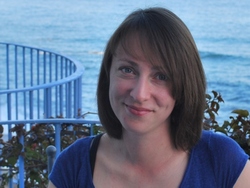
Sylviane Déderix. Ph.D.
Dr. Sylviane Déderix is a Postdoctoral fellow at Catholic University of Louvain in the Aegean Interdisciplinary Studies Research Group. She has a Ph.D. in History, Art, and Archeology.
She is also a collaborator of the Laboratory of Geophysical- Satellite Remote Sensing & Archaeoenvironment and a member of the Sissi Archaeological Project (Crete, Greece) in charge of the architectural study of the house tombs excavated in the cemetery.
She has collaborated with the effort of finding the lost grave of Andreas Vesalius using satellite imagery and geophysical approaches to pinpoint the location of the cemetery of the Church of Santa Maria delle Grazie after the island of Zakynthos was practically destroyed by an earthquake in 1953.
Since then the island and its buildings have been rebuilt and streets relocated, which causes the cemetery to have been lost until her work was published. Now we know the approximate location of the cemetery close to the current intersection of the Kolokotroni and Kolyva streets, and further studies can be conducted.
Thanks to Dr. Déderix for collaborating with "Medical Terminology Daily" with the article "In Search of Andreas Vesalius, The Quest for the Lost Grave - The Sequel" which she co-authored with Pascale Pollier and Theo Dirix.