
Medical Terminology Daily (MTD) is a blog sponsored by Clinical Anatomy Associates, Inc. as a service to the medical community. We post anatomical, medical or surgical terms, their meaning and usage, as well as biographical notes on anatomists, surgeons, and researchers through the ages. Be warned that some of the images used depict human anatomical specimens.
You are welcome to submit questions and suggestions using our "Contact Us" form. The information on this blog follows the terms on our "Privacy and Security Statement" and cannot be construed as medical guidance or instructions for treatment.
We have 1505 guests online
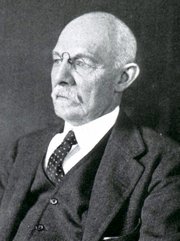
William S. Halsted, MD
(1852 – 1922)
American anatomist, teacher, and surgeon, William Stewart Halsted was born in New York City, USA to a wealthy family of English origin. His father was involved in charitable work and Governor and trustee to a city hospital. Not a brilliant student initially, Halsted took an undergraduate in Liberal Arts in Yale, CT., after which he entered the Medical College of Physicians at the Columbia College, where he excelled.
As a second-year medical student Halsted applied and obtained a position in surgery at a local hospital. In here he learned about Lister’s antiseptic technique and became an adamant proponent of it to reduce infection. In 1877 Halsted obtained his MD. After a short time as House Physician at the New York Hospital, Halsted traveled to Europe to further his education studying for two years at the Universities of Vienna, Leipzig, and W?rzburg.
Besides being at the forefront of surgical and antiseptic techniques (introducing the use of rubber gloves in surgery), Halsted was extremely concerned with the way medical students were taught in the US. He pioneered bedside clinical round discussions with the medical students after two years of basic sciences studies. Halsted developed the idea of a patient chart; he also developed the residency program for medical students in use today.
Halsted is probably the most influential researcher and surgeon at the turn of the century. He dedicated time to the study of intestinal anastomoses and the use of silk as a suture material. His experimental work in 1887 proved that the inclusion of the submucosa layer in an anastomosis was mandatory, as well that a single layered anastomosis was enough to attain closure. Perhaps Halsted’s most important contribution was the application and use of the scientific method to surgical questions. Halsted’s principles, also known as "Halsted's Rules of Surgery", set the standards used today in surgical suturing and surgical stapling.
He also pioneered the development and surgical techniques for radical mastectomy as a treatment for breast cancer.
As a side effect of this studied in anesthesia and the use of cocaine for anesthesia, Halsted became addicted to this substance, a problem that followed him through the years. Without impairing his capacity as a researcher and a surgeon, Halsted eventually recovered. He died in Baltimore in 1922 as a complication to surgery.
Sources:
1. Dubay, A. D., & Franz, G. M. (2003). Acute Wound Healing: The Biology of Acute Wound Failure. Surg Clin NA, 83, 463-481.
2. Halsted, W. S. (1887). Circular Suture of the Intestine - An Experimental Study. Am J Med Sci, 436-461.
3. “William Stewart Halsted: his life and contributions to surgery” Osborne, P. Lancet Oncol 2007; 8: 256–65
4. “William Stewart Halsted: Surgical pioneer” Burress, P Endoc Today (2010), 8: (2) 22
5. “William Stewart Halsted (1852–1922) Neurological stamp” Haas, LF J Neurol Neurosurg Psych 2000;69:641
Original image courtesy of "Images from the History of Medicine" at www.nih.gov

"Clinical Anatomy Associates, Inc., and the contributors of "Medical Terminology Daily" wish to thank all individuals who donate their bodies and tissues for the advancement of education and research”.
Click here for more information


- Details
Click for a larger image
While working on my library catalog, I made a very nice discovery!
I found a set of 22 medical brochures circa 1950, from MedExport, an USSR government-sponsored company. These brochures depict instruments that are not in use now, or have been modernized.
The brochures were inside one of the books that Dr. Mark Ravitch's family donated to my library.
Some of these are surgical staplers which I have mentioned in my series of articles "History of Surgical Stapling" which includes a video on the topic.
What is interesting is that some of these instruments where discarded and thought of as non-practical, but they are coming back in modern versions such as the coronary artery bypass graft (CABG) vascular devices manufactured by Cardica, a division of Dextera Surgical.
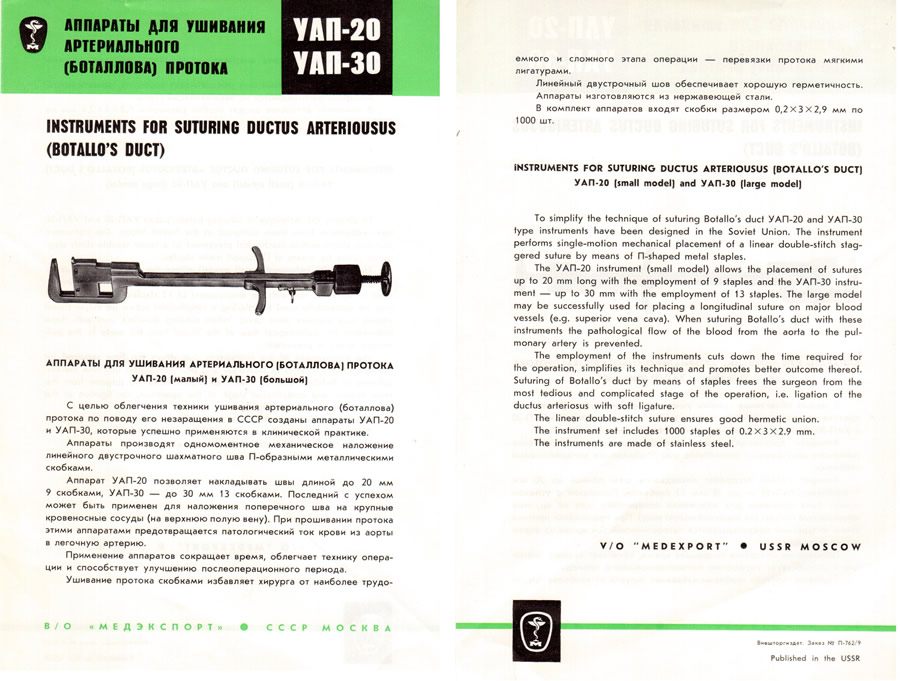
An example of this is shown in the image attached to this article (you can click on the image for a larger view).
This is the YAN-30, used to close the ductus arteriosus, also known as the Duct of Botallus, named after Leonardo Botallus.
This duct has a function in the fetus, and it closed shortly after birth. Patency of the ductus arteriosus causes deoxygenated blood to mix with the oxygenated blood in the thoracic aorta giving rise to a condition known as PDA or Patent Ductus Arteriosus.
Needless to say, I am not selling or trading these priceless collector's items!!
- Details
This article is part of the series "A Moment in History" where we honor those who have contributed to the growth of medical knowledge in the areas of anatomy, medicine, surgery, and medical research.
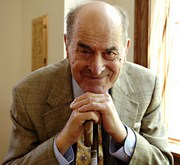
Henry J. Heimlich, MD (1920 - 2016). A thoracic surgeon, Dr. Henry J. Heimlich was born in 1920 in Wilmington, DE; and died in Cincinnati on December 17, 2016. He studied Medicine at Cornell University and served in the US Naval Reserve. In the early 1960's he designed a one-way valve to allow for the slow drainage of a pneumothorax or a pneumohemothorax. He is best known for the creation and world-wide known "Heimlich maneuver" to clear the upper respiratory pathways in the case of choking victims.
In 1969 Dr. Heimlich became director of surgery at the Jewish Hospital in Cincinnati, he was also a professor of clinical sciences at the Xavier University in Cincinnati and president of his namesake Institute.
Sadly, the memory of Dr. Heimlich is slowly dissapearing, as the Deaconess Institute no longer publishes the pages for the Heimlich maneuver and his biography. The Internet Archive still maintains a copy of this website here. More information can be found on Wikipedia.
Although it is our policy to not provide personalized medical information, here is a website where you can read about how to perform the Heimlich Maneuver.
- Details
This is a series of articles on depression and published as a community service. The information in these articles follow our Privacy and Security Guidelines and cannot be construed as medical guidance. For additional information and counseling, consult with your physician or the appropriate health care professional of your choice. You can also find information on Transcranial Magnetic Stimulation (TMS) here. For the initial article on this series click here.
There are several forms of depressive disorders.
• Major depression: Characterized by the presence of severe symptoms that interfere with the individual's ability to work, sleep, study, eat, and enjoy life. An episode can occur only once in a lifetime, but more often, a person has several episodes separated by varying lengths of time.
Click for a larger image
• Persistent depressive disorder: Also known as Major Depressive Disorder (MDD) it is a depressed mood that lasts for at least 2 years. A person diagnosed with persistent depressive disorder may have episodes of major depression along with periods of less severe symptoms, but in general the depressive mood lasts for a minimum of 2 years. In both cases, patients present with depressed mood, loss of interest or pleasure, decreased energy, feelings of guilt or low self-worth, abnormal patterns of sleep or appetite, gruesome nightmares, and poor concentration.
Some forms of depression are slightly different, or they may develop under unique circumstances. They include:
• Psychotic depression: Psychotic depression occurs when a person has severe depression plus some form of psychosis, such as having disturbing false beliefs or a break with reality (delusions), or hearing or seeing upsetting things that others cannot hear or see (hallucinations).
• Postpartum depression: This is much more serious than the "baby blues" that many women experience after giving birth, when hormonal and physical changes and the new responsibility of caring for a newborn can be overwhelming. It is estimated that 10 to 15 percent of women experience postpartum depression after giving birth. There is a rare variant of this disorder, the prepartum depression, which as the name implies happens in the final stages of pregnancy. In both these cases the problem is that the patient cannot be treated with drugs as they may affect the fetus, or the patient cannot breast-feed the newborn eliminating an important stage in the mother-child bonding process. A depressed mother with drug therapy and concurrent side-effects may not able to care for her baby. Thia patient is a good candidate for TMS.
• Seasonal affective disorder (SAD): Is characterized by the onset of depression during the winter months, when there is less natural sunlight. The depression generally lifts during spring and summer. SAD may be effectively treated with light therapy, but nearly half of those with SAD do not get better with light therapy alone. Antidepressant medication and psychotherapy can reduce SAD symptoms, either alone or in combination with light therapy. In some patients the onset of SAD can be the trigger for MDD.
• Bipolar disorder: Also called manic-depressive illness, is not as common as major depression or persistent depressive disorder. Bipolar disorder is characterized by cycling mood changes that range from extreme highs (e.g., mania) to extreme lows (e.g., depression).
References:
1. Altshuler LL, Hendrich V, Cohen LS. Course of mood and anxiety disorders during pregnancy and the postpartum period. Journal of Clinical Psychiatry, 1998; 59:29.
2. Rohan KJ, Lindsey KT, Roecklein KA, Lacy TJ. Cognitive-behavioral therapy, light therapy and their combination in treating seasonal affective disorder. Journal of Affective Disorders, 2004; 80:273–283.XX
Next: Treatment options
- Details
The medical term [ictal] arises from the Latin word [ictus] meaning a "a blow, strike, stroke, or thrust," and [icere] meaning "to strike, to hit," also related to [iæcere], meaning "to throw". The root term is [ict-] and with the adjectival suffix [-al] means “pertaining to a blow or stroke”.
The use of the term [ictus] today refer to a sudden onset of medical or physiological event such as a seizure, stroke, headache, or migraine.
Associated terms are:
[Preictal] (sometimes written pre-ictal) meaning “before the blow or stroke” and usually refers to symptoms or signs that precede or are at the beginning of the ictus. These symptoms are also called a [prodrome].
[Postictal] (sometimes written post-ictal) meaning “after the blow or stroke” and refers to the period immediately after the ictus where the symptoms and signs are receding.
In the case of an epileptic seizure the [postictal state] is the altered state of consciousness after the seizure, and is characterized by drowsiness, confusion, nausea, hypertension, headache or migraine, and can be followed by amnesia.
- Details
The following article was published by Theo Dirix in his blog. He is one of the Vesalius Continuum project members and a contributor to this website. Theo Dirixis an author and a taphophile. He has successively held the office of Consul in Embassies of Belgium in Tanzania, Saudi Arabia, Jordan, Canada, the United Arab Emirates and, since 2011, Greece. His current posting is in Kopenhagen, Denmark Before 1989, he worked for the Flemish Radio 3 and commented on (mainly Moroccan) literature. He is constantly writing travel stories of his visits to cemeteries and graves. He is also the author of the book "In Search of Andreas Vesalius: The Quest for the Lost Grave".
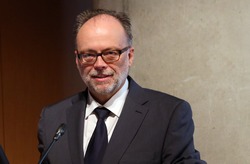
Theo Dirix
“Andreas Vesalius is a rock star in well defined circles”, a friend wrote to me in an e-mail and: ”I hate disappointing people". That is to say with the results of the upcoming crucial phase in the search for his lost grave in Zakynthos, Greece. I guess she considers all 800 friends of my Vesalius Continuum Page as members of those "well defined circles". Let me assure her, and all of you, Vesalius groupies, that nobody will be disappointed.
Potential sponsors definitely won’t. They just have to ask Agfa HealthCare Greece, that has financed the Geographical Information System of the first phase. With the amount paid, a company cannot even buy a single add in a newspaper; Agfa got dozens of adds instead, during our talks, in publications and in this paragraph.
Neither will Vesalius groupies, even after a generous contribution to the crowd funding campaign. Beyond the pleasure of discovering a geophysical prospection, they can bid on the miniature facial reconstruction we will present here soon. Or on paintings of skulls, cells and blood; one of my mentors is already labeling his acrylic studies we will auction soon.
And finally, no scientist will. Of course, there are some who will grin if we find ... nothing, but they seem to forget that a non-discovery can be as important as a find. Many more, however, continue to encourage us. They know funerary slabs have already been found under the corner house of Kolyva/Kolokotroni in the city center, where we concentrate our search. I’ll never forget the reaction of an archaeologist when I showed her the pictures of those artefacts in Pavlos Plessas’s blog.
From pampalaia.blogspot.dk/2012/08/blog-post.html I quote:
"How many excavations would you say have taken place at this site, which could, and should, have been the focus of a universal cultural pilgrimage? As far as I know none! Unless of course the dynamites and the bulldozers that after the catastrophic earth-quakes of 1953 demolished any wall left standing and pushed it into the sea can be thought of as an archaeological dig."
Back to our plans: a team of four or five researchers will walk through that part of the town with a Ground Penetrating Radar device. They will drill small holes (of about one cm in diameter and twenty cm in depth) in the asphalt roads, pavements and surroundings to enter electrodes and carry out the Electrical Resistivity Tomography. To get permits for making the holes, have plans of any utility networks and carry out the fieldwork, this geophysical prospection will take five days maximum. After processing the survey, the research center IMS/FORTH, Rethymnon, will come up with a map of underground architectural remains.
How exiting is that? I'm looking forward to receiving your comments. Are you ready to register, to pledge your support ?
Personal note: Click on the following link to collaborate with this incredible quest. I already did. Dr. Miranda
GoFundMe Campaign for the next stage of the project
- Details
GoFundMe Campaign for the next stage of the project
A group of researchers and investigators are looking to the incredible possibility of finding the grave of Andreas Vesalius. Initially this led to the 2014 meeting "Vesalius Continuum" in the island of Zakynthos, Greece. At that time Dr. Sylviene Déderix, Pascale Pollier, and Theo Dirix presented the status of the research that led to identification of the location of the church where Vesalius was buried. This was the church of Santa Maria delle Grazie which would have been located in the northern sector of the modern town, around the current junction of Kolokotroni and Kolyva streets.
More on this original stage on the project was published on the following article: In Search of Andreas Vesalius, The Quest for the Lost Grave - The Sequel. Supporters for this research include world-renown scholars such as Prof. Omer Steeno and Dr. Maurits Biersbrouck, which appear in the video
The next stage in this quest is to perform a detailed analysis of the grounds around the church using Electrical Resistive Tomography (ERT) and Ground Penetrating Radar (GPR) as well as other non-invasive ground-sensing modalities. This kind of research is not cheap and requires funding.
Pascale and the research team have set a GoFundMe campaign to raise €9,900, roughly US$10,800, and I am asking all of the Vesalius followers and anatomy enthusiasts to contribute as little or as much as you can to make this next stage of the project a reality. You can reach the GoFundMe page here.
The video in this article is by courtesy of Vimeo.com