
Medical Terminology Daily (MTD) is a blog sponsored by Clinical Anatomy Associates, Inc. as a service to the medical community. We post anatomical, medical or surgical terms, their meaning and usage, as well as biographical notes on anatomists, surgeons, and researchers through the ages. Be warned that some of the images used depict human anatomical specimens.
You are welcome to submit questions and suggestions using our "Contact Us" form. The information on this blog follows the terms on our "Privacy and Security Statement" and cannot be construed as medical guidance or instructions for treatment.
We have 1992 guests online
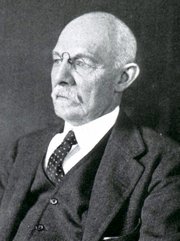
William S. Halsted, MD
(1852 – 1922)
American anatomist, teacher, and surgeon, William Stewart Halsted was born in New York City, USA to a wealthy family of English origin. His father was involved in charitable work and Governor and trustee to a city hospital. Not a brilliant student initially, Halsted took an undergraduate in Liberal Arts in Yale, CT., after which he entered the Medical College of Physicians at the Columbia College, where he excelled.
As a second-year medical student Halsted applied and obtained a position in surgery at a local hospital. In here he learned about Lister’s antiseptic technique and became an adamant proponent of it to reduce infection. In 1877 Halsted obtained his MD. After a short time as House Physician at the New York Hospital, Halsted traveled to Europe to further his education studying for two years at the Universities of Vienna, Leipzig, and W?rzburg.
Besides being at the forefront of surgical and antiseptic techniques (introducing the use of rubber gloves in surgery), Halsted was extremely concerned with the way medical students were taught in the US. He pioneered bedside clinical round discussions with the medical students after two years of basic sciences studies. Halsted developed the idea of a patient chart; he also developed the residency program for medical students in use today.
Halsted is probably the most influential researcher and surgeon at the turn of the century. He dedicated time to the study of intestinal anastomoses and the use of silk as a suture material. His experimental work in 1887 proved that the inclusion of the submucosa layer in an anastomosis was mandatory, as well that a single layered anastomosis was enough to attain closure. Perhaps Halsted’s most important contribution was the application and use of the scientific method to surgical questions. Halsted’s principles, also known as "Halsted's Rules of Surgery", set the standards used today in surgical suturing and surgical stapling.
He also pioneered the development and surgical techniques for radical mastectomy as a treatment for breast cancer.
As a side effect of this studied in anesthesia and the use of cocaine for anesthesia, Halsted became addicted to this substance, a problem that followed him through the years. Without impairing his capacity as a researcher and a surgeon, Halsted eventually recovered. He died in Baltimore in 1922 as a complication to surgery.
Sources:
1. Dubay, A. D., & Franz, G. M. (2003). Acute Wound Healing: The Biology of Acute Wound Failure. Surg Clin NA, 83, 463-481.
2. Halsted, W. S. (1887). Circular Suture of the Intestine - An Experimental Study. Am J Med Sci, 436-461.
3. “William Stewart Halsted: his life and contributions to surgery” Osborne, P. Lancet Oncol 2007; 8: 256–65
4. “William Stewart Halsted: Surgical pioneer” Burress, P Endoc Today (2010), 8: (2) 22
5. “William Stewart Halsted (1852–1922) Neurological stamp” Haas, LF J Neurol Neurosurg Psych 2000;69:641
Original image courtesy of "Images from the History of Medicine" at www.nih.gov

"Clinical Anatomy Associates, Inc., and the contributors of "Medical Terminology Daily" wish to thank all individuals who donate their bodies and tissues for the advancement of education and research”.
Click here for more information


- Details

Click for a larger image
UPDATED: The word [pecten] originates from the Latin [pectine] meaning "to comb", the adjective [pectinate] means "resembling a comb". The term denotes structures that have well-formed parallel shapes, such as the pectinate muscle of the heart. The pectinate muscle can be clearly seen in the internal aspect of the atrial appendages. (see image, pointer "B")
The term [pecten] meaning "comb" is an old word used for the superior aspect of the pubic bone (os pubis) where the pectineus muscle attaches. The root term [-pectin-] can be seen then in terms such as the iliopectineal line, and the pectineal ligament, also known as "Cooper's ligament".
The origin of the use of the term [pecten os pubis] to denote the area of attachment of the pectineus muscle to the bony ridge in the superior aspect of the pubic bone is obscure, but the pectineus muscle has well-marked parallel striations resembling a comb.
The image shows a human heart where the right atrium has been opened. The red arrow points to the pectinated muscle characteristic of the right atrial appendage (right auricle). Keep in mind that the distribution and shape of the muscle of the left atrial appendage is completely different.
Note: The links to Google Translate include an icon that will allow you to hear the pronunciation of the word.
- Details
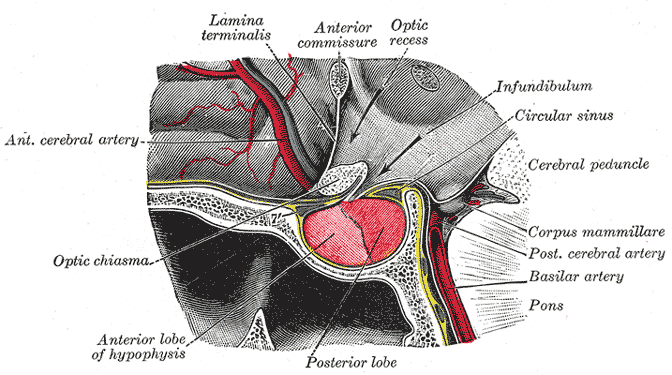
Hypophyseal infundibulum
[Infundibulum] is a Latin word and it means "funnel". The plural form is [infundibula]. Variations of the word include [infundibuliform] meaning "with the shape or form of a funnel], and [infundibular] meaning "pertaining to a funnel". This word is widely used in human anatomy and embryology:
- Infundibuliform fascia: Funnel-shaped portion of the transversalis fascia that is directed toward and forming the internal inguinal ring.
- Hypophyseal infundibulum: An inferior extension of the hypothalamus forming a funnel-shaped stalk connected to the hypophysis or pituitary gland. (see image)
- Cystic infundibulum: The funnel-shaped portion of the gallbladder
- Ethmoidal infundibulum: a funnel-shaped extension of the middle meatus of the ethmoid bone, etc.
- Uterine infundibulum: Refers to the funnel-shaped distal opening of the uterine tube
The term infundibulum is also found in heart anatomy. It refers to funnel-shaped extensions of the cardiac chambers. This is well-illustrated by both the cone-like right and left ventricular outflow tracts toward the semilunar valves (aortic and pulmonary). In the case of the atrioventricular valves (tricuspid and mitral) there is also described an infundibular region. In all cases, these funnel-shaped regions allow for smooth, non-turbulent blood flow towards their respective valves.
Word suggested by: J. Estrada. Original image in the public domain, courtesy of bartleby.com
- Details

Click for a larger image
The term [larynx] originates from the Greek [λάρυγξ] meaning "upper windpipe or throat". Known vernacularly as "Adam's apple" or the "voice box" (not proper clinical terms), the larynx is the organ of phonation, and one of the organs found in the cervical visceral compartment. It is found immediately superior to the trachea, and anterior to the pharynx and esophagus.
It is formed by nine cartilages, three of which are median and single (epiglottis, thyroid, and cricoid cartilages), the rest being paired (arytenoid, corniculate, and cuneiform cartilages). In the accompanying image, the thyroid cartilage is depicted in blue, and the cricoid cartilage in green.
Within the larynx is a pair of musculomembranous folds, the vocal cords, which are innervated by the recurrent laryngeal nerves, branches of the Xth cranial nerve, also known as the vagus nerve.
The thyroid gland (in purple) is related to the inferior aspect of the larynx. The gland receives its name from the thyroid cartilage of the larynx, as the Greek term [θυροειδής] (thyreoeidís) means "in the shape of an oblong-shield".
It was Andrea Vesalius who named the cricoid cartilage because of its shape. The Greek term [κρικοειδή] (krikoeidí) refers to a structure "shaped like a ring". The cricoid cartilage is a complete ring, and thus is different from the incomplete or "C" shaped rings of the trachea.
Image property of CAA Inc. Artist: Dr. Miranda
- Details
Click for a larger image
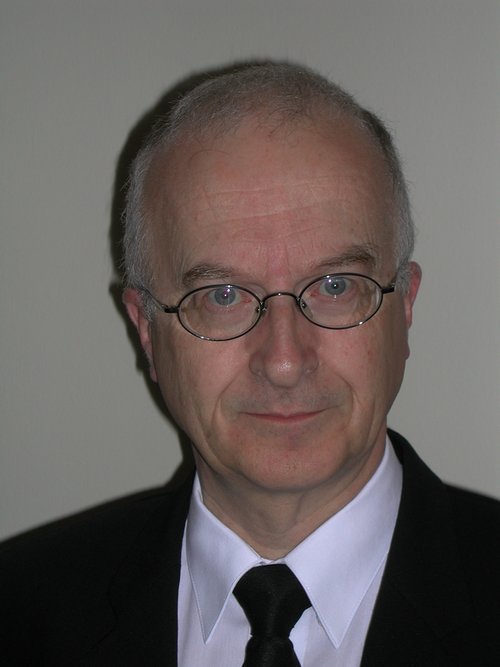
Dr. Maurits Biesbrouck was born in Roeselare (Belgium) on February 15th, 1946, studied medicine at the Catholic University Leuven and became a MD in 1972. He devoted his professional career to clinical pathology (City Hospital Roeselare) and transfusion medicine He became adjunct medical director of the Dienst voor het Bloed (Brussels) and was the president-founder of the Scientific Association Transfusion in Flanders (WVTV).
Having a lifelong interest in Andreas Vesalius he translated the first book of the De Humani Corporis Fabrica Libri Septem into Dutch, compiled an annually updated Vesalius-bibliography and wrote many articles on his life and works, many as a co-author with Omer Steeno (Leuven, Belgium) and Theodoor Goddeeris (Kortrijk, Belgium). For the moment he is working on an overview of the editions of Vesalius’s works. See www.andreasvesalius.be.
Thanks to Dr. Bisbrouck for collaborating with "Medical Terminology Daily" with the article "Andreas Vesalius' Fatal Voyage to Jerusalem", a 2016 updated version of an original presentation at the 2014 Vesalius Continuum Meeting in Zakynthos, Greece.
He was part of the research team that uncovered the "false Vesalius postage stamps".
- Details
By Maurits Biesbrouck, MD. Continued from "Andreas Vesalius’s fatal voyage to Jerusalem (5)".
For the first page of this article, click here.

Passage in Abraham Ortelius’s Teatro del Mondo with Pigafetta’s report on Vesalius’s burial place. In Italian
“Leaving aside the discussion on the epitaph of Cicero, who did not die on this island [Zakynthos], I, Filippo Pigafetta, add having seen the grave of Andreas Vesalius from Brussels, famous anatomist and the first one to render in appropriate Latin wordings and accompanied with modern illustrations the fabric of the human body, as can be seen in his marvelous books. While returning from a pilgrimage to the Holy Land he ended his life here after glorious years. An inscription to his memory was placed above the door to the church of Saint Franciscus, in golden letters on black velvet, that was taken away by the Turcs in 1571. Thus this island was ennobled likewise by the bones of such famous persons” (16).
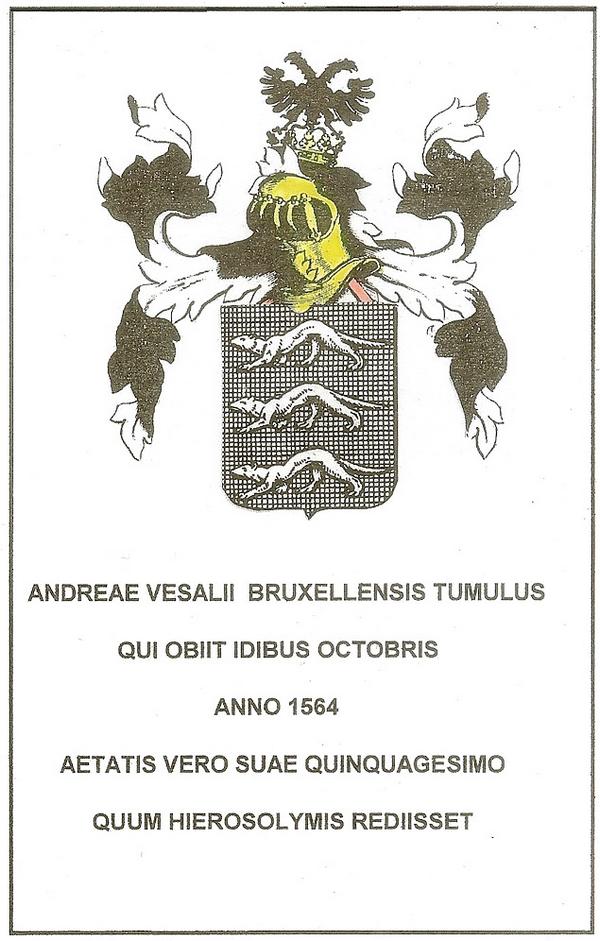
Reconstruction of Vesalius’ epitaph
by Theodoor Goddeeris (2012)
Pigafetta saw the grave in July 1586, almost at the same time as Jean Zuallart, but he may have seen it yet in 1568, on his way to Cyprus, or during his travelling to Egypt and Mount Sion in 1576-1577. When his information dates from 1568, or was based on reliable sources later on, then the Turcs could have taken two inscriptions: his epitaph and a plaque at the entrance of the church (17).
The church S. Maria delle Grazie
As far as is known, Fürer, Zuallart, and Pigafetta were the only three travellers to Jerusalem, to have seen Vesalius’s grave in the S. Maria delle Grazie with their own eyes. Thanks to them we are sure that Vesalius was buried in that church, built in 1488. Regrettably, it was destroyed on October 18th 1840 by a severe earthquake. It was then rebuilt, but moved a few meters inland. In 1893 the church was again destroyed by an earthquake. This time it was not restored, and the rubble was used by the fishermen along the coast to rebuild their houses, as told by Barbiani (18).
Vesalius’s epitaph
So Fürer saw Vesalius’s epitaph before it was stolen, but he gave an incorrect description of Vesalius’ coat of arms on it. Anyway, it follows that Vesalius’ grave was indeed at this church, and that he must have been buried there and not by the side of a road somewhere. An effort was immediately made to give him a worthy burial place. The epitaph with the coat of arms, which was already present so soon after his death, is proof of this. The people of Zakynthos were well aware of who this person was. To correct the errors in the epitaph and in the coat of arms as well, some years ago, Dr. Theodoor Goddeeris, made a graphic reconstruction of both.
Conclusions
I can summarize with four conclusions (19):
1° Andreas Vesalius' trip to Jerusalem had nothing to do with the Inquisition: he went to Jerusalem for religious reasons, and the King took the opportunity to send with him his financial support for the Holy Places, as he used to do.
2° Vesalius did not die in a shipwreck. He died most probably of a combination of exhaustion and illness.
3° He was not buried on some desolate spot, but in the church Santa Maria delle Grazie. His remains are not yet found, however. (see here for additional information on the search for Vesalius' grave).
4° His grave had an epitaph (and we know exactly what it said and looked like).
Personal note: My sincere thanks to Dr. Maurits Biesbrouck for contributing this article to "Medical Terminology Daily". His clear and factual analysis gives us an insight on the last months of Andreas Vesalius' life and the problems that eventually led to his death on Zakynthos, Greece. I am proud to have been one of the many international attendees to the 2014 meeting in the island of Zakynthos where I saw Dr. Biesbrouck deliver the presentation and research on which this article is based. Dr. Miranda.
Sources and author's comments:
16. Teatro del Mondo di Abrahamo Ortelio: da lui poco inanzi la sua morte riveduto, e di tavole nuove, et commenti adorno, e arricchito con la vita dell’Autore. Traslato in Lingua Toscana dal Sigr. Filippo Pigafetta, in Anversa, si vende nella Libraria Plantiniana, 1608 and 1612.
17. Maurits BIESBROUCK, Theodoor GODDEERIS, Omer STEENO. ‘Post Mortem Andreae Vesalii (1514-1564). Deel I: De laatste reis van Andreas Vesalius en de omstandigheden van zijn dood’ [After Vesalius’ Death: The Last Travel of Andreas Vesalius and the Circumstances of his Death] and ‘Deel II: Het graf van Andreas Vesalius op Zakynthos’ [Vesalius’ Grave in Zakynthos] in A. Vesalius, 2015, 27 (no. 3): 154-161 and (no. 4): 193-200, ill.
18. Nicolas Ant. BARBIANI, O André Vésale kai è proodos tès anatomias [Andreas Vesalius and the evolution of anatomy] – L’évolution de l’anatomie et André Vésale, Athens, 1953, 32 pp., ill.; in Greek with a French summary on pp. 7-8.
19. For more details see the papers mentioned in ref. 1.
- Details
By Maurits Biesbrouck, MD. Continued from "Andreas Vesalius’s fatal voyage to Jerusalem (4)".
For the first page of this article, click here.
The story by Solenander
An interesting story, told by Reiner Solenander (1524-1601), deserves our attention here (12). His report is important, but it was hard to find, because it is included in a work of Thomas Theodor Crusius, namely his Vergnügung müssiger Stunden, from 1722. Dr. Theodoor Goddeeris found a copy of this in the Herzog August Bibliothek in Wolfenbüttel (Germany). In it, the story can be found of Vesalius’s end according to Solenander, written in Augsburg, and dated May 1566. This means: one year and seven months after Vesalius’ death. I only translate the most important elements:
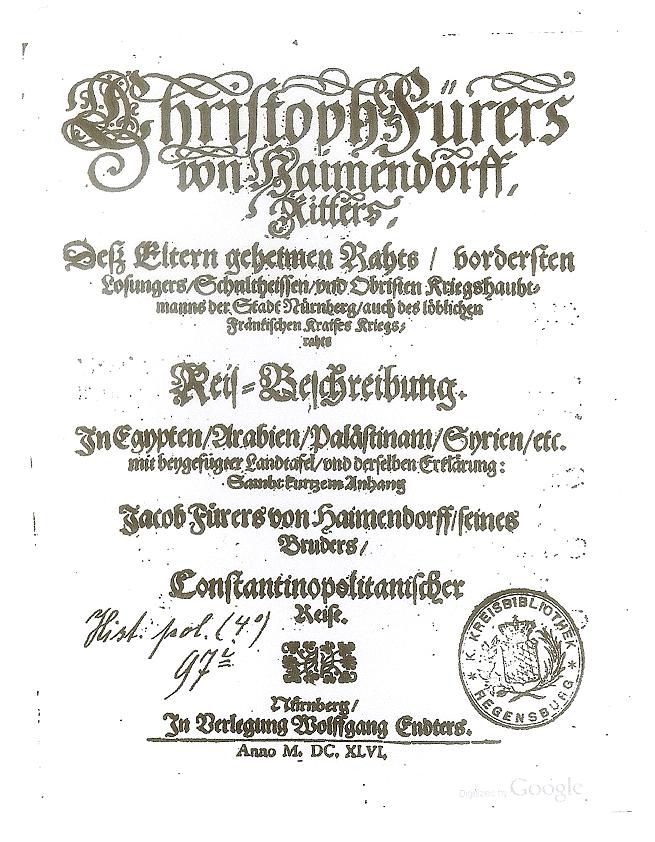
Title page of the Reis-Beschreibung by
Christoph Fürer von Haimendorf (1646)
“…, they returned to the ship. Initially, owing to stormy weather, they were driven off course, and when they had been driven into the open sea, the air became so peaceful, that the ship drifted around for several weeks, in virtually the same place. It was high summer and baking hot. Then most of the passengers fell ill, and many died. When he saw them being thrown into the sea, for several days in succession, Vesalius became dispirited, and began to suffer from sickness himself, but did not say anything about it. …, the provisions began to run out. There was a general shortage and a severe lack of drinking water. A daily ration was given to each, and not a drop more than was deemed necessary. Having ended up in this desperate situation, Vesalius, who was taciturn by nature, melancholy, and not provided for such an eventuality, received no care, as the necessary provisions had by now run out, and he started to become more seriously ill. … After they had been drifting around for a long time, the wind finally began to pick up, and they were able to sail on, with a favourable wind. In the meantime, Vesalius lay sick in the hold…. When land was sighted, everyone became frenzied, but he became even more seriously ill. Only then did the travellers arrive at Zakynthos, they called to him, and when they entered the port and struck sail, Vesalius expired, amid the creaking of the ropes and the noise of camels. But he obtained what he had most desired, namely that he should be carried ashore, and buried on land, at a chapel or shrine, near the port of Zakynthos"(13).
Vesalius’s burial place
This is how Vesalius died most probably: from illness and deprivation. But the question of his eventual burial place also arises. Numerous researchers have tried hard to gain clear information on this subject. The first person to see the grave with his own eyes was Christoph Fürer von Haimendorf (1541-1610), who in his Itinerarium (1621) states that he stopped off on Zakynthos and saw Vesalius’ grave. It is the German version of Fürer’s account of his journey, that contains the most details about Vesalius’ burial place. Not the Latin one, that appeared 25 years earlier (14).
Fürer himself, set out on a journey in July 1565, also from Venice, and headed first for Alexandria in Egypt. They sailed past Corfu, and on the 6th of August they disembarked on Zakynthos, a good seven months after Vesalius' death. He writes: “On this island there is a closter named S. Maria della Gratia, where Vesalius has been buried.” Fürer gives also a description of Vesalius’s epitaph here, because he continues: “In a grave with an epitaph carrying his coat of arms with three whippets on a shield in red, a yellow eagle, with two crowned heads, and the inscription: Tomb of Andreas Vesalius from Brussels, who died in the year 1564 on the 10th of October, on his way back from Jerusalem, at the age of 58...” This should of course be “the 15th of October” instead of the 10th, and “at the age of 50” instead of “58”. The date must be a typographical error, because his Latin text has indeed “the 15th of October”, and his abbreviation “ID” for the ides can easily be misread as a ‘ten’. Also, the description of the coat of arms is incorrect: as everyone knows, there were no whippets on it but weasels.
Solenander gives the epitaph also. According to him it reads: “Tomb of Andreas Vesalius from Brussels, who died October the 15th, 1564, on his way back from Jerusalem, at the age of 58...” Here again, the age is wrong, as Vesalius was born on the 31st of December 1514: thus he was ten weeks short of 50. As both Fürer and Solenander had the wrong age for Vesalius, this points to the fact that the epitaph might have been wrong, and not their reports.
Jean Zuallart, another Jerusalem traveller, writes that Zakynthos is an island which is highly susceptible to earthquakes, and he also mentions the grave in the church of Santa Maria delle Grazie. He saw the tomb in 1586, and tells that Vesalius was buried, on the same spot as Marcus Tullius Cicero, the famous roman writer. According to Zuallart in 1586, that is twenty-two years after Vesalius’ death, he reported that the copper memorial plaque had disappeared, having been stolen by the Turks when they plundered the island in 1571.
Pavlos Plessas was the first one to point, some years ago, to a third eye-witness of Vesalius’s grave (15). He found proof of this in an Italian translation of the worldatlas by Abraham Ortelius (1527-1598) Theatrum Orbis Terrarum. That translation was made by Filippo Pigafetta, member of an italian family of nobility from Vicenza, who added several personal experiences to the text, such as his own visit to Zakynthos. To Ortelius’s text on the Ionian Islands, accompanying Map 217, he adds in the section devoted to Zakynthos: (continued)...
Article continued here: Andreas Vesalius’s fatal voyage to Jerusalem (6).
Sources and author's comments:
12. Maurits BIESBROUCK, Theodoor GODDEERIS, Omer STEENO. ‘Reiner Solenander (1524-1601): an important 16th Century Medical Practioner and his Original Report of Vesalius’ Death in 1564 - Reiner Solenander (1524.-1601.): značajan medicinski praktičar iz 16. stoljeća i njegov izvorni izvještaj o Vezalovoj smrti 1564. godine’ in Acta medico-historica Adriatica, 2015, 13 (no. 2): 265-286, ill.
13. Reiner SOLENANDER. ‘Kurze Nachricht von des Andreae Vesalii Todt und Begräbnisz - Historia de Obitu Andreae Vesalii ex Literis Reineri Solenandri ex Comitiis August. 1566. Mense Majo’ in Thomas Theodor CRUSIUS, Vergnügung müssiger Stunden, oder allerhand nützliche zur heutigen galanten Gelehrsamkeit dienende Anmerckungen, M. Rohrlachs Wittib und Erben, 1722, pp. 483-490. The ‘work’ Vergnügung müssiger Stunden was in fact a journal that was published by Theodor Crusius in Leipzig for 20 years from 1713 to 1732; Solenander’s contribution about Vesalius’ death appeared in volume 18, 1722.
14. Christoph FÜRER VON HAIMENDORF, Reis-Beschreibung in Egypten, Arabien, Palästinam, Syrien, etc.: M. beygef. Landtafel u. ders. Erkl. Sambt Kurtzem Anh. Jacob Fürers von Haimendorff, s. Brüders, Constantinopolitanischer Reise, Nürnberg: Endter, 1646, 384 pp.
15. Pavlos [PLESSAS], ‘The tomb of Vesalius and Filippo Pigafetta’s testimony’ in Pampalaia Zakunthinès, April 3th, 2013, 4 pp., ill.; see <http://pampalaia.blogspot.com>.