
Medical Terminology Daily (MTD) is a blog sponsored by Clinical Anatomy Associates, Inc. as a service to the medical community. We post anatomical, medical or surgical terms, their meaning and usage, as well as biographical notes on anatomists, surgeons, and researchers through the ages. Be warned that some of the images used depict human anatomical specimens.
You are welcome to submit questions and suggestions using our "Contact Us" form. The information on this blog follows the terms on our "Privacy and Security Statement" and cannot be construed as medical guidance or instructions for treatment.
We have 487 guests online
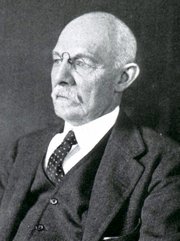
William S. Halsted, MD
(1852 – 1922)
American anatomist, teacher, and surgeon, William Stewart Halsted was born in New York City, USA to a wealthy family of English origin. His father was involved in charitable work and Governor and trustee to a city hospital. Not a brilliant student initially, Halsted took an undergraduate in Liberal Arts in Yale, CT., after which he entered the Medical College of Physicians at the Columbia College, where he excelled.
As a second-year medical student Halsted applied and obtained a position in surgery at a local hospital. In here he learned about Lister’s antiseptic technique and became an adamant proponent of it to reduce infection. In 1877 Halsted obtained his MD. After a short time as House Physician at the New York Hospital, Halsted traveled to Europe to further his education studying for two years at the Universities of Vienna, Leipzig, and W?rzburg.
Besides being at the forefront of surgical and antiseptic techniques (introducing the use of rubber gloves in surgery), Halsted was extremely concerned with the way medical students were taught in the US. He pioneered bedside clinical round discussions with the medical students after two years of basic sciences studies. Halsted developed the idea of a patient chart; he also developed the residency program for medical students in use today.
Halsted is probably the most influential researcher and surgeon at the turn of the century. He dedicated time to the study of intestinal anastomoses and the use of silk as a suture material. His experimental work in 1887 proved that the inclusion of the submucosa layer in an anastomosis was mandatory, as well that a single layered anastomosis was enough to attain closure. Perhaps Halsted’s most important contribution was the application and use of the scientific method to surgical questions. Halsted’s principles, also known as "Halsted's Rules of Surgery", set the standards used today in surgical suturing and surgical stapling.
He also pioneered the development and surgical techniques for radical mastectomy as a treatment for breast cancer.
As a side effect of this studied in anesthesia and the use of cocaine for anesthesia, Halsted became addicted to this substance, a problem that followed him through the years. Without impairing his capacity as a researcher and a surgeon, Halsted eventually recovered. He died in Baltimore in 1922 as a complication to surgery.
Sources:
1. Dubay, A. D., & Franz, G. M. (2003). Acute Wound Healing: The Biology of Acute Wound Failure. Surg Clin NA, 83, 463-481.
2. Halsted, W. S. (1887). Circular Suture of the Intestine - An Experimental Study. Am J Med Sci, 436-461.
3. “William Stewart Halsted: his life and contributions to surgery” Osborne, P. Lancet Oncol 2007; 8: 256–65
4. “William Stewart Halsted: Surgical pioneer” Burress, P Endoc Today (2010), 8: (2) 22
5. “William Stewart Halsted (1852–1922) Neurological stamp” Haas, LF J Neurol Neurosurg Psych 2000;69:641
Original image courtesy of "Images from the History of Medicine" at www.nih.gov

"Clinical Anatomy Associates, Inc., and the contributors of "Medical Terminology Daily" wish to thank all individuals who donate their bodies and tissues for the advancement of education and research”.
Click here for more information


- Details

Click for hydrocephalus image
[UPDATED] The word is derived from the Greek; the prefix [hydr-] [υδρος]means "water", while the root term [-cephal-] means "head". The term [hydrocephalus] means "water in the head"; of course the "water" is cerebrospinal fluid (CSF) which accumulates excessively in the ventricular system of the brain.
There are several reasons why the amount of CSF within the brain can be excessive, increasing the intracranial pressure: An imbalance between production and absorption of CSF (excessive production or reduced absorption), or a blockage in the ventricular system causing a dilation of the ventricles. The excessive pressure can and will damage the delicate brain tissue. In the case of hydrocephaly (another form of the term) in a newborn the soft cartilage between the cranial bones will distend allowing for the head to dilate and reduce the damage to the brain tissues. A hydrocephalus shunt can allow the patient to reduce the size of the head and eventually lead a normal life.
In 1964 Dr. Salom?n Hakim described, in what was then considered a controversial publication, a condition known as "normal pressure hydrocephalus", usually associated with old-age, Alzheimer's and Parkinson's disease. This condition is now widely accepted as a specific type of hydrocephalus.
The image depicts the ventricular system of the brain in a normal state. If you click on the image, a secondary image of a hydrocephalic baby courtesy of Wikipedia will appear. WARNING! This image is potentially disturbing. For a YouTube video of the insertion of a CSF shunt into the brain, click here.
- Details
Click for a larger image
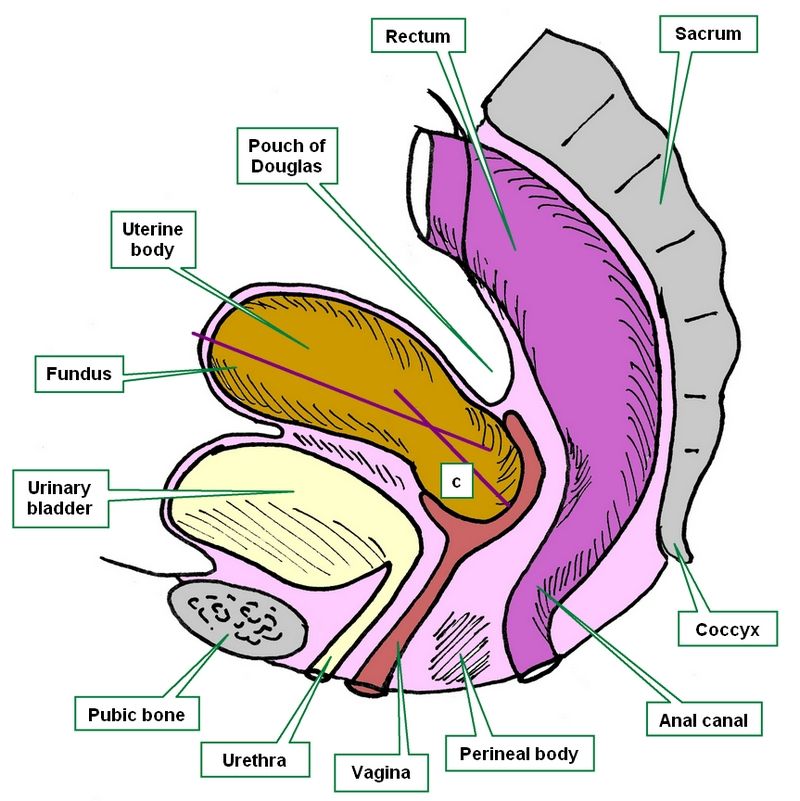
[UPDATED]These three root tems [-hyster-], [-metr-], and [-uter-] refer to the same organ, the [uterus]. There is even a fourth word (not a root term) used to denote the uterus; the matrix. This name originates from the Latin word for "mother".
The word [uterus] and the corresponding root [-uter-] comes from the Latin [uteris] which initially referred to a leather-made water bottle. The use of this term probably originated from the shape of the organ and the fact that during pregnancy it indeed is full of amniotic fluid, called vernacularly "uterine water". The root term [-uter-] can be seen in the words uterine, and uteritis.
The root tem [-metr-] is related to the Greek word [μητέρα] (mit?ra) meaning "mother" and the variation [μήτρα] (mitra) meaning "womb". This root term can be seen in the words endometrium, myometrium, and endometritis.
The root tem [-hyster-] is related to the Greek word [hystera] meaning "womb". This root term can be seen in the words hysterectomy, and hysteria.
Images property of: CAA.Inc. Artist: Dr. E. Miranda
- Details

Left malleus. A. Posterior view, B. Medial view
The word [malleus] is Latin word [malleus] meaning "hammer". It is the name of an ossicle in the middle ear.
The manubrium (handle) of the malleus is attached to the tympanic membrane. The head has a ligament, the superior malleolar ligament, which suspends the malleus in place. The head of the malleus has an articular surface for the incus, which itself articulates with the stapes. Malleus, incus, and stapes are the three ossicles found in the middle ear. This chain of bones allows mechanical transmission of the movement of the tympanic membrane through to the inner ear. At the base of the malleolar manubrium there is a site for attachment of the tensor tympani muscle which tenses and relaxes the tympanic membrane.
The Latin word [malleus] is the base for the root term [-mall-], which we can see in the English words [mallet] and even [malleable], which is used in the sense of "something able to be hammered into shape".
Interesting fact: The word [mall] as in "shopping mall" arises from an old Italian game similar to croquet called [pallamaglio]. [palla] means "ball" and [maglio] (from the Latin malleus) means "hammer". The game was quite popular in England where the word evolved from [pallamaglio] into [paille-maille] and then [pall-mall]. Since the game was played in long alleys and streets, some of these began to be referred as [malls], eventually these streets began to be lined with stores, evolving the term into [Shopping Mall].
Sources:
1 "Tratado de Anatomia Humana" Testut et Latarjet 8 Ed. 1931 Salvat Editores, Spain
2. "Anatomy of the Human Body" Henry Gray 1918. Philadelphia: Lea & Febiger
Image modified by CAA, Inc, Original image courtesy of bartleby.com
- Details

Click for a larger image
Today was the closing ceremony of the 2015 Summer Human Gross Anatomy Course and Laboratory for the Doctorate in Physical Therapy of the Mount Saint Joseph University. Gifts were exchanged and the Silver and Gold Scalpel Award were announced for two of the groups. Congratulations!!
The course professor is my good friend Elizabeth Murrray, Ph.D., D-ABFA, a world-renown forensic anthropologist. I have been adjunct faculty for this course for many years and I love to be able to share my knowledge with the students of this course. Unfortunately, this year my commitments did not allow me to be at the lab as much as I would have liked. Sorry.
To the happy faces in this picture my congratulations for having completed the course. Your cadaver was your first patient and I saw many grieve for the person and the pathologies found, and also saw them be thankful for the gift of their bodies for their learning. Congratulations on finishing this demanding course and my best wishes in your professional and personal lives. Dr. Miranda+
Picture by Prof. Doug Miller.
- Details
The word [malleolus] derives from the Latin word [malleus] meaning "hammer". Malleolus is a diminutive form of "malleus" therefore it mean "little hammer". The plural form of [malleolus] is [malleoli].
The term describes two inferior bony prominences found in the lateral and medial aspect of the ankle, the lateral and medial malleoli.
The medial malleolus is a knobby bony prominence of the tibia. It articulates with the talus bone and has a groove, the malleolar sulcus. The lateral malleolus is a bony prominence of the fibula.
- Details
Click for a larger image
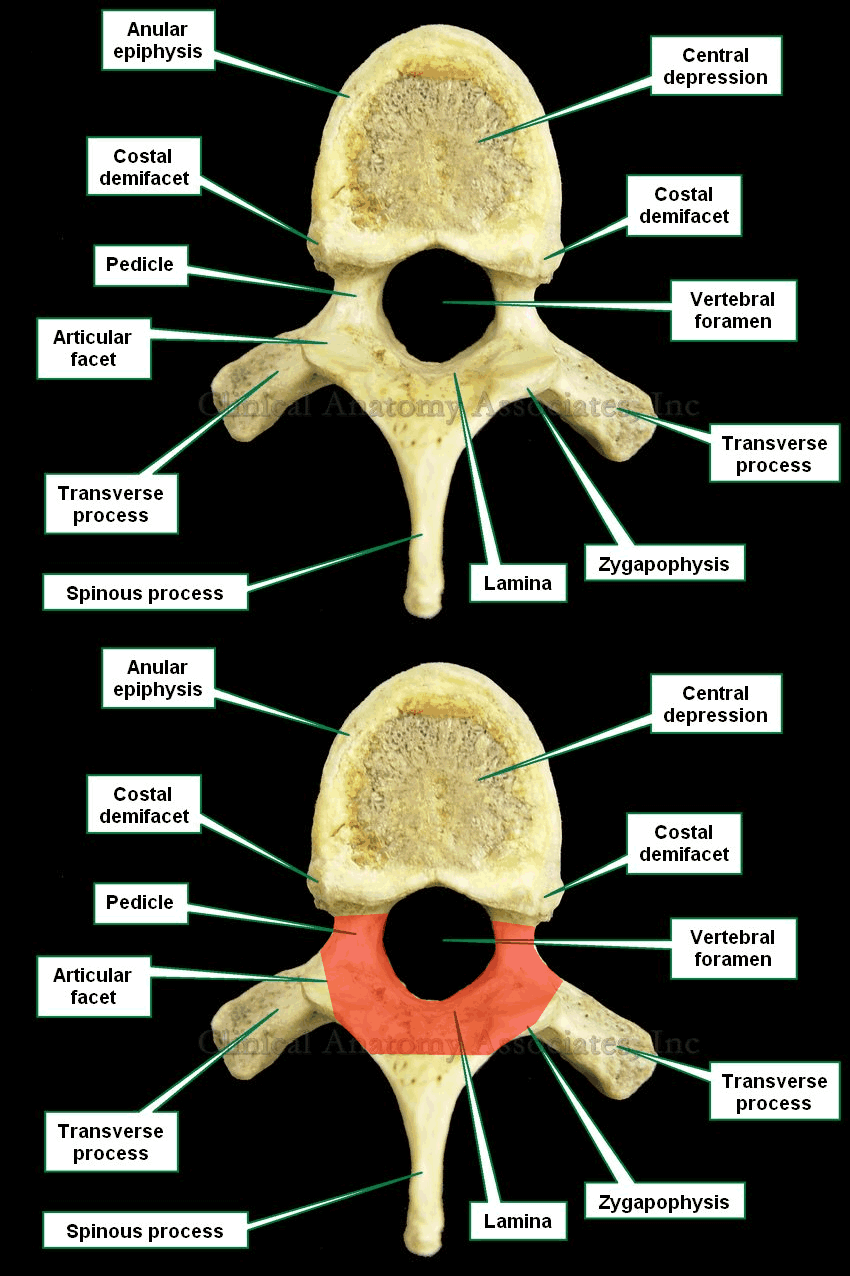
The [vertebral arch] is one of the components of a typical vertebra. It is a bony arch found posterior to the vertebral body, and it is composed by the pedicles, the vertebral laminae, and the root or base of the articular processes or zygapophyses.
The presence of the vertebral arch defines the vertebral foramen, a space that contains the spinal cord with its meninges, spinal arteries and venous plexuses, and epidural fat. The sum of all the vertebral foramina creates the vertebral canal.
Image property of: CAA.Inc. Photographer: David M. Klein