
Medical Terminology Daily (MTD) is a blog sponsored by Clinical Anatomy Associates, Inc. as a service to the medical community. We post anatomical, medical or surgical terms, their meaning and usage, as well as biographical notes on anatomists, surgeons, and researchers through the ages. Be warned that some of the images used depict human anatomical specimens.
You are welcome to submit questions and suggestions using our "Contact Us" form. The information on this blog follows the terms on our "Privacy and Security Statement" and cannot be construed as medical guidance or instructions for treatment.
We have 513 guests online
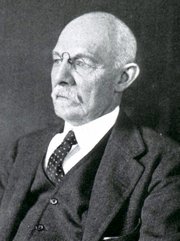
William S. Halsted, MD
(1852 – 1922)
American anatomist, teacher, and surgeon, William Stewart Halsted was born in New York City, USA to a wealthy family of English origin. His father was involved in charitable work and Governor and trustee to a city hospital. Not a brilliant student initially, Halsted took an undergraduate in Liberal Arts in Yale, CT., after which he entered the Medical College of Physicians at the Columbia College, where he excelled.
As a second-year medical student Halsted applied and obtained a position in surgery at a local hospital. In here he learned about Lister’s antiseptic technique and became an adamant proponent of it to reduce infection. In 1877 Halsted obtained his MD. After a short time as House Physician at the New York Hospital, Halsted traveled to Europe to further his education studying for two years at the Universities of Vienna, Leipzig, and W?rzburg.
Besides being at the forefront of surgical and antiseptic techniques (introducing the use of rubber gloves in surgery), Halsted was extremely concerned with the way medical students were taught in the US. He pioneered bedside clinical round discussions with the medical students after two years of basic sciences studies. Halsted developed the idea of a patient chart; he also developed the residency program for medical students in use today.
Halsted is probably the most influential researcher and surgeon at the turn of the century. He dedicated time to the study of intestinal anastomoses and the use of silk as a suture material. His experimental work in 1887 proved that the inclusion of the submucosa layer in an anastomosis was mandatory, as well that a single layered anastomosis was enough to attain closure. Perhaps Halsted’s most important contribution was the application and use of the scientific method to surgical questions. Halsted’s principles, also known as "Halsted's Rules of Surgery", set the standards used today in surgical suturing and surgical stapling.
He also pioneered the development and surgical techniques for radical mastectomy as a treatment for breast cancer.
As a side effect of this studied in anesthesia and the use of cocaine for anesthesia, Halsted became addicted to this substance, a problem that followed him through the years. Without impairing his capacity as a researcher and a surgeon, Halsted eventually recovered. He died in Baltimore in 1922 as a complication to surgery.
Sources:
1. Dubay, A. D., & Franz, G. M. (2003). Acute Wound Healing: The Biology of Acute Wound Failure. Surg Clin NA, 83, 463-481.
2. Halsted, W. S. (1887). Circular Suture of the Intestine - An Experimental Study. Am J Med Sci, 436-461.
3. “William Stewart Halsted: his life and contributions to surgery” Osborne, P. Lancet Oncol 2007; 8: 256–65
4. “William Stewart Halsted: Surgical pioneer” Burress, P Endoc Today (2010), 8: (2) 22
5. “William Stewart Halsted (1852–1922) Neurological stamp” Haas, LF J Neurol Neurosurg Psych 2000;69:641
Original image courtesy of "Images from the History of Medicine" at www.nih.gov

"Clinical Anatomy Associates, Inc., and the contributors of "Medical Terminology Daily" wish to thank all individuals who donate their bodies and tissues for the advancement of education and research”.
Click here for more information


- Details
This article is part of the series "A Moment in History" where we honor those who have contributed to the growth of medical knowledge in the areas of anatomy, medicine, surgery, and medical research.
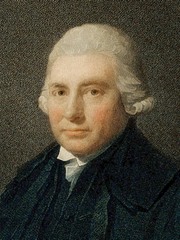
Alexander Monro Secundus
Alexander Monro Secundus (1733- 1817). Scottish physician and anatomist, born in Edinburgh. Alexander Monro Secundus (the second), studied anatomy with his father Alexander Monro Primus (the first). He received his doctorate in medicine at 22 years of age. His studies led him to write on the lymphatic system, leading to a public written dispute with William Hunter. In 1753 he demonstrated the communication channels between both lateral and third ventricle of the brain, describing it in a published work in 1797. Since then, these channels have been know as the foramina of Monro. Later analysis of prior publications demonstrate that these foramina were known, although probably not well understood.
The Monro family gave history three anatomists who occupied the chair of Anatomy at the University of Edinburgh for over a century. Alexander Monro Primus (1697 - 1767), Alexander Monro Secundus (1733 - 1817), and Alexander Monro Tertius (1773 - 1859)
Sources:
1. Sharp, J. A. (1961). Alexander Monro secundus and the interventricular foramen. Medical History, 5(1), 83
2. Wu, O. C., Manjila, S., Malakooti, N., & Cohen, A. R. (2012). The remarkable medical lineage of the Monro family: contributions of Alexander primus, secundus, and tertius. Journal of neurosurgery, 116(6), 1337-1346.
3. "The origin of Medical Terms" Skinner, HA; 1970
Original image: Coloured stipple engraving by James Heath (1757–1834), after Henry Raeburn (1756–1823) [Public domain], via Wikimedia Commons

- Details
Click for a larger image
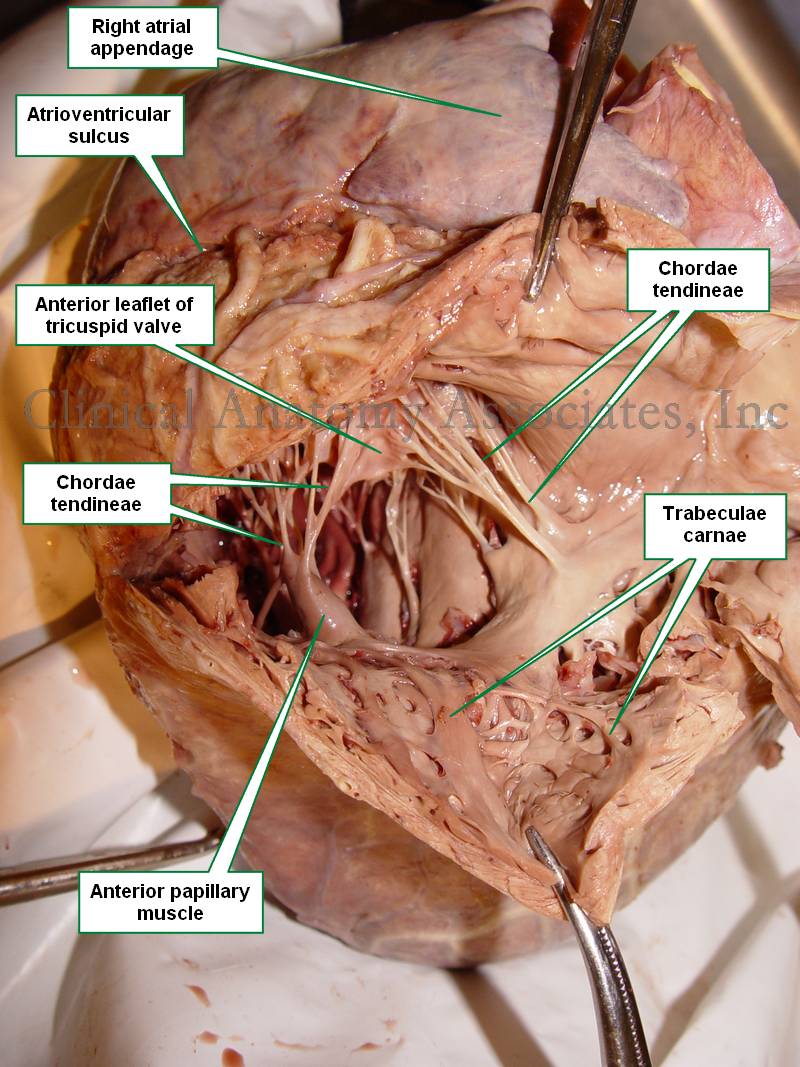
The chordae tendineae, as their Latin name suggests, are tendinous cords found in the right and left ventricles of the heart. These chordae tendineae connect the papillary muscles to the leaflets of the atrioventricular (AV) valves. The vernacular term for these structures is "heart strings".
The function of the chordae tendineae is to limit the freedom of motion of the cusps of the AV valves (tricuspid and mitral), limiting their capacity to "flap" back into the corresponding atrium. Rupture of one or more chordae can cause retrograde flow (reflux or regurgitation) of blood from the ventricle into the atrium, causing cardiac dysfunction.
The chordae tendineae are part of a larger complex of interacting anatomical structures that include the fibrous "skeleton of the heart", the fibrous core of the AV valves, the chordae tendineae, the papillary muscles, and the complex fibrous internal structure of the papillary muscles and the ventricular wall.
The image shows the dissection of a human heart, with the right atrium open. The fan-like shape of the many chordae tendineae is clearly visible, spanning two leaflets. Observe that some chordae tendineae arise directly from the interventricular septum. These are known as the "septal chordae tendineae". Observe the atrioventricular sulcus, and the cardiac apex.
Image property of: CAA.Inc.
- Details

Click for a larger image
The [common hepatic duct] is one of the components of the extrahepatic hepatobiliary tree that takes bile produced in the liver and transports it to the duodenum, with a storage function in the gallbladder.
The common hepatic duct (CHD) is formed by the junction of the right and left hepatic ducts which bring bile from the right and left functional lobes of the liver respectively. These hepatic ducts converge forming an obtuse angle.
During its trajectory the CHD is found between the layers of the lesser omentum. It has anatomical relations with the proper hepatic artery and the portal vein.
The CHD has an average diameter of 4 to 5 mm and an average length of 3cm (Testut & Latarjet 1931). It ends at the point of origin of the cystic duct which takes bile to the gallbladder. The CHD continues with the common bile duct, which empties into the second portion of the duodenum through the hepatopancreatic ampulla, also known as the Ampulla of Vater.
As with all the components of the hepatobiliary tree, the CHD presents with many anatomical variations. In cases the CHD has been reported with a length of 42 mm, and as short as 3 mm.
Following is the key to the image: 1. Bile ducts: 2. Intrahepatic bile ducts 3. Left and right hepatic ducts, 4. Common hepatic duct 5. Cystic duct 6. Common bile duct 7. Ampulla of Vater 8. Major duodenal papilla 9. Gallbladder 10–11 Right and left lobes of liver 12. Spleen. 13. Esophagus 14. Stomach Small intestine: 15. Duodenum, 16. Jejunum 17. Pancreas: 18: Accessory pancreatic duct, 19: Pancreatic duct. 20–21: Right and left kidneys (silhouette). The anterior border of the liver is lifted superiorly (brown arrow). Gallbladder in longitudinal section, pancreas and duodenum in frontal section. Intrahepatic ducts and stomach in transparency.
Sources:
1. "Tratado de Anatomia Humana" Testut et Latarjet 8 Ed. 1931 Salvat Editores, Spain
2. "Gray's Anatomy" 38th British Ed. Churchill Livingstone 1995
Original image (Public domain) by Jmarchn (Own work) [CC BY-SA 3.0 (http://creativecommons.org/licenses/by-sa/3.0) or GFDL (http://www.gnu.org/copyleft/fdl.html)], via Wikimedia Commons

- Details
The simplest definition of the prefix [pro-] is that it means “forward”. The truth is quite more complicated.
This prefix, used in vernacular English, actually has two different origins and meanings. One arises from the Latin [pro], meaning “on behalf of”, or “in favor of”, and as such we see it in the words proactive, pro-independence, and prohibition.
The second meaning comes from the Greek [πρό] (pr?) meaning “before” and “fore”. This evolved into “in front of” and later to “forward”, which is the main meaning used in medical terminology, as in the words prognosis and prolapse.
- Details
Click for a larger image
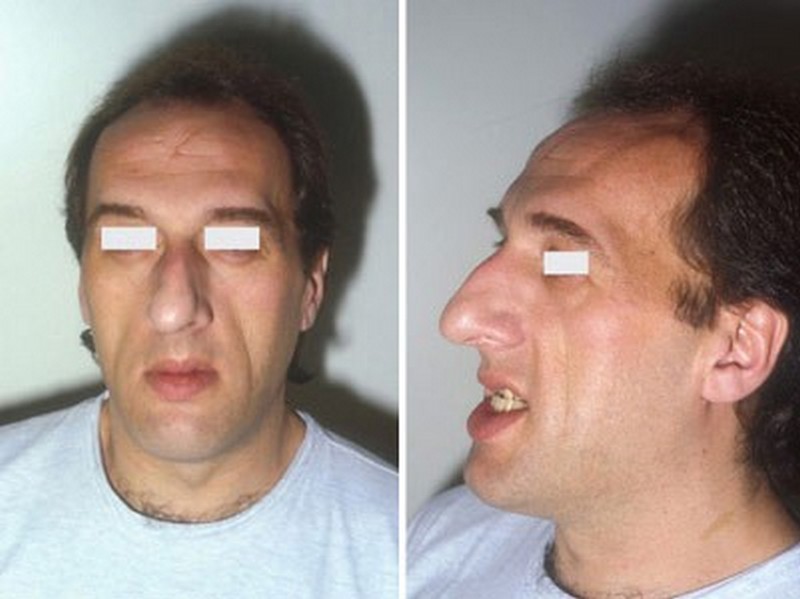
The root term [-gnath-] arises from the Greek word [γνάθος] (gn?thos) meaning “jaw” or “jaw bone”. It is used in medical terms referring to jaw pathology,
- Prognathism or prognathia: The prefix [pro-] means “forward”. A protrusion of the jaw
- Retrognathism or retrognathia: The prefix [retro-] means “posterior”. A posterior displacement caused by lack of development of the jaw
- Micrognathia: The prefix [micro-] means “small”. A small jaw
All these words (prognathism, retrognathism, and micrognathism) are examples of dysmorphism. The accompanying image shows a case of acromegaly with consequent prognathism due to overdevelopment of the jaw.
Note: The links to Google Translate include an icon that will allow you to hear the pronunciation of the word.
Image: By Philippe Chanson and Sylvie Salenave [CC BY 2.0 (http://creativecommons.org/licenses/by/2.0)], via Wikimedia Commons
- Details

Click for a larger image
UPDATED: The word [sphincter] derives from the Greek [σφιγκτήρ] (sfinkt??r), with the same meaning, in turn arising from the Greek word [σφιχτός] (sficht?s) meaning "tight". . The term was originally used by Galen (129AD - 200AD) in the meaning of "to bind tight" or "that which binds tight".
A sphincter is an area of circular muscle fibers that controls a canal or an opening. Rufus named some of them, because of their shape, [orbicularis], a Latin term meaning "circular". An example of this nomenclature are the [orbicularis oculi] and the [orbicularis ori] muscles, the circular muscles of the eye and mouth, respectively.
Some of the so-called "sphincters" in the body are functional sphincters, that is, they control a canal mostly because of their shape, not because of the constrictive action of their circular muscle fibers, such as the ileocecal sphincter or valve, which is normally a one-way valve or a check-valve (shown in the picture)
Other sphincters are true anatomical sphincters, where the number and strength of their circular fibers close off the lumen of the organ, but these are not one-way valves. An example of this type of sphincter is the pylorus.
Images and links public domain, courtesy of: www.bartleby.com