
Medical Terminology Daily (MTD) is a blog sponsored by Clinical Anatomy Associates, Inc. as a service to the medical community. We post anatomical, medical or surgical terms, their meaning and usage, as well as biographical notes on anatomists, surgeons, and researchers through the ages. Be warned that some of the images used depict human anatomical specimens.
You are welcome to submit questions and suggestions using our "Contact Us" form. The information on this blog follows the terms on our "Privacy and Security Statement" and cannot be construed as medical guidance or instructions for treatment.
We have 510 guests online
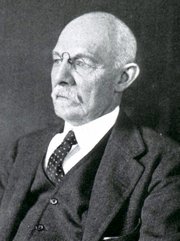
William S. Halsted, MD
(1852 – 1922)
American anatomist, teacher, and surgeon, William Stewart Halsted was born in New York City, USA to a wealthy family of English origin. His father was involved in charitable work and Governor and trustee to a city hospital. Not a brilliant student initially, Halsted took an undergraduate in Liberal Arts in Yale, CT., after which he entered the Medical College of Physicians at the Columbia College, where he excelled.
As a second-year medical student Halsted applied and obtained a position in surgery at a local hospital. In here he learned about Lister’s antiseptic technique and became an adamant proponent of it to reduce infection. In 1877 Halsted obtained his MD. After a short time as House Physician at the New York Hospital, Halsted traveled to Europe to further his education studying for two years at the Universities of Vienna, Leipzig, and W?rzburg.
Besides being at the forefront of surgical and antiseptic techniques (introducing the use of rubber gloves in surgery), Halsted was extremely concerned with the way medical students were taught in the US. He pioneered bedside clinical round discussions with the medical students after two years of basic sciences studies. Halsted developed the idea of a patient chart; he also developed the residency program for medical students in use today.
Halsted is probably the most influential researcher and surgeon at the turn of the century. He dedicated time to the study of intestinal anastomoses and the use of silk as a suture material. His experimental work in 1887 proved that the inclusion of the submucosa layer in an anastomosis was mandatory, as well that a single layered anastomosis was enough to attain closure. Perhaps Halsted’s most important contribution was the application and use of the scientific method to surgical questions. Halsted’s principles, also known as "Halsted's Rules of Surgery", set the standards used today in surgical suturing and surgical stapling.
He also pioneered the development and surgical techniques for radical mastectomy as a treatment for breast cancer.
As a side effect of this studied in anesthesia and the use of cocaine for anesthesia, Halsted became addicted to this substance, a problem that followed him through the years. Without impairing his capacity as a researcher and a surgeon, Halsted eventually recovered. He died in Baltimore in 1922 as a complication to surgery.
Sources:
1. Dubay, A. D., & Franz, G. M. (2003). Acute Wound Healing: The Biology of Acute Wound Failure. Surg Clin NA, 83, 463-481.
2. Halsted, W. S. (1887). Circular Suture of the Intestine - An Experimental Study. Am J Med Sci, 436-461.
3. “William Stewart Halsted: his life and contributions to surgery” Osborne, P. Lancet Oncol 2007; 8: 256–65
4. “William Stewart Halsted: Surgical pioneer” Burress, P Endoc Today (2010), 8: (2) 22
5. “William Stewart Halsted (1852–1922) Neurological stamp” Haas, LF J Neurol Neurosurg Psych 2000;69:641
Original image courtesy of "Images from the History of Medicine" at www.nih.gov

"Clinical Anatomy Associates, Inc., and the contributors of "Medical Terminology Daily" wish to thank all individuals who donate their bodies and tissues for the advancement of education and research”.
Click here for more information


- Details
The root term [-narc-] is a derived from the Greek [ναρκος] (narkos ), meaning “torpor” or “lethargic”. Initially it was used to denote numbness in an extremity, but eventually evolved to its modern meaning. It is used in medical word such as:
- Narcotic: A group of pharmaceuticals that numbs pain
- Narcosis: The suffix [-osis] means “condition”. A condition of generalized numbness or lethargicness
- Narcolepsy: The suffix [-lepsy]refers to a sudden onset or a seizure. Sudden numbness or lethargicness
Note: The links to Google Translate include an icon that will allow you to hear the pronunciation of the word.
- Details
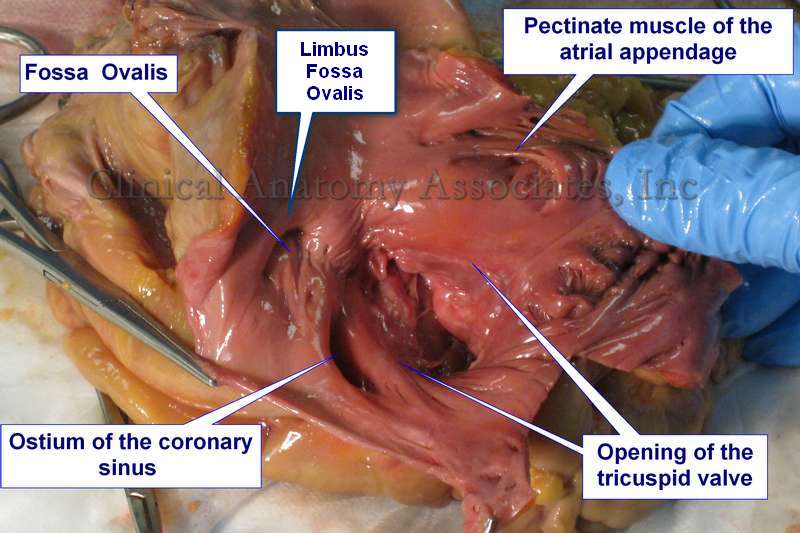
Click on the image for a larger depiction
The coronary sinus is a venous structure that receives blood from the coronary circulation and returns it to the right atrium of the heart. It is found in the atrioventricular sulcus and receives all the veins of the heart (small, middle, great and oblique cardiac veins, and others), with the exception of some anterior cardiac veins that may empty directly into the right atrium. There are small venous valves at the point where most of these veins enter the coronary sinus.
Unlike most veins, the coronary sinus in the human has an evident layer of smooth muscle that may become the source of ectopic foci of atrial depolarization, causing atrial fibrillation.
The opening of the coronary sinus into the right atrium is called the "ostium of the coronary sinus".
There is discussion as to where the coronary sinus begins, as there is sometimes a gradual dilation of the great cardiac vein and a clear-cut boundary cannot be seen. Ludinghausen (1992) proposed to use as a boundary the point where the oblique vein of the left atrium (vein of Marshall) enters the coronary sinus. A this point there is a small valve called the "valve of Vieussens".
The ostium of the coronary sinus, where it empties into the right atrium, is characterized by the presence of a semilunar fold or band of tissue called the "valve of Thebesius". This valve may be absent (as in the image), it may be small, large, trabeculated, or cribriform. The presence of a large or cribriform valve of Thebesius may encumber the attempt at retrograde cardioplegia.
The image shows an human heart dissection, where the right atrium has been opened and the following structures exposed and labeled: Fossa ovalis, ostium of the coronary sinus, pectinate muscle of the atrial appendage, and the opening of the tricuspid valve.
Sources:
1. "Tratado de Anatomia Humana" Testut et Latarjet 8 Ed. 1931 Salvat Editores, Spain
2. "Gray's Anatomy" 38th British Ed. Churchill Livingstone 1995
3. "Myocardial coverage of the coronary sinus and related veins" Ludinghausen M, Ohmachi N, Boot C. (1992) Clin Anat 5:1-15
- Details
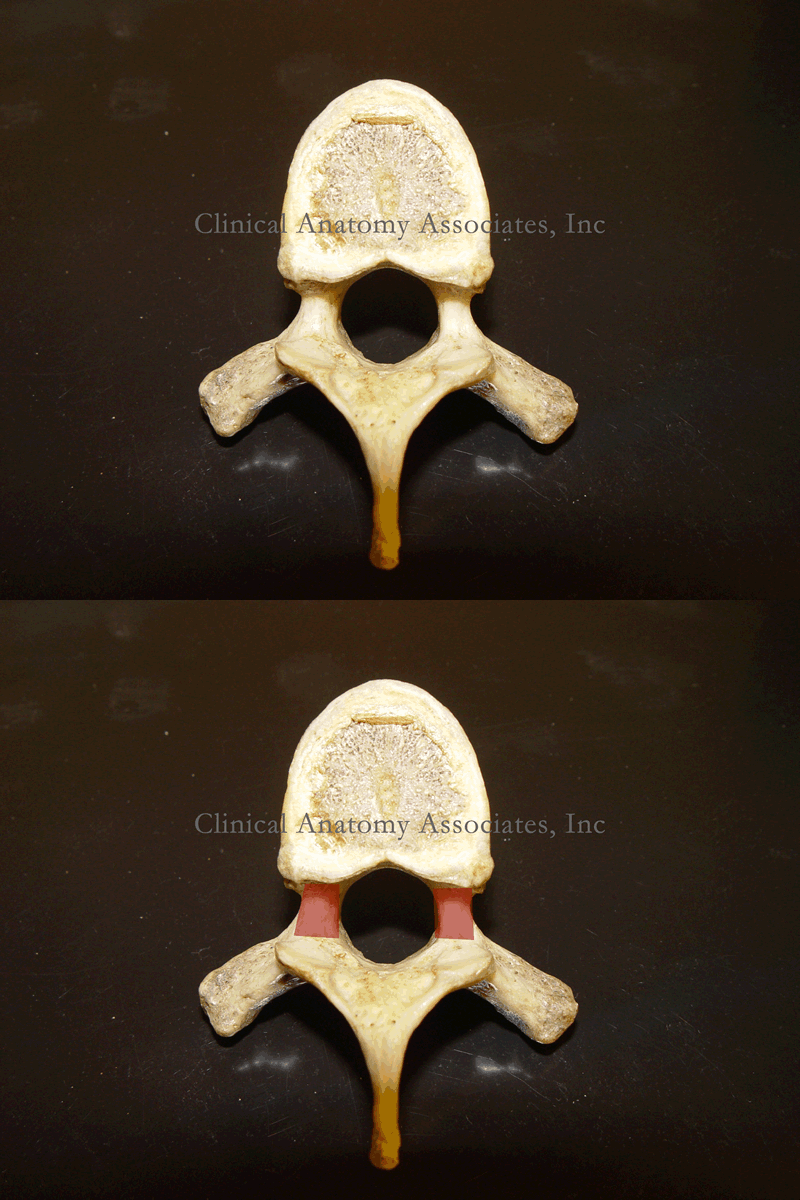
Click for a larger image
[UPDATED] The word [pedicle] is a derivative from the Latin [pediculus] meaning “a small foot”, a “stem”, or a “stalk”. The Latin term [pediculus] is itself a derivative of [pes/pedis] meaning “foot”.
[Pedicle] is also used to denote structures that lie at the root of “foot” of an organ, as in the “renal pedicle” (an older anatomical term) or in the pedicle of a sessile tumor. It is also used in surgery, to denote the vascular pedicle or “stalk” of a free tissue graft.
Since a pedicle is also the “foot” of an arch, the term has also been used to denote the base of the vertebral arch. Thus explained, each vertebra has bilateral bony bridges between the vertebral body anteriorly and the laminae posteriorly. These are the vertebral pedicles, which form the lateral walls of the vertebral canal.
The vertebral pedicles have different characteristics (width, length, angulation) depending on their vertebral level. This is important for spine surgery where pedicle screws are used:
• Lumbar vertebra: has a thicker, wider pedicle that tends to angulate posterolaterally
• Thoracic vertebra: has a thinner pedicle that looks almost anteroposteriorly
• Cervical vertebra: the pedicle is very small and thin, angles quite laterally, and forms the medial border of the transverse foramina.
The accompanying image is an inferior view of a thoracic vertebra showing the location of the vertebral pedicles. Click on the image for a larger version.
Additional information: “Vertebral pedicle anatomy in relation to pedicle screw fixation: a cadaver study” Chaynes et al. Surg Rad Anat (2001) 23:2, 85-90
Image property of: CAA.Inc.. Photographer: D.M. Klein.
- Details
The root terms [-stom-] and [-stoma-] both arise from the Greek word [στόμα] (st?ma) meaning “mouth” or “opening”. You can find them in medical terms such as:
- Stomatitis: The suffix [-itis] means inflammation. An inflammation of the mouth
- Stomatognathic: The root term [-gnath] means "jaw". Pertaining to the mouth and jaw
- Ileostomy: Creation of a permanent opening in the ileum for drainage purposes
- Anastomosis: Creation of a common opening between two hollow organs
The word [stoma] is also used as a stand-alone term with the same meaning, as in the creation of a stoma for surgical drainage.
Note: The links to Google Translate include an icon that will allow you to hear the pronunciation of the word.
- Details
|
The [cystic artery] (FCAT: arteria cistica) is the artery that provides arterial blood supply to the gallbladder. It is found in the [triangle of Calot], also known as the “cystohepatic triangle” is a triangular region found within the lesser omentum connecting the duodenum, stomach, and liver. It is an area bound superiorly by the inferior surface of the liver, laterally by the cystic duct and the medial border of the gallbladder, and medially by the common hepatic duct. It is usually a branch of the right hepatic artery, which is itself a branch of the proper hepatic artery. After its origin from the right hepatic artery the cystic artery directs towards the neck of the gallbladder where it divides into anterior and posterior branches which then penetrate the gallbladder. These anterior and posterior branches are names "left and right" by Testut and Latarjet (1931) or "right and left" by Morris (1942). The cystic artery, as most of the components of the region of the hepatobiliary tree, has well documented anatomical variations. A detailed explanation of these variations can be found here at the Illustrated Encyclopedia of Human Anatomic Variation, curated by Dr. Ronald Bergman. |
 Hepatobiliary tree and arteries to the stomach. R=right, L= left, a.=artery, Gd a.= gastroduodenal artery |
| Sources: 1. "Tratado de Anatomia Humana" Testut et Latarjet 8 Ed. 1931 Salvat Editores, Spain 2. "Gray's Anatomy" 38th British Ed. Churchill Livingstone 1995 3. "Terminologia Anatomica: International Anatomical Terminology (FCAT)" Thieme, 1998 4. "Morris' Human Anatomy" Pearce, J. (1942) Blakiston Co. Philadlephia USA Image modified from the original by Dr. Henry Vandyke Carter. Public Domain. |
|
| MTD Main Page | Subscribe to MTD |
- Details
This article is part of the series "A Moment in History" where we honor those who have contributed to the growth of medical knowledge in the areas of anatomy, medicine, surgery, and medical research.
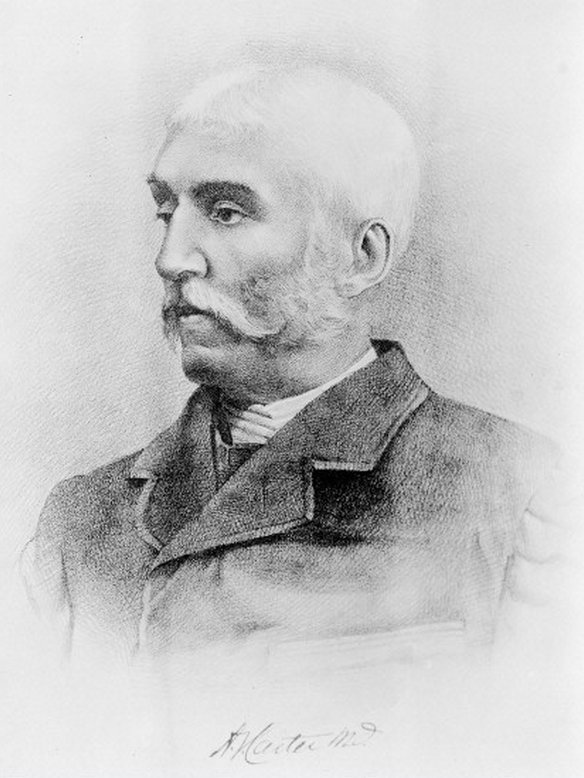
Click for a larger image
Lorem ipsum dolor sit amet, consectetur adipiscing elit, sed do eiusmod tempor incididunt ut labore et dolore magna aliqua.
Henry Vandyke Carter, MD (1831 – 1897). English physician, surgeon, medical artist, and a pioneer in leprosy and mycetoma studies. HV Carter was born in Yorkshire in 1831. He was the son of Henry Barlow Carter, a well-known artist and it is possible that he honed his natural talents with his father. His mother picked his middle name after a famous painter, Anthony Van Dyck. This is probably why his name is sometimes shown as Henry Van Dyke Carter, although the most common presentation of his middle name is Vandyke.
Having problems to finance his medical studies, HV Carter trained as an apothecary and later as an anatomical demonstrator at St. George’s Hospital in London, where he met Henry Gray (1872-1861), who was at the time the anatomical lecturer. Having seen the quality of HV Carter’s drawings, Henry Gray teamed with him to produce one of the most popular and longer-lived anatomy books in history: “Gray’s Anatomy”, which was first published in late 1857. The book itself, about which many papers have been written, was immediately accepted and praised because of the clarity of the text as well as the incredible drawings of Henry Vandyke Carter.
While working on the book’s drawings, HV Carter continued his studies and received his MD in 1856.
In spite of initially being offered a co-authorship of the book, Dr. Carter was relegated to the position of illustrator by Henry Gray and never saw the royalties that the book could have generated for him. For all his work and dedication, Dr. Carter only received a one-time payment of 150 pounds. Dr. Carter never worked again with Gray, who died of smallpox only a few years later.
Frustrated, Dr. Carter took the exams for the India Medical Service. In 1858 he joined as an Assistant Surgeon and later became a professor of anatomy and physiology. Even later he served as a Civil Surgeon. During his tenure with the India Medical Service he attained the ranks of Surgeon, Surgeon-Major, Surgeon-Lieutenant-Colonel, and Brigade-Surgeon.
Dr. Carter dedicated the rest of his life to the study of leprosy, and other ailments typical of India at that time. He held several important offices, including that of Dean of the Medical School of the University of Bombay. In 1890, after his retirement, he was appointed Honorary Physician to the Queen.
Dr. Henry Vandyke Carter died of tuberculosis in 1897.
Personal note: Had history been different, this famous book would have been called “Gray and Carter’s Anatomy” and Dr. Carter never gone to India. His legacy is still seen in the images of the thousands of copies of “Gray’s Anatomy” throughout the world and the many reproductions of his work available on the Internet. We are proud to use some of his images in this blog. The image accompanying this article is a self-portrait of Dr. Carter. Click on the image for a larger depiction. Dr. Miranda
Sources:
1. “Obituary: Henry Vandyke Carter” Br Med J (1897);1:1256-7
2. “The Anatomist: A True Story of ‘Gray’s Anatomy” Hayes W. (2007) USA: Ballantine
3. “A Glimpse of Our Past: Henry Gray’s Anatomy” Pearce, JMS. J Clin Anat (2009) 22:291–295
4. “Henry Gray and Henry Vandyke Carter: Creators of a famous textbook” Roberts S. J Med Biogr (2000) 8:206–212.
5. “Henry Vandyke Carter and his meritorious works in India” Tappa, DM et al. Indian J Dermatol Venereol Leprol (2011) 77:101-3