
Medical Terminology Daily (MTD) is a blog sponsored by Clinical Anatomy Associates, Inc. as a service to the medical community. We post anatomical, medical or surgical terms, their meaning and usage, as well as biographical notes on anatomists, surgeons, and researchers through the ages. Be warned that some of the images used depict human anatomical specimens.
You are welcome to submit questions and suggestions using our "Contact Us" form. The information on this blog follows the terms on our "Privacy and Security Statement" and cannot be construed as medical guidance or instructions for treatment.
We have 1508 guests online
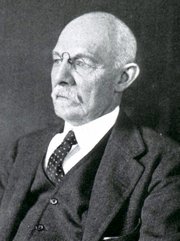
William S. Halsted, MD
(1852 – 1922)
American anatomist, teacher, and surgeon, William Stewart Halsted was born in New York City, USA to a wealthy family of English origin. His father was involved in charitable work and Governor and trustee to a city hospital. Not a brilliant student initially, Halsted took an undergraduate in Liberal Arts in Yale, CT., after which he entered the Medical College of Physicians at the Columbia College, where he excelled.
As a second-year medical student Halsted applied and obtained a position in surgery at a local hospital. In here he learned about Lister’s antiseptic technique and became an adamant proponent of it to reduce infection. In 1877 Halsted obtained his MD. After a short time as House Physician at the New York Hospital, Halsted traveled to Europe to further his education studying for two years at the Universities of Vienna, Leipzig, and W?rzburg.
Besides being at the forefront of surgical and antiseptic techniques (introducing the use of rubber gloves in surgery), Halsted was extremely concerned with the way medical students were taught in the US. He pioneered bedside clinical round discussions with the medical students after two years of basic sciences studies. Halsted developed the idea of a patient chart; he also developed the residency program for medical students in use today.
Halsted is probably the most influential researcher and surgeon at the turn of the century. He dedicated time to the study of intestinal anastomoses and the use of silk as a suture material. His experimental work in 1887 proved that the inclusion of the submucosa layer in an anastomosis was mandatory, as well that a single layered anastomosis was enough to attain closure. Perhaps Halsted’s most important contribution was the application and use of the scientific method to surgical questions. Halsted’s principles, also known as "Halsted's Rules of Surgery", set the standards used today in surgical suturing and surgical stapling.
He also pioneered the development and surgical techniques for radical mastectomy as a treatment for breast cancer.
As a side effect of this studied in anesthesia and the use of cocaine for anesthesia, Halsted became addicted to this substance, a problem that followed him through the years. Without impairing his capacity as a researcher and a surgeon, Halsted eventually recovered. He died in Baltimore in 1922 as a complication to surgery.
Sources:
1. Dubay, A. D., & Franz, G. M. (2003). Acute Wound Healing: The Biology of Acute Wound Failure. Surg Clin NA, 83, 463-481.
2. Halsted, W. S. (1887). Circular Suture of the Intestine - An Experimental Study. Am J Med Sci, 436-461.
3. “William Stewart Halsted: his life and contributions to surgery” Osborne, P. Lancet Oncol 2007; 8: 256–65
4. “William Stewart Halsted: Surgical pioneer” Burress, P Endoc Today (2010), 8: (2) 22
5. “William Stewart Halsted (1852–1922) Neurological stamp” Haas, LF J Neurol Neurosurg Psych 2000;69:641
Original image courtesy of "Images from the History of Medicine" at www.nih.gov

"Clinical Anatomy Associates, Inc., and the contributors of "Medical Terminology Daily" wish to thank all individuals who donate their bodies and tissues for the advancement of education and research”.
Click here for more information


- Details

Click for a larger image
The etymology (origin) of the term [temporal] is Latin and derives from [tempus and temporis] meaning "time". It is said that the name was given to the area of the head where the hair initially starts to become gray and whitish, marking the "passage of time". Many philosophists and scholars have said that "life is only temporal".
Anatomically, the [temple] is the area of the temporal region. The word "temple" as used in anatomy has a separate etymology from the word temple, used as "place of worship". Both come from Latin, but the word for the place of worship comes from [templum] meaning a "shrine" or a "place of worship".
Use of the term [temporal] is found in:
• Temporal bone
• Temporal muscle
• Temporal fascia
Image: By Pearson Scott Foresman [Public domain], via Wikimedia Commons
Click here for the link to the original image
- Details
This article is part of the series "A Moment in History" where we honor those who have contributed to the growth of medical knowledge in the areas of anatomy, medicine, surgery, and medical research.
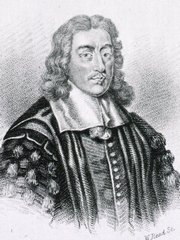
Thomas Willis
UPDATED: Thomas Willis (1621-1675). An English physician and anatomist, Willis was born on his parents' farm in Great Bedwyn, Wiltshire, where his father held the stewardship of the Manor. He was a kinsman of the Willys baronets of Fen Ditton, Cambridgeshire. He graduated M.A. from Christ Church, Oxford in 1642. In the Civil War years he was a royalist, and was dispossessed of the family farm at North Hinksey by Parliamentary forces. In the 1640's Willis was one of the royal physicians to Charles I of England. He obtained his medical degree in 1646.
Thomas Willis might well be one of the greatest physicians of the 17th century.He is one of the founders of the Royal Society of London. He is remembered by his many publications, especially "Cerebri Anatome: Cui accessit Nervorum Descriptio et Usu", where he describes the arterial anastomoses at the base of the brain. This work is also the first detailed description of the vasculature of the brain. Willis described nine cranial nerves.
He is considered as the father of Neurology as a discipline. He used the term "neurology" for the first time in 1664. He described several neurological conditions
The Arterial Circle of Willis is a famous eponymous structure found at the base of the brain. It represents an anastomotic roundabout that connects the right and left sides as well as the carotid and vertebral arterial territories that supply the brain. Named after Thomas Willis, this structure was known well before him, but it was Willis who described its function. You will be redirected to a detailed description of this structure if you click here.
Sources:
1. "The legendary contributions of Thomas Willis (1621-1675): the arterial circle and beyond" Rengachary SS et al J Neurosurg. 2008 Oct;109(4):765-75
2. "Thomas Willis, a pioneer in translational research in anatomy (on the 350th anniversary of Cerebri anatome)" Arraez-AybarJournal of Anatomy, 03/2015, Volume 226, Issue 3
3. " The naming of the cranial nerves: A historical review" Davis, M Clinical Anatomy, 01/2014, Volume 27, Issue 1
4. "Observations on the history of the circle of Willis". Meyer A, Hieros, R.Med Hist 6:119–130, 1962
Original image in the public domain courtesy of the National Library of Medicine.
- Details
Click for a larger image
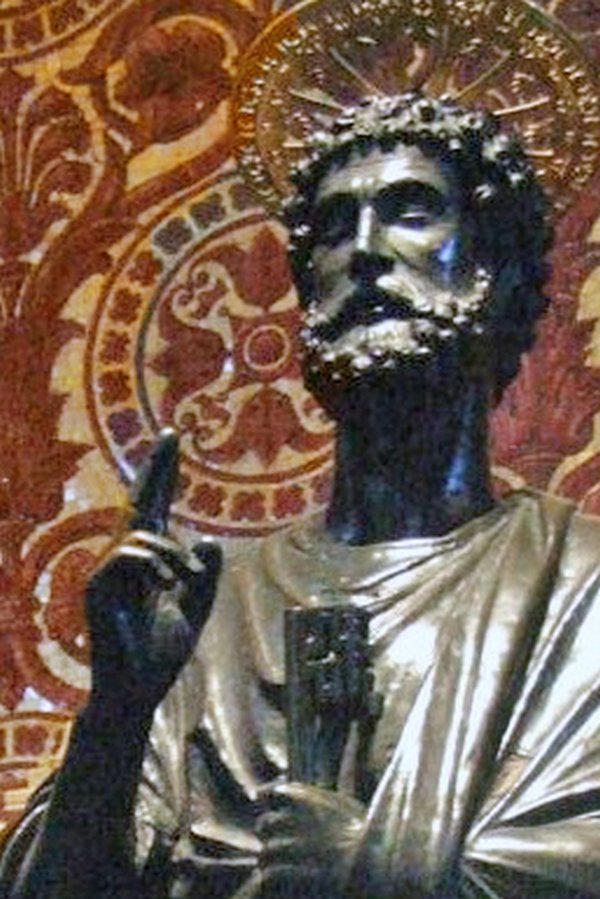
Also referred to as “benediction hand”, “Preacher`s hand”, “Papal Hand”, “Pope Blessing hand”, etc. This sign is linked to an ulnar nerve neuropathy, and there is a long time controversy about the name of this sign as well as its etiology, where some authors contend that there may be involvement of the median nerve.
Scholars, books and Internet sites are not clear about it. If there is an ulnar nerve neuropathy the person attempting to open his hand would be left with the second and third digits in extension, while the fourth and fifth digits would be flexed at the interphalangeal joints but extended at the metacarpophalangeal joints due the loss of the function of the interossei muscles and lumbrical muscles of the fourth and fifth digits.
The key for this sign is based in on the blessing act which is performed with an open hand and not with a fist. This is the reason why an ulnar neuropathy and not a median nerve neuropathy is the undelaying cause of the Papal Benediction Sign.
Presumably this term was the result of an injury of Saint Peter’s (the first Pope) ulnar nerve which caused him to bless using the “Preacher’s hand”. It stands to reason that everyone copied him as we can see in the lustrations and the art of the Catholic Church.
Article written by: Prof. Claudio R. Molina, MsC.
Sources:
1. Futterman, B. (2015). Analysis of the Papal Benediction Sign: The ulnar neuropathy of St. Peter. Clinical Anatomy (New York, N.Y.), 28(6), 696–701. Click here for the article
2. "From Vulcan Salute To Papal Blessing, Ulnar Nerve Damage Caused Original Benediction Sign | Box | NYIT". Nyit.edu. N.p., 2017. Web. 14 Jan. 2017
Image by By Mattana [Public domain], via Wikimedia Common: Click here for the link to the original image

- Details
Click for a larger image
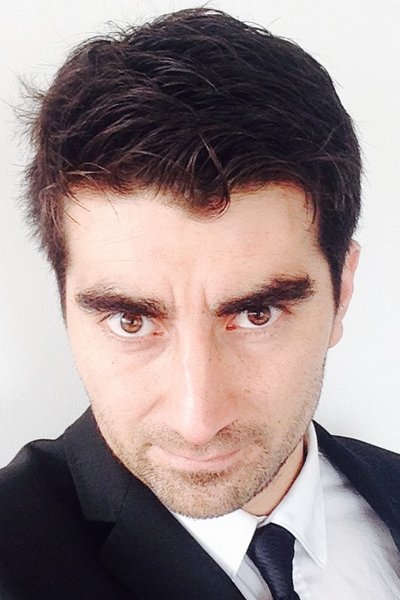
We would like to welcome Professor Claudio R. Molina. MsC. as a contributor to Medical Terminology Daily.
Prof. Molina s a Physical Therapist, has a Masters degree in Biomedical Sciences, and is a Professor in the Human Anatomy Department of the Medical School at the Finis Terrae University in Santiago, Chile.
He is also a Postgraduate teacher for students of the “Anatomical Bases of Normal Imaging” diploma program at the Medical school of the same university.
Clinical Anatomy Associates, Inc is proud to have Dr. Cortés as a contributor to "Medical Terminology Daily" and as a consultant to our team.
- Details

Intended initially as a humorous view of anatomy, the "Anatomical Laws of Miranda" have a very serious objective. They support the fact that in every interventional case the operator should be extremely aware of the potential anatomical variations present. They also point to the fact that in real life, human anatomy does not look exactly like the anatomy books, models or prosections, and practice in the art of dissection and constant study are needed to ensure the proper identification of anatomical structures in surgery.
These laws are not original, they have been partially expressed at one time or another by several anatomists and surgeons, including Dr. Aaron Ruhalter and Dr. Robert Acland. What I have done is put them officially together and create the corollaries.
The anatomical laws of Miranda
- 1. The only constant in anatomy is variation
- 2. Nothing in the human body is really colored... or labeled
- 3. No anatomical structure has the moral obligation to be where they are supposed to be
There are corollaries to these laws and visitors to this web site are invited to provide us with their thoughts and addenda to the anatomical laws.
Corollaries:
1a. In the case of the so-called "anatomical constants"...law number 1 also applies
2.a. Black and white anatomy books are sometimes better to study than color atlases
2.b. Arteries are not red, nerves are not yellow, and lymphatic vessels are definitely not green!
2c. Nothing looks exactly like the anatomy books, computer simulations, or models. Food for thought for those medical schools that are eliminating dissection from their medical curricula.
3.a. This leads to that dreadful "Oooops!" sometimes heard in surgery
3.b. This also leads to the comment "It HAS to be around here!", which is dreadful if the "here" is a patient in surgery.
- Details
- Written by: Theo Dirix
This article is part of the series "A Moment in History" where we honor those who have contributed to the growth of medical knowledge in the areas of anatomy, medicine, surgery, and medical research.
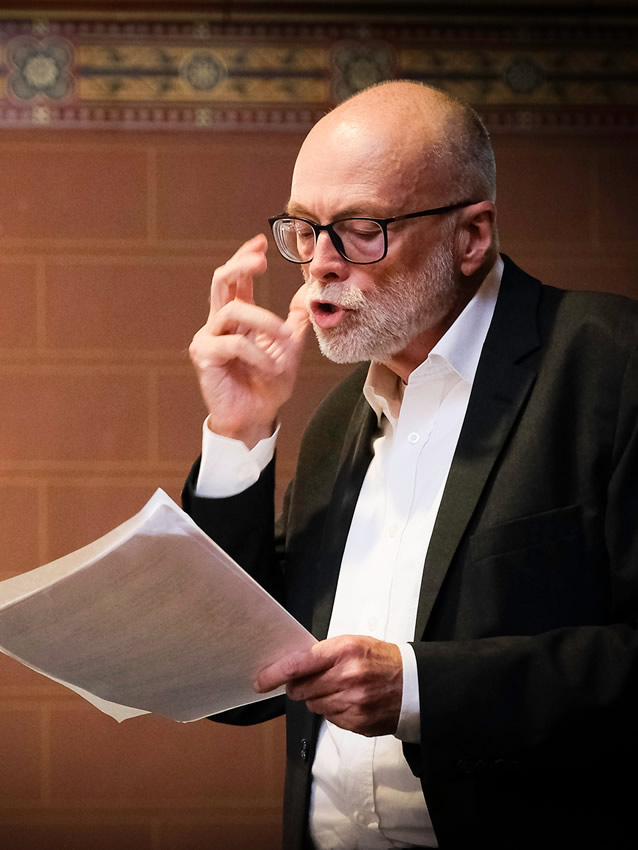
Theo Dirix, Author and Taphophile
It is a truism that commemorations generate more attention for those being celebrated: since the quincentenary of 2014, the bibliography of the Flemish anatomist Andreas Vesalius (1514-1564) exceeds 3000 entries, and counting (1). Has the moment also come when hoaxes in his biography, some that were refuted over fifty or a hundred years ago, finally cease to circulate? (2) The Quest for his Lost Grave is entering a second crucial phase, but will we ever find his remains and learn the cause of his death?
There is a consensus of opinion that his early work "De Humani Corporis Fabrica Libri Septem" marks the transition to empiric research. His academic career and his advancement to the position of family physician at the court of Charles V, Emperor of the Holy Roman Empire, and at that of his successor Philip II, are well documented. His last months, days and moments become clearer too but obstinate pranks survive. Indeed, there is absolutely no proof that he ever ran into the otherwise so well documented Inquisition (3).
Recently rediscovered letters are evidence that Vesalius left Spain as a pious pilgrim: a laissez-passer by Philip II, notes from the Spanish Embassy in Venice and even the letter of thanks written by the Custodian of the Holy Places in Jerusalem, which Vesalius was to hand over to Philip II (4) The latter unequivocally refutes the other prank that a shipwreck during his return was the cause of his death.
In the running up to the quincentenary, medical artist, artisan and curator, Pascale Pollier has launched a romantic quest for his grave. Keen to make his facial reconstruction, she went looking for his cranium. When the Embassy of Belgium in Athens incorporated her project in its public diplomacy, the Quest had become cross-disciplinary.
First some contradictions about his final resting place had to be cleared up. Prominent Vesalius biographers, Omer Steeno, Maurits Biesbrouck and Theodoor Goddeeris have provided the research that convincingly points to the catholic church of Santa Maria delle Grazie in Zakynthos. Unfortunately the church, constructed in 1488, disappeared under the rubble of a major earthquake in 1953. The trio also documented the fact that several eyewitnesses had visited his sepulchre and copied the epitaph, Christoph Fürer von Haimendorf being the first in August 1565. In May 1566 Reiner Solenander quotes a merchant from Nuremberg who had been travelling with Vesalius. Is he the goldsmith or jeweller, mentioned in other literature? The grave was also seen in 1586 by Jean Zuallart and Filippo Pigafetta. As early as 1574 Johannes Sambucus states that Vesalius was buried in Zakynthos and in 1603 he added the name of the church: “D.[omus] Mariae” (5).
Once the spot had been defined, the research team, now calling itself Vesalius Continuum (6), turned to archaeologists: Prof. Jan Driessen, Université Catholique de Louvain (UCL) and Director of the Belgian School in Athens, EBSA, and Apostolos Sarris, Deputy Director of the Institute for Mediterranean Studies - Foundation for Research and Technology, Hellas (IMS-FORTH).
In 2014, Dr. Sylviane Déderix (UCL/IMS-FORTH) checked the presumed location of the church through the spatial analysis of a Geographical Information System (GIS). Her comparison of historical maps with modern cartographic data shows that the ruins are to be found on the northwest corner of the intersection of Kolyva Street and Kolokotroni Street, partly below the asphalt and partly under private property.
During construction works on that exact spot, funerary slabs have already been excavated, and provide yet further proof that there was a cemetery at this location. A geophysical approach to the further examination of anomalies under the surface is imperative. With the necessary official permission and funding, a team of researchers could collect and process data through non-destructive methods such as ground penetrating radar (GPR) and electrical resistivity tomography (ERT). If this was to prove conclusive, a third phase of small-scale excavations in search of remains may follow.
One of the unearthed funerary slabs dates from the sixteenth century: it belonged to a certain Bevilaqua who was given the position of Public Physician in 1593. Vesalius is not the only traveller who has been buried there. Other high profile guests may be Bishop Balthassar, Maria Remondini (1698-1777) and the French philhellene and author of acclaimed travel books, Pierre-Augustin Guys who was buried in the church on 27 September 1799.
It is obvious that if human remains were exhumed genetic identification is a must. Vesalius Continuum turned to Dr. Maarten Larmuseau of the Laboratory of Forensic Genetics and Molecular Archaeology of the KULeuven. He is a Specialist in the genetic identification of old-DNA and will compare potential mitochondrial DNA and/or Y-chromosomes of remains in the Santa Maria delle Grazie with those of living relatives who are in direct maternal or pattern line. In the case of Vesalius, his direct descendants, and those of his wife, cannot contribute to the identification, but maternal relatives of his mother, Elisabeth Crabbé, can.
This romantic quest for the lost bones of the father of modern anatomy, which has turned into a cross-disciplinary search, ostensibly does not end in death, but rather in curiosity, understanding, beauty, love, passion, life (7).
You too can join in the adventure by contributing to the crowd funding campaign to sponsor the next step in the archaeological campaign: www.gofundme.com/VesaliusContinuum
Note: This article was originally published in Theo Dirix's blog. Published here with his permission. Theo Dirix is a Vesaliana contributor to Medical Terminology Daily.
Sources:
1. Maurits Biesbrouck upgraded Dr. Harvey Cushing’s list of publications on Vesalius to more than 3000 records: http://www.andreasvesalius.be , accessed 8 January 2017.
2. DIRIX, Theo: Andreas Vesalius and his hoaxes, con variazioni, in: Vesalius, Journal of the International Society of the History of Medicine, Vol. XXII, nr. 1, June 2016, Special Issue, Proceedings of A Tribute to Andreas Vesalius, Padua, Italy - December 2015, pp. 103 - 111.
3. The source is post-mortem gossip spread in January 1565 by the French diplomat, Hubertus Languetus, in a note of 24 lines opening with: “rumour has it”. See: BIESBROUCK, Maurits, Theodoor GODDEERIS, Omer STEENO. ‘Post Mortem’ Andreae Vesalii (1514-1564), Deel I. De laatste reis van Andreas Vesalius en de omstandigheden van zijn dood), in: A.Vesalius, nr. 3 september 2015, Alfagen, Leuven, pp 154-161.
4. In total four letters have been discovered by José Baron Fernandez in the archives of Simancas, described and published since 1965, brought back to light by Steeno, Biesbrouck and Goddeeris.
5. Primary sources about the epitaphs are shown in:https://vimeo.com/album/4256560/video/190461188, accessed 15/01/2017
6. Within the initial ad hoc organising committee of the Vesalius Continuum Conference in September 2014 in Zakynthos, medical artist Pascale Pollier and the author, then Consul at the Embassy of Belgium in Athens, formed the Search team.
7. Closing lines of the “Conclusion, to be continued” in: DIRIX, Theo, In Search of Andreas Vesalius, The Quest for the Lost Grave, LannooCampus, Leuven, 2014, p.140.