
Medical Terminology Daily (MTD) is a blog sponsored by Clinical Anatomy Associates, Inc. as a service to the medical community. We post anatomical, medical or surgical terms, their meaning and usage, as well as biographical notes on anatomists, surgeons, and researchers through the ages. Be warned that some of the images used depict human anatomical specimens.
You are welcome to submit questions and suggestions using our "Contact Us" form. The information on this blog follows the terms on our "Privacy and Security Statement" and cannot be construed as medical guidance or instructions for treatment.
We have 859 guests online
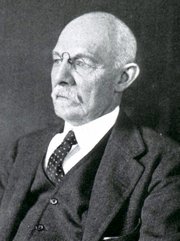
William S. Halsted, MD
(1852 – 1922)
American anatomist, teacher, and surgeon, William Stewart Halsted was born in New York City, USA to a wealthy family of English origin. His father was involved in charitable work and Governor and trustee to a city hospital. Not a brilliant student initially, Halsted took an undergraduate in Liberal Arts in Yale, CT., after which he entered the Medical College of Physicians at the Columbia College, where he excelled.
As a second-year medical student Halsted applied and obtained a position in surgery at a local hospital. In here he learned about Lister’s antiseptic technique and became an adamant proponent of it to reduce infection. In 1877 Halsted obtained his MD. After a short time as House Physician at the New York Hospital, Halsted traveled to Europe to further his education studying for two years at the Universities of Vienna, Leipzig, and W?rzburg.
Besides being at the forefront of surgical and antiseptic techniques (introducing the use of rubber gloves in surgery), Halsted was extremely concerned with the way medical students were taught in the US. He pioneered bedside clinical round discussions with the medical students after two years of basic sciences studies. Halsted developed the idea of a patient chart; he also developed the residency program for medical students in use today.
Halsted is probably the most influential researcher and surgeon at the turn of the century. He dedicated time to the study of intestinal anastomoses and the use of silk as a suture material. His experimental work in 1887 proved that the inclusion of the submucosa layer in an anastomosis was mandatory, as well that a single layered anastomosis was enough to attain closure. Perhaps Halsted’s most important contribution was the application and use of the scientific method to surgical questions. Halsted’s principles, also known as "Halsted's Rules of Surgery", set the standards used today in surgical suturing and surgical stapling.
He also pioneered the development and surgical techniques for radical mastectomy as a treatment for breast cancer.
As a side effect of this studied in anesthesia and the use of cocaine for anesthesia, Halsted became addicted to this substance, a problem that followed him through the years. Without impairing his capacity as a researcher and a surgeon, Halsted eventually recovered. He died in Baltimore in 1922 as a complication to surgery.
Sources:
1. Dubay, A. D., & Franz, G. M. (2003). Acute Wound Healing: The Biology of Acute Wound Failure. Surg Clin NA, 83, 463-481.
2. Halsted, W. S. (1887). Circular Suture of the Intestine - An Experimental Study. Am J Med Sci, 436-461.
3. “William Stewart Halsted: his life and contributions to surgery” Osborne, P. Lancet Oncol 2007; 8: 256–65
4. “William Stewart Halsted: Surgical pioneer” Burress, P Endoc Today (2010), 8: (2) 22
5. “William Stewart Halsted (1852–1922) Neurological stamp” Haas, LF J Neurol Neurosurg Psych 2000;69:641
Original image courtesy of "Images from the History of Medicine" at www.nih.gov

"Clinical Anatomy Associates, Inc., and the contributors of "Medical Terminology Daily" wish to thank all individuals who donate their bodies and tissues for the advancement of education and research”.
Click here for more information


- Details
- Written by: Coninx, R; Dirix, T
Did Andreas Vesalius really die from scurvy on the island of Zakynthos in 1564?
Evidence does not support this theory.
NOTE: The following article authored by Theo Dirix, and Dr. Rudi Coninx, is a rebuttal of Pavlos Plessas' theory that Andreas Vesalius indeed died from scurvy. The original article entitled "Powerful indications that Vesalius died from scurvy" by Pavlos Plessas was presented in a meeting at the island of Zakynthos in 2014.
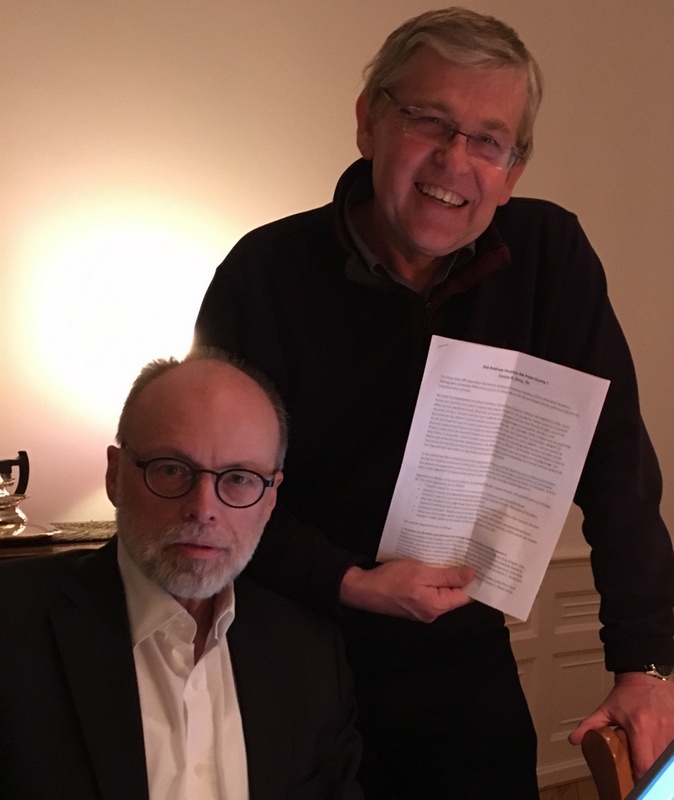
Dr. Rudi Coninx, and Theo Dirix
For the first segment of this article, click here.
...continued...
4. The sudden death
Vesalius did indeed die upon arrival in Zakynthos. And sudden death is indeed associated with scurvy.
We know this from two accounts. Both are second hand accounts:
The Italian Pietro Bizzari based his account on what he had been told by an anonymous Venetian goldsmith. The goldsmith claimed that he had happened upon the sick Vesalius by chance on a deserted beach and, in spite of the opposition he had faced from the Zakynthians, had tried to assist him in his final hours and had buried him with his own hands in a plot he had purchased for that purpose. This account suggests the Vesalius’ death was not sudden, but was prolonged process, lasting at least hours, if not days. None of the typical scurvy signs like the bleeding and joint pain, the foul mouth, are mentioned in the account.
The second written account has come to us via Johannes Metellus, the Latinised name of a Frenchman named Jean Matal. Metellus claims to have received this information from a German traveler from Nuremberg named Georg Boucher. Boucher travelled on the same ship with Vesalius to Zakynthos.
Boucher tells us that Vesalius was poorly supplied with food, fell ill, initially with worry over the breakout of the disease and his own fate, and soon after disembarking dropped dead. Boucher arranged for a stone to be put on his grave. Boucher’s account is generally considered more reliable
Metellus describes the symptoms of Vesalius’ illness and they do not match the description of a scorbutic patient. The disease described by Metellus includes symptoms of extreme fear and irrational behaviour, immediately prior to his illness. These are not well known scurvy symptoms, as sometimes is claimed.
Metellus attributes the illness that broke out on Vesalius’ ship, at least partly, to food and water shortages. He is clear though in that the deaths were caused by illness and not directly by starvation or dehydration. Not everyone of the ship was affected. Boucher, for example, does not appear to have fallen ill at any point, despite having had to share the same food as other passengers. The possibility of rotten food as a cause of death on the ship is plausible.
The behaviour changes described by Metellus are sometimes given as proof of scurvy, and reference is made to a 1971 study by Kinsman and Hood [16] which allegedly claims that personality changes are amongst the first symptoms of scurvy.
However, this study was done on only five volunteer prisoners. Not a big sample and certainly not a sample representative of a general population, especially when making conclusions about personality disorders which, moreover are based on answering a questionnaire, not based on observation. In addition, the quoted personality changes appear related to the body pool of ascorbic acid, but the peak appears on day 107. Certainly not an early symptom. And finally, the authors admit that these signs are not specific for vitamin C deficiency: “elevation of this triad is also found in prolonged semi starvation, and deficiencies of B-complex vitamins. These changes are characteristic of individuals who are physically ill, as the subjects were”.
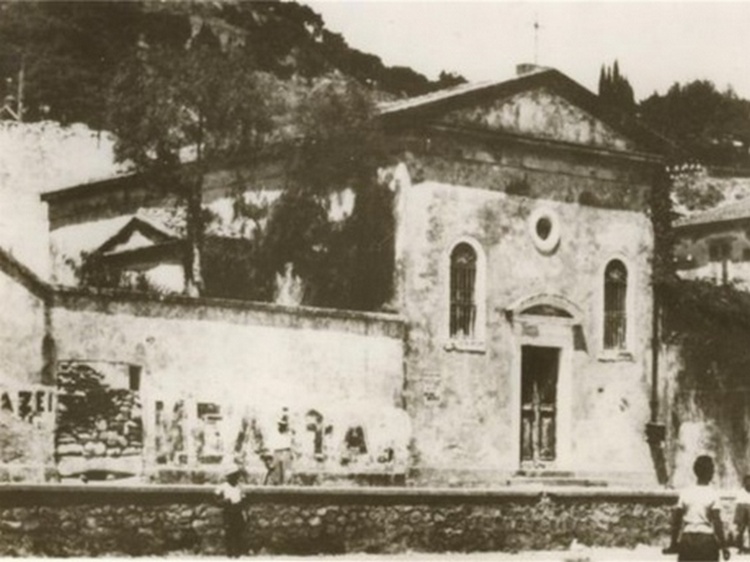
Church of Santa Maria delle Grazie
Click for a larger image
Vesalius’ immense worry and fear of falling ill, when he had not yet showed symptoms, would not point to an abnormal hypochondriac reaction, as alleged, but rather to a normal reaction. In the view of many passengers getting sick, die and being thrown overboard. Vesalius was known to be introvert. [quotation]
5. Burial on Zakynthos.
We know that Vesalius died in Zakynthos and was buried there as his tombstone has been described by several contemperous travellers. The German traveller Christoph Fürer Von Haimendorff visited the island in 1565, just a year after Vesalius’ death, and described Vesalius’ grave in the Franciscan monastery of Santa Maria delle Grazie. Von Haimendorff provided us with the details of the burial inscription. In 1586 the tombstone had disappeared, looted in the Turkish attack of 1571, according to Giovanni Zuallardo (Johannes Schwallart), a compatriot of Vesalius, who visited Zakynthos in 1586.
Conclusion
We conclude that the death from scurvy theory, while not entirely implausible, is not backed up by facts. The symptoms attributed to Andreas Vesalius prior to his death simply do not correspond to scurvy. While his altered mental state and his sudden death are compatible with scurvy, the absence of typical tell-tale signs of scurvy (gingival bleeding, joint pain, ecchymoses,) which were known at the time, would certainly have attracted the attention of Vesalius, one of the most prominent doctors of his era. The two remaining signs -altered mental state and his sudden death- are non-specific and are consistent with many other diseases. We therefore agree with the conclusion recently advanced by three eminent Vesalius experts (M. Biesbrouck, Th. Goddeeris and O. Steeno) that Vesalius died from exhaustion combined by illness [17].
In order to have a definite diagnosis, it will be important to locate the grave of Andreas Vesalius, find the remaining bones and test them for signs of scurvy. X-ray changes to the long bones are typical for scurvy [18] and even in adults one should be able to find signs of osteopenia, pathological fractures or others.
This would provide a definitive diagnosis of scurvy, even 500 years after the death of the great anatomist.
Note: My personal thanks to Theo Dirix and Dr. Rudi Coninx for contributing this article to this blog. The search for the grave of Andreas Vesalius continues on and you can find more information on "The Quest for the Lost Grave" GoFundMe page. Dr. Miranda
Note: Pavlos Plessas has published a counterargument to this article in a separate document entitled "An answer regarding the death of Andreas Vesalius", also found in this blog.
Sources:
1. https://circulatingnow.nlm.nih.gov/2014/10/15/the-death-of-andreas-vesalius/ accessed 27.12.2016
2. Matheson Cullen, G. Vesalius and the inquisition myth. Lancet, January 14, 1928, p 105-6.
3. Dirix Th. In search of Andreas Vesalius. The quest for the lost grave. Lannoo, 2014.
4. https://en.wikipedia.org/wiki/Andreas_Vesalius accessed on January 21, 2016
5. Biesbrouck M, Goddeeris Th, Steeno O. The last months of Andreas Vesalius. A coda. In Vesalius, Acta Internationalia Historiae Medicinae. 2012, 18 (No 2), 70-75.
6. Plessas P. http://www.parathemata.com/2014/09/pavlos-plessas-powerful-indications.html 2014. Accessed January 21, 2016.
7. https://www.clinicalanatomy.com/andreas-vesalius
Aa https://ods.od.nih.gov/factsheets/VitaminC-HealthProfessional/
8. Fain, O. La Revue de Médecine Interne, 2004; vol 25, Issue 12, 872-880.
9. Hodges RE, Hood J, Canham HE, Sauberlich HE, Baker EM. Clinical manifestations of ascorbic acid deficiency in man. Am J Clin Nutr 1971;24:432-43.
x. Hirschman JV, Raugi GJ. Adult scurvy. Journal of American Academy of Dermatology, 1999, 41; No 6, 895-909.
xx. Bartley W, Krebs HA, O’Brien JRP. Vitamin C requirement of human adults. Medical Research Council Special Report Series No 280. London: Her Majesty’s Stationary Office; 1953. P 1-179. Quoted in Hirschmann et al.
xxx Hodges RE, Baker EM, Hood J, Saueberlich HE, March SC. Experimental scurvy in man. American Journal of Clinical Nutrition. 1969;22:535-48.
10. Harrisons Principles of Internal Medicine, 1998; p 484-85
11. Leung FW, Guze PA: Adult scurvy. Annals of Emergency medicine; 1981; 10:652-655
12. Bennet M, Coninx R. The mystery of the wooden leg: vitamin C deficiency in East African prisons. Tropical Doctor, 2005; 35: 81-84.
13. Carpenter K. The history if scurvy and vitamin C.Cambridge University Press 1986, p29.
11. Bown S R. 4he Age of Scurvy. How a surgeon, a mariner and a gentleman helped Britain win the battle of Trafalgar. Summersdale, 2003, p 96-99.
15. Lind J. A treatise of the scurvy. Containing an inquiry into the nature, causes and cure of that disease. Together with a critical and chronological view of what has been published on the subject. Edinburgh: Sands, Murray and Cochran: 1753.
16. Kinsman RA, Hood J: Some behavioural effects of ascorbic acid deficiency. The American Journal of Clinical Nutrition, 1971, 455-464.
17. Biesbrouck M, Goddeeris Th, Steeno O: ‘Post Mortem’ Andreae Vesalii (1514 – 1564). Deel II. Het graf van Andreas Vesalius op Zakynthos. A. Vesalius, nr.4 December 2015. [in Dutch].
18. Bruce M Rothschild. Scurvy imaging. http://emedicine.medscape.com/article/413463-overview
- Details
- Written by: Coninx, R; Dirix, T
Did Andreas Vesalius really die from scurvy on the island of Zakynthos in 1564?
Evidence does not support this theory.
NOTE: The following article authored by Theo Dirix, and Dr. Rudi Coninx, is a rebuttal of Pavlos Plessas' theory that Andreas Vesalius indeed died from scurvy. The original article entitled "Powerful indications that Vesalius died from scurvy" by Pavlos Plessas was presented in a meeting at the island of Zakynthos in 2014.
Dr. Rudi Coninx, and Theo Dirix
For the first segment of this article, click here.
...continued...
We believe the arguments in favour of scurvy unfortunately are not sufficient to draw a conclusion. And for each of the argument in favour of the scurvy theory, there are strong counterarguments too.
We will examine the main arguments here
1. Travelers to the Holy Land did have not enough food to eat that contained vitamin C.
There is no evidence that Vesalius, a man of means with introduction letters from the King of Spain, was deprived of food during his travels in the Holy Land. He could certainly buy food, and probably stayed at monasteries, sharing the same food that protected the residing monks from developing scurvy. And while scurvy was not uncommon, residents did not die in large numbers because of lack of vitamin C. Dying from scurvy was, even then, was limited to a small segment of the population.
Minimal daily intake of vitamin C for an adult is 90 mg per day [aa]. Most of that intake comes from fruits and vegetables (oranges, grapefruits …) but liver and kidney are also sources of vitamin C. These are all foods that Vesalius would have consumed in Jerusalem.
2. The long sea voyage led to scurvy.
The sea voyage is too short (40 days) to develop scurvy. It takes about three months (120 days) for scurvy to develop [8]. In one study it took healthy volunteers four months to develop signs of scurvy when fed a vitamin C deprived diet [9] although some showed signs at day 29. The first sign to appear was petechial haemorrhage. In 1939, Johan Crandon, a surgical resident at Boston City Hospital, experimented on himself by eating a diet totally devoid of vitamin C [x]. Fatigue developed after 3 to 4 months, and the pathognomonic hyperkeratotic papules appeared on day 134 and the perifollicular haemorrhages on the legs on day 162. Symptoms appear after 3 to 4 months only, and there is no evidence of this in any description of Vesalius symptoms.
It has also been argued that the trip through the Sinai desert must have contributed to the presumed low intake of vitamin C.
Vesalius’s entire stay in the Holy Land, including the Sinai desert trip –presumably lasting a month and a half- did not last for more than 4 months: he arrived in Jerusalem in May 1564 and boarded ship in Alexandria in September 1564. We believe this is not long enough to deplete all vitamin C and cause symptoms, even adding a 40 day sea voyage. And it is unlikely that his stay in Jerusalem was entirely free of vitamin C, as he was a respected guest of high authorities. We know that there was “no hint of shortages before their departure from Egypt” [Plessas]
Most studies indicate the earliest detectable change occurs after 120 to 180 days [xx] although there are studies where early signs appear earlier [xxx]. But in this study, which was stopped after 3 months, no serious effects occurred.
3. “Clinical description is typical for scurvy”.
This is simply not true. The clinical description we have, from second hand accounts, are vague and non-specific. The clinical signs and symptoms of scurvy are well known and clearly described today [10]. The typical clinical signs for scurvy are absent from all accounts: gingival bleeding, an early and typical sign, or the “rotten mound” is never mentioned. Subcutaneous bleeding [11] – ecchymoses - or joint pains, leading to difficulties walking, are never mentioned. Gum bleeding are typical signs, and so are swollen and painful legs, also leading to difficulties in walking [12]. They are all absent from the accounts. Non-specific signs such as laziness are also typical, with muscle pain in the legs as an initial sign, but they always evolve into bleeding, gum problems, putrid smell and other signs that Vesalius would have described. As a doctor, Vesalius would have been well placed to recognize these signs and to describe them. None of them appear in any account.
Authors claiming typical signs were present make a lot of the so-called melancholy and refer to the writings of the 16th century expert Johannus Echthius who wrote a treatise about scurvy in Latin, as was customary in these days, in 1541, although it was only published after his death in 1556 [13] Despite being considered an expert on scurvy, Echtihius –and all “experts” of his day could recognize the disease – they knew little about the causes of scurvy, its link with vitamin C and the treatment. In fact Echthius and his 16th century colleagues were dead wrong about the causes of scurvy. Echthius obtained his knowledge entirely from studying Greek and Roman classics, Celsus, Galen and others, and came to the conclusion that scurvy was caused by a blocked spleen, leading to an excess of black bile. The treatment therefore consisted in hot and wet medicines like oil and vitriol. The only useful cure, citrus juice, was considered a “cold” medicine, therefore of no use [14]. Doctors at the time recommended avoiding fruits and vegetables in case of scurvy! Knowledge about the causes of scurvy would have to wait till the work of James Lind, an officer of the British Royal Navy who published his now famous treatise on scurvy in 1753 [15]
But Echthius did know how to recognize the symptoms of scurvy: stomachache, a complaint of the mouth, and sceletyrbe, a complaint of the legs. Vesalius showed none of these symptoms.
In another argument in favour of the scurvy theory, it is claimed that extreme fear and irrational behaviour … are well known early symptoms [Plessas ]. This is not the case. Lind was correct when he observed that “a listlessness to action … a lazy inactive disposition” that degenerates in “a universal lassitude” [Hisrchman] are typical signs. This is also the observation of one of the authors (RC) having observed scurvy patients in Ethiopian prisons.
Article continued here: Did Andreas Vesalius really die from scurvy? (3)
Sources:
1. https://circulatingnow.nlm.nih.gov/2014/10/15/the-death-of-andreas-vesalius/ accessed 27.12.2016
2. Matheson Cullen, G. Vesalius and the inquisition myth. Lancet, January 14, 1928, p 105-6.
3. Dirix Th. In search of Andreas Vesalius. The quest for the lost grave. Lannoo, 2014.
4. https://en.wikipedia.org/wiki/Andreas_Vesalius accessed on January 21, 2016
5. Biesbrouck M, Goddeeris Th, Steeno O. The last months of Andreas Vesalius. A coda. In Vesalius, Acta Internationalia Historiae Medicinae. 2012, 18 (No 2), 70-75.
6. Plessas P. http://www.parathemata.com/2014/09/pavlos-plessas-powerful-indications.html 2014. Accessed January 21, 2016.
7. https://www.clinicalanatomy.com/andreas-vesalius
Aa https://ods.od.nih.gov/factsheets/VitaminC-HealthProfessional/
8. Fain, O. La Revue de Médecine Interne, 2004; vol 25, Issue 12, 872-880.
9. Hodges RE, Hood J, Canham HE, Sauberlich HE, Baker EM. Clinical manifestations of ascorbic acid deficiency in man. Am J Clin Nutr 1971;24:432-43.
x. Hirschman JV, Raugi GJ. Adult scurvy. Journal of American Academy of Dermatology, 1999, 41; No 6, 895-909.
xx. Bartley W, Krebs HA, O’Brien JRP. Vitamin C requirement of human adults. Medical Research Council Special Report Series No 280. London: Her Majesty’s Stationary Office; 1953. P 1-179. Quoted in Hirschmann et al.
xxx Hodges RE, Baker EM, Hood J, Saueberlich HE, March SC. Experimental scurvy in man. American Journal of Clinical Nutrition. 1969;22:535-48.
10. Harrisons Principles of Internal Medicine, 1998; p 484-85
11. Leung FW, Guze PA: Adult scurvy. Annals of Emergency medicine; 1981; 10:652-655
12. Bennet M, Coninx R. The mystery of the wooden leg: vitamin C deficiency in East African prisons. Tropical Doctor, 2005; 35: 81-84.
13. Carpenter K. The history if scurvy and vitamin C.Cambridge University Press 1986, p29.
11. Bown S R. 4he Age of Scurvy. How a surgeon, a mariner and a gentleman helped Britain win the battle of Trafalgar. Summersdale, 2003, p 96-99.
15. Lind J. A treatise of the scurvy. Containing an inquiry into the nature, causes and cure of that disease. Together with a critical and chronological view of what has been published on the subject. Edinburgh: Sands, Murray and Cochran: 1753.
16. Kinsman RA, Hood J: Some behavioural effects of ascorbic acid deficiency. The American Journal of Clinical Nutrition, 1971, 455-464.
17. Biesbrouck M, Goddeeris Th, Steeno O: ‘Post Mortem’ Andreae Vesalii (1514 – 1564). Deel II. Het graf van Andreas Vesalius op Zakynthos. A. Vesalius, nr.4 December 2015. [in Dutch].
18. Bruce M Rothschild. Scurvy imaging. http://emedicine.medscape.com/article/413463-overview
- Details
- Written by: Coninx, R; Dirix, T
Did Andreas Vesalius really die from scurvy on the island of Zakynthos in 1564?
Evidence does not support this theory.
NOTE: The following article authored by Theo Dirix, and Dr. Rudi Coninx, is a rebuttal of Pavlos Plessas' theory that Andreas Vesalius indeed died from scurvy. The original article entitled "Powerful indications that Vesalius died from scurvy" by Pavlos Plessas was presented in a meeting at the island of Zakynthos in 2014.
Dr. Rudi Coninx, and Theo Dirix
Andreas Vesalius, the father of modern anatomy, was a famous man in his time. Born Andries van Wesel in 1514 in Brussels, he became the most important authority on anatomy of his time, daring even to correct the teachings of Galen, the ultimate reference on anatomy since the ancient times. Author of the most famous book on anatomy, the seven-volume "De Humani Corporis Fabrica, Libri Septem" , professor of surgery and anatomy in Padua at age 23 in 1537, imperial physician to the court of King Charles V and personal physician of the emperor of the Spanish Empire, King Philip II, Andreas Vesalius’ accomplishments are multifold. Yet, surprisingly, there are lots of things we do not know about him: how did he look like, for example, but also –and that is the topic of this paper- how did he die, what did he die from, and where exactly is he buried?
There have been more items related to Vesalius’ life that were wrongly transmitted through time, but recent investigations have put to rest a number of “disputed” facts that were erroneously reported and commonly accepted. They often made into the general history books or even into Wikipedia. The two most glaring ones were
1. That Andreas Vesalius had to leave the Imperial Court in Spain because the Inquisition was investigating him for allegedly doing an autopsy on a person that was not yet dead.
• We now know that Andreas Vesalius did not leave the Imperial Court for his pilgrimage to Jerusalem under pressure of the Inquisition, as is often alleged [1], but that he left on his own accord and with the full support of the Emperor who provided him with introduction letters to Spanish embassies abroad. We thought the Vesalius and the inquisition myth was laid to rest in 1928 [2], but has to be refuted again and again to this day, it seems [3].
2. That Andreas Vesalius was shipwrecked, and presumably drowned
• Vesalius did not die shipwrecked, as it was still alleged by Wikipedia recently [4] (but now corrected. His ship arrived safely at the harbour of the island of Venetian owned island of Zante (now Zakinthos, Greece) and Andreas Vesalius went ashore there.
What do we know for sure about the last days of Andreas Vesalius?
• We know that Andreas Vesalius undertook a pilgrimage to Jerusalem in early March 1564, arriving in Venice late April, and that he sailed from Venice via Cyprus to Jerusalem in early May. He only stayed for a short time in Jerusalem, probably one month. He then traveled from Jerusalem through the Sinai desert to Alexandria, Egypt and boarded a Venetian ship there in September 1564, heading for Venice.
• We know that the return journey was eventful. The ship was initially driven off course and then stuck without winds for over forty days which lead to food and water shortages on the ship. Most passengers fell ill, and many died. Their bodies were thrown overboard. This caused great anxiety to Andreas Vesalius who feared being thrown overboard unceremoniously in case he died. Vesalius became ill himself and lay sick in the hold with nobody taking care of him. (Account of Reinert Soleander, quoted by Biesbrouk et al.) [5].
• We also know that he stepped off the ship on the Venetian island of Zante (now Zakynthos in Greece) on October 15, 1564, sick, weak and frail, that he slowly walked towards the gates of the city where he collapsed and fell dead.
These are the facts that can be attested, and are not in dispute. What remains disputed is: did this 50 year old man die from scurvy, as is alleged?
In this article we will look at the arguments advanced in favour of the scurvy theory and see if there is any evidence to support these arguments.
Most arguments in favour of the scurvy theory have been proposed by Mr. Pavlos Plessas at the 2014 Vesalius Continuum meeting in Zakynthos, Greece and posted online on his blog (and here) [5]:
• “Vesalius stayed for six months in an area where Vitamin C was not easily found.
• Vesalius’s travels and sightseeing during the summer months means that some of his body’s Vitamin C reserves were lost through perspiration.
• Over the duration of his pilgrimage this could have exceeded 20% of his initial reserves. He then stayed an additional forty days at sea becoming vitamin C deficient.
• He reports Vesalius as immobile, depressed, with phobic and paranoid behavior,
• These can have sudden death syndrome upon restart of physical activity, which would also explain Vesalius' sudden death at the doors of the port of Zakynthos [7]..
Article continued here: Did Andreas Vesalius really die from scurvy? (2)
Sources:
1. https://circulatingnow.nlm.nih.gov/2014/10/15/the-death-of-andreas-vesalius/ accessed 27.12.2016
2. Matheson Cullen, G. Vesalius and the inquisition myth. Lancet, January 14, 1928, p 105-6.
3. Dirix Th. In search of Andreas Vesalius. The quest for the lost grave. Lannoo, 2014.
4. https://en.wikipedia.org/wiki/Andreas_Vesalius accessed on January 21, 2016
5. Biesbrouck M, Goddeeris Th, Steeno O. The last months of Andreas Vesalius. A coda. In Vesalius, Acta Internationalia Historiae Medicinae. 2012, 18 (No 2), 70-75.
6. Plessas P. http://www.parathemata.com/2014/09/pavlos-plessas-powerful-indications.html 2014. Accessed January 21, 2016.
7. https://www.clinicalanatomy.com/andreas-vesalius
Aa https://ods.od.nih.gov/factsheets/VitaminC-HealthProfessional/
8. Fain, O. La Revue de Médecine Interne, 2004; vol 25, Issue 12, 872-880.
9. Hodges RE, Hood J, Canham HE, Sauberlich HE, Baker EM. Clinical manifestations of ascorbic acid deficiency in man. Am J Clin Nutr 1971;24:432-43.
x. Hirschman JV, Raugi GJ. Adult scurvy. Journal of American Academy of Dermatology, 1999, 41; No 6, 895-909.
xx. Bartley W, Krebs HA, O’Brien JRP. Vitamin C requirement of human adults. Medical Research Council Special Report Series No 280. London: Her Majesty’s Stationary Office; 1953. P 1-179. Quoted in Hirschmann et al.
xxx Hodges RE, Baker EM, Hood J, Saueberlich HE, March SC. Experimental scurvy in man. American Journal of Clinical Nutrition. 1969;22:535-48.
10. Harrisons Principles of Internal Medicine, 1998; p 484-85
11. Leung FW, Guze PA: Adult scurvy. Annals of Emergency medicine; 1981; 10:652-655
12. Bennet M, Coninx R. The mystery of the wooden leg: vitamin C deficiency in East African prisons. Tropical Doctor, 2005; 35: 81-84.
13. Carpenter K. The history if scurvy and vitamin C.Cambridge University Press 1986, p29.
11. Bown S R. 4he Age of Scurvy. How a surgeon, a mariner and a gentleman helped Britain win the battle of Trafalgar. Summersdale, 2003, p 96-99.
15. Lind J. A treatise of the scurvy. Containing an inquiry into the nature, causes and cure of that disease. Together with a critical and chronological view of what has been published on the subject. Edinburgh: Sands, Murray and Cochran: 1753.
16. Kinsman RA, Hood J: Some behavioural effects of ascorbic acid deficiency. The American Journal of Clinical Nutrition, 1971, 455-464.
17. Biesbrouck M, Goddeeris Th, Steeno O: ‘Post Mortem’ Andreae Vesalii (1514 – 1564). Deel II. Het graf van Andreas Vesalius op Zakynthos. A. Vesalius, nr.4 December 2015. [in Dutch].
18. Bruce M Rothschild. Scurvy imaging. http://emedicine.medscape.com/article/413463-overview
- Details
- Written by: Prof. C. Uribe
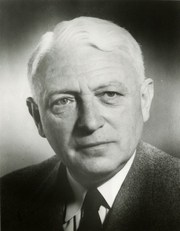
Felix Fleischner, MD
One of the current challenges in medical sciences is to achieve a common and universal language that allows establishing, promoting the understanding and communication between people of different cultures and nationalities.
The use of anatomical and radiological terms in the chest is not exempt from this theme. An adequate terminology allows describing findings and unifying concepts that facilitate communication, teaching, research, in brief, the transmission of knowledge.
From the radiological point of view, ignorance of appropriate terminology creates confusion and may eventually lead to inaccuracies and misdiagnoses. Therefore, reaching consensus in terminology is an attempt to minimize the effects of language vices, which are unfortunately passed on to future generations.
On the other hand, in recent years, technical advances in radiology have improved the capture, recording and storage of images, which in turn has involved the need for a new language to explain new concepts.
Within this context, the Fleischner Society, an international and multidisciplinary medical society for thoracic radiology, was founded in 1969 in memory of Dr. Félix Fleischner. Among the objectives of this society is the publication of formal statements that have been adopted for several years, as standards in the field of chest radiology, generating an important point of discussion and consensus around this issue.
Thus, as in 1971 a proposal for initial terminology was made, which was consolidated in 1984 and 1996 with the publications of the Fleischner Society glossary for Chest X-rays and Tomographies respectively. In 2008 (Radiology 2008; 246: 697-722) this glossary is finally updated using new terms, modifying or eliminating some of those that have become obsolete and others in which their meaning has changed.
Sources:
1. Austin JHM, Müller NL, Friedman PJ. Glossary of Terms for CT of the Lungs: Recommendations of the Nomenclature Committee of The Fleischner Society. Radiology 1996; 200:327-30.
2. Fraser RS, Müller NL, Colman N, Pare PD. Diagnosis of diseases of the Chest. 4th ed. Philadelphia: WB Saunders Company, 1999.
3. Tuddenham WJ. Glossary of Terms for Thoracic Radiology: Recommendations of the Nomenclature Committee of The Fleischner Society. Am J Roentgenol 1984; 143:509-17.
4. Souza Jr AS, Araújo Neto CA, Jasinovodolinki D,Marchiori E, Kavakama J, Irion KL et al. Terminologia para a Descrição de Tomografia Computadorizada do Tórax (Sugestões Iniciais para um Consenso Brasileiro). Radiol Bras 2002; 35:125-8.
5.David M. Hansell, Alexander A. Bankier, Heber MacMahon, Theresa C. McLoud, Nestor L. Müller, and Jacques Remy Fleischner Society: Glossary of Terms for Thoracic Imaging Radiology 2008 246:3, 697-722
This article belongs to the series "Glossary of Terms for Thoracic Imaging" by Prof C. Uribe, MsC. This series is based on the "Glossary of Terms for Thoracic Imaging" by the Fleischner Society
- Details
This article is part of the series "A Moment in History" where we honor those who have contributed to the growth of medical knowledge in the areas of anatomy, medicine, surgery, and medical research.
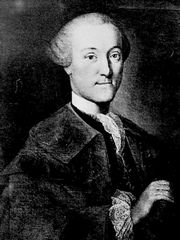
Johann Gottfried Zinn
Johann Gottfried Zinn (1727–1759) anatomist and botanist, was born on December 6, 1727 in the city of Ansbach, Germany. He started his medical studies in his native city, becoming later a student of Dr. Albrecht von Hallers at the University of Göttingen, and received his MD in 1749.
He left for Berlin to continue his studies but came back shortly thereafter. He became a professor of anatomy at the University of Göttingen and in 1753 he also became the director of the botanical garden in the same city.
He is known for his anatomical treatise on the anatomy of the human eye: “Descriptio anatomica oculi humani iconibus illustrata”. Because of this, his name has become an eponym in the “Zonule of Zinn”, a ring of strands that forms a fibrous band connecting the ciliary body with the capsule of the lens of the eye. Zonule of Zinn is sometimes referred to as the suspensory ligaments of the lens, or the “ligament of Zinn”. His name is also attached to the anular ring tendon found in the posterior aspect of the eye, the "anular tendon of Zinn". This ring serves as attachment for all the extraocular muscles of the eye and the optic nerve passes through the center of the ring.
Carol Linné (Carolus Linneaus) named a genus of flowers in the family Asteraceae known vernacularly today as “Zinnia” in his honor. Hover your cursor over his portrait to see the flower.
The chapter on orbital anatomy of his anatomy book, taken from the second edition in 1780, has been translated and the first of three parts is published in an issue of “Strabismus”
His book "Catalogus Plantarum Horti Academici Et Agri" can be read online here.
His life was short, dying at the early age of 32, but his name lives on in the name of a beautiful flower.
Sources:
1. “Johann Gottfried Zinn" Simonz, HJ Strabismus – 2004, Vol. 12, No.
2, p. 125 2. "Anatomical Description of the Human Eye" Zinn, JG Strabismus, 13:45–52, 2005
Images: Public Domain by Wikipedia Commons. 1. Own work I_am Jin, and H. Wilhem Dietz
- Details

Sternalis muscle (Andreas Vesalius 1543)
The Sternalis muscle has been nominated as a supernumerary anatomical variation; the highest prevalence is in China (23.5%) and the lowest in Chile (0.87%).
The muscle is a wide band of muscular tissue located in the anterior thoracic wall, where fibers travel near-parallel to the sternum, inferior to the clavicles, aterior to the pectoralis major and the pectoral fascia. It has received many names: rectus sternalis, parasternal, episternal, superficial abdominal rectus, among other names. To avoid confusion, a true sternalis muscle should have the following characteristics:
(1) be localized between the subcutaneous tissue of the anterior thoracic region and fascia pectoralis;
(2) originate superiorly from the sternum or infraclavicular region;
(3) be inserted inferiorly in the ribs, rib cartilage, external oblique muscle aponeurosis and sheath of the rectus abdominis muscle;
(4) its innervation must come from the anterior root of the intercostal nerves. Another possible innervation from medial and lateral pectoral nerves has been mentioned.
Even though the Sternalis muscle does not appear to have a significant function, it is important to bear it in mind when evaluating mammograms, because one could misdiagnose it as a mammary cancer, as exposed by many authors. It is crucial to be familiar with this muscle to avoid confusion with pathology, such as extra-abdominal desmoid tumors, diabetic mastopathy, abscesses, hematomas, fat necrosis, and others; its unilateral presence may cause breast or chest asymmetry.
Note: The image in this article depicts this variation and is from the 1543 " De Humanis Corporis Fabrica, Libri Septem " by Andreas Vesalius.
Sources:
1. Jelev L., Georgiev G., Surchev L. (2001) The sternalis muscle in the Bulgarian population: classification of sternales. J. Anat. 199: 359-363.
2. Bradley F.M., Hoover H.C., Hulka C.A., Whitman G.J., McCarthy K.A., Hall D.A., Moore R., Kopans D.B. (1996) The sternalis muscle: an unusual normal finding seen on mammography. AJR. Am. J. Roentgenol. 166: 33-36.
3. Scott-Conner C.E.H., Al-Jurf A.S. (2002) The sternalis muscle. Clin. Anat. 15: 67-69.
4. Shiotani M., Higuchi T., Yoshimura N., Kiguchi T., Takahashi N., Maeda H., Aoyama H. (2012) The sternalis muscle: radiologic findings on MDCT. Jpn. J. Radiol. 30: 729-734.