Medical Terminology Daily (MTD) is a blog sponsored by Clinical Anatomy Associates, Inc. as a service to the medical community. We post anatomical, medical or surgical terms, their meaning and usage, as well as biographical notes on anatomists, surgeons, and researchers through the ages. Be warned that some of the images used depict human anatomical specimens.
You are welcome to submit questions and suggestions using our "Contact Us" form. The information on this blog follows the terms on our "Privacy and Security Statement" and cannot be construed as medical guidance or instructions for treatment.
We have 1181 guests online
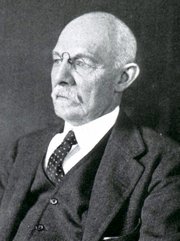
William S. Halsted, MD
(1852 – 1922)
American anatomist, teacher, and surgeon, William Stewart Halsted was born in New York City, USA to a wealthy family of English origin. His father was involved in charitable work and Governor and trustee to a city hospital. Not a brilliant student initially, Halsted took an undergraduate in Liberal Arts in Yale, CT., after which he entered the Medical College of Physicians at the Columbia College, where he excelled.
As a second-year medical student Halsted applied and obtained a position in surgery at a local hospital. In here he learned about Lister’s antiseptic technique and became an adamant proponent of it to reduce infection. In 1877 Halsted obtained his MD. After a short time as House Physician at the New York Hospital, Halsted traveled to Europe to further his education studying for two years at the Universities of Vienna, Leipzig, and W?rzburg.
Besides being at the forefront of surgical and antiseptic techniques (introducing the use of rubber gloves in surgery), Halsted was extremely concerned with the way medical students were taught in the US. He pioneered bedside clinical round discussions with the medical students after two years of basic sciences studies. Halsted developed the idea of a patient chart; he also developed the residency program for medical students in use today.
Halsted is probably the most influential researcher and surgeon at the turn of the century. He dedicated time to the study of intestinal anastomoses and the use of silk as a suture material. His experimental work in 1887 proved that the inclusion of the submucosa layer in an anastomosis was mandatory, as well that a single layered anastomosis was enough to attain closure. Perhaps Halsted’s most important contribution was the application and use of the scientific method to surgical questions. Halsted’s principles, also known as "Halsted's Rules of Surgery", set the standards used today in surgical suturing and surgical stapling.
He also pioneered the development and surgical techniques for radical mastectomy as a treatment for breast cancer.
As a side effect of this studied in anesthesia and the use of cocaine for anesthesia, Halsted became addicted to this substance, a problem that followed him through the years. Without impairing his capacity as a researcher and a surgeon, Halsted eventually recovered. He died in Baltimore in 1922 as a complication to surgery.
Sources:
1. Dubay, A. D., & Franz, G. M. (2003). Acute Wound Healing: The Biology of Acute Wound Failure. Surg Clin NA, 83, 463-481.
2. Halsted, W. S. (1887). Circular Suture of the Intestine - An Experimental Study. Am J Med Sci, 436-461.
3. “William Stewart Halsted: his life and contributions to surgery” Osborne, P. Lancet Oncol 2007; 8: 256–65
4. “William Stewart Halsted: Surgical pioneer” Burress, P Endoc Today (2010), 8: (2) 22
5. “William Stewart Halsted (1852–1922) Neurological stamp” Haas, LF J Neurol Neurosurg Psych 2000;69:641
Original image courtesy of "Images from the History of Medicine" at www.nih.gov

"Clinical Anatomy Associates, Inc., and the contributors of "Medical Terminology Daily" wish to thank all individuals who donate their bodies and tissues for the advancement of education and research”.
Click here for more information


- Details
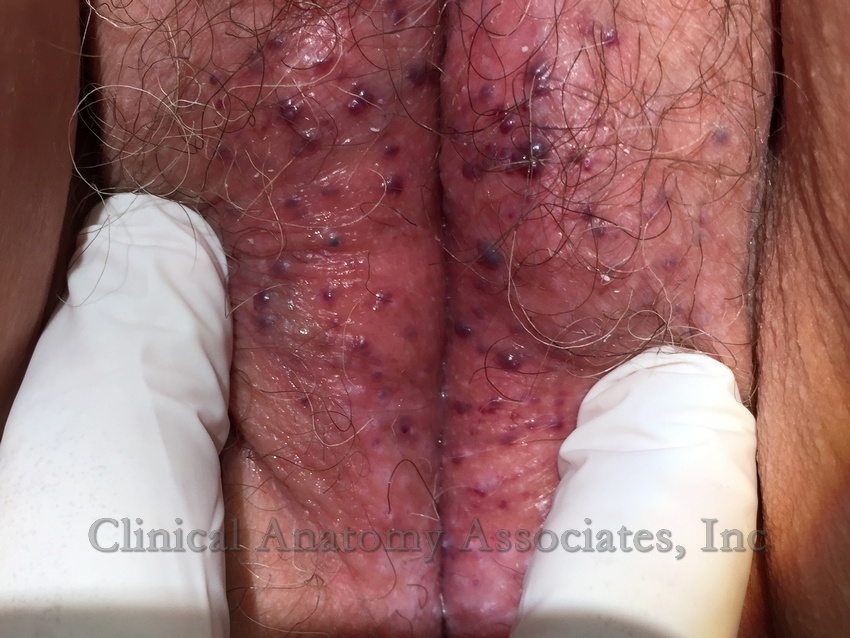
Image property of: CAA.Inc.
WARNING: Depicts female external genitalia.
UPDATED: This article presents a case of vulvar hemangiomata. In superficial or surface anatomy, [vulva] is the anatomical name given to the external female genitalia.
The medical term [hemangioma] is formed by two root terms and a suffix. The root term [hem-] arises from the Greek word [αίμα] (a?ma) meaning "blood", the second root term [-angi-] .from the Greek term [αγγείο] (angeio), meaning "vessel” and the suffix [-oma] (ωμα), also Greek, meaning "mass", "growth”, or "tumor". The plural derivative word [hemangiomata] uses the suffix [-omata] which is the plural form of [-oma].
Vulvar hemangiomata are multiple blood growths or tumors on a female’s external genitalia. In most cases, hemangiomata are idiopathic.
Vulvar hemangiomata can be capillary (arterial) or cavernous (venous). They are benign vascular tumors which can be congenital, meaning the patient is born with them, or acquired, meaning that they appear later in life. In both cases they are usually asymptomatic. Patients may become concerned over aesthetics or because of bleeding due to trauma to the lesions. In rare cases, these hemangiomas can be large, requiring excision.
They are usually kept under observation, evaluating their progress (evolution or involution). If they increase in number or become symptomatic, intervention includes the use of sclerosing agents, destruction by cryotherapy or laser therapy, or surgical excision.
Personal note: My thanks to the patient who voluntarily and anonymously provided this image to further learning and knowledge on this pathology. Dr. Miranda
- Details
2017 AACA Meeting – Thursday, July 20
This is the 2017 Meeting of the American Association of Clinical Anatomists (AACA) in Minneapolis, MN. This 34th meeting of the association, gets together over 300 clinical anatomists, anatomists, physicians, and students from all over the world.
Last day of the meeting! In the morning, there was a poster session and a platform session dedicated to the neck and lower limb. Now, I must confess that as much as I wanted to attend the meeting, I decided to go somewhere else and skip the morning session… I should feel bad about this, but I do not!!
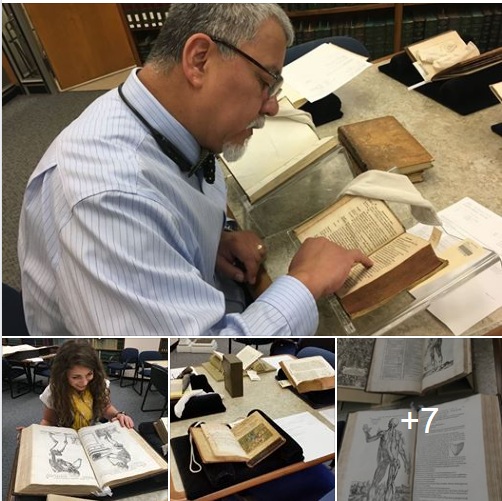
With two other attendees to the AACA meeting I went to the Wangensteen Historical Library which has a collection of over 80,000 rare books. We met with the Curator, Lois Hendrickson, Christopher Herzberg, and Emily Beck.
First, we visited the current exhibit, “Medical Exchanges: Mapping the Human Body in Japan and China” with incredible books, medical posters, and artifacts referencing anatomy, surgery, acupuncture, botanical remedies, etc. Then we went into the reading room where they already had a display of books on anatomy, surgery, histology, etc.
We spent at least four hours reading and admiring these books and the knowledge they contain. One of our discussions was on the fact that today there is a great deal of information “lost” in these books because they have not been digitized, or because many are written in languages which the average researched does not master.
For those who read this blog, you know that I am collector of antique medical books and the opportunity to be at this incredible library was unique. There were so many books that is difficult to list. Authors like Bidloo, Hooke, Verhayen, Mascagni, Vesalius, etc. Books like “De Muto Cordis”, “Micrographia”, “De Humani Corporis Fabrica, Libri Septem”, and “De Humani Corporis Fabrica, Epitome” are some of the jewels that we were able to admire.
Personally, the opportunity to spend time with these books was invaluable. There are only 13 known “De Humani Corporis Fabrica, Epitome” books in the world. It is priceless and who knows what its monetary value would be if any makes it to the antiquarian market. Being able to read, admire and touch this book was the “epitome” of my time at the library (pun intended).
Unfortunately, for some unknown reason I lost all the pictures I took of this occasion, so I hope to get some from the colleagues that went to the library with me.
Back at the AACA Meeting, we had a Medical Terminology Committee meeting, followed by the AACA Business Meeting, and then the closing banquet with the presentation of Awards. The last order of business was the presidential transition. Neil Norton, PhD ended his presidential tenure with the closing of the 2017 AACA Meeting and Marios Loukas, MD, PhD begins his two-year as President of the AACA.
Next year the AACA meeting will be in Atlanta! See you there!
- Details
2017 AACA Meeting – Wednesday, July 19.
This is the 2017 Meeting of the American Association of Clinical Anatomists in Minneapolis, MN. This 34th meeting of the association, gets together over 300 clinical anatomists, anatomists, physicians, and students from all over the world.
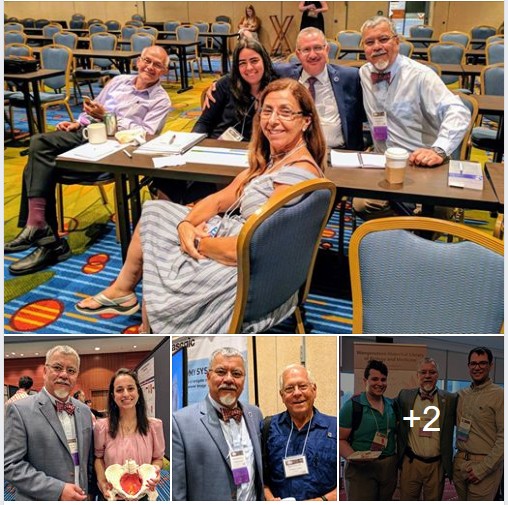
Second day of the meeting, by now I have met most all my old friends from the AACA, and I have started making some new ones… I really like this meeting.
The meeting started with the poster session where I am a judge. I made it a point to look at all the posters yesterday and the quality of the presentations is impressive. I am humbled to have to judge so much talent and feel that many deserve the award for the best poster presentation.
The platform sessions for the day were dedicated to the Upper Limb and Education.
There was a special session dedicated to the topic “The Legal and Ethic Consideration of Being the Guardian of the Gift”. This session dealt with the legal and ethical implications of curating and keeping old collections of fetal tissue, osteology, teratology, and anatomical specimens.
I also attended the Clinical Anatomy Terminology Committee meeting… it was fun. We formed groups and tried to make anatomical definitions according to new standards being developed by the AACA.
The day ended with a social event (food and drinks) where we were treated to samples of books from the Wangensteen library (NO TOUCHING) and medical devices from the Bakken museum. What a day!!!
More nice stuff tomorrow!!!
- Details
2017 AACA Meeting – Tuesday, July 18.
This is the 2017 Meeting of the American Association of Clinical Anatomists in Minneapolis, MN. This 34th meeting of the association, gets together over 300 clinical anatomists, anatomists, physicians, and students from all over the world.
The meeting started with the official welcome by the president of the AACA, Neil S. Norton, Ph. D., and the welcome by our local Minnesota host Tucker W. LeBien, Ph.D.
Unfortunately, our Honored Member James D. Collins, M.D., is sick and could not attend. We all wish him well.
The rest of the day was spent in poster sessions, the Tech Fair, and a reception where new AACA members can meet our mentors and possibly connect throughout their careers. The AACA aims to help its members through these activities.
We also had time to visit the exhibit hall where our sponsors can present their products. We sincerely thank them for their contribution.
One of the presentations that caught my attention was the use of augmented reality in anatomy, where you can see an anatomical structure floating in the air superimposed on the environment. 3D anatomical resources were also presented by the exhibitors.
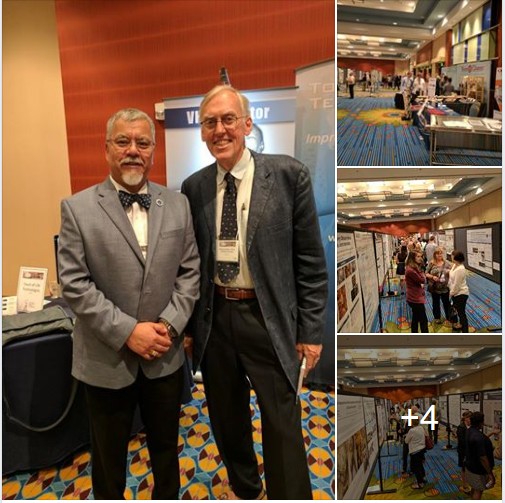
One of the highlights of my day was to meet again with Victor M. Spitzer, Ph.D., (Honored Member AACA 2014) and talk about meeting in Colorado at his lab, and the incredible revolution in anatomy that he started with The Visual Human Project. I invited him to become a contributor to our blog…. Hope he accepts!
The day ended with some of the attendees to the meeting going to see a New York Yankees vs, the Minnesota Twins baseball game…. I stayed. Unfortunately for our hosts the NYY won 6-3.
More nice stuff tomorrow!!!
- Details
2017 AACA Meeting – Monday, July 17.
This is the 2017 Meeting of the American Association of Clinical Anatomists in Minneapolis, MN. This 34th meeting of the association, gets together over 300 clinical anatomists, anatomists, physicians, and students from all over the world.
We started with a judge’s meeting. I will be one of many judges that will evaluate the many posters presented by mostly new AACA members and students sponsored by an AACA member. This is a very important activity, as the winner will be presented with an award. Each poster presenter will explain their scientific research and answer questions from the judges.
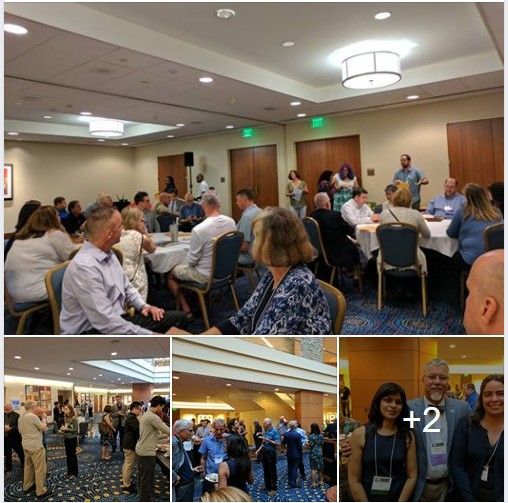
After the judge’s meeting, it is time for the inaugural reception. This is the time to meet with old friends and colleagues as well as an opportunity to welcome first time attendees and new AACA members. Luckily, they are easily identifiable by a green badge.
I am very lucky to be here, and looking forward to tomorrow with the inaugural session, the tech fairs, posters sessions, and platform session on the torso.
The following post and pictures will take you to the Facebook page of Clinical Anatomy Associates, Inc.
- Details
This is the first time I embed a Facebook article from https://www.facebook.com/CAAInc.
During this week, I will be attending the 2017 Meeting of the American Association of Clinical Anatomists in Minneapolis, MN. This 34th meeting of the association, gets together over 300 clinical anatomists, anatomists, physicians, and students from all over the world.
I will try to post pictures, and excerpts from some of the lectures, presentations and posters. After the meeting, there will be a postgraduate course which I will also attend.
The meeting will be held at the Minneapolis Marriott City Center Convention Center and is hosted by the University of Minnesota Medical School.
So, let’s start with travel! I flew N21315 to Minneapolis. The flight was IFR, uneventful, at 12,000 ft. (with oxygen support) and landed at KSTP (St. Paul Downtown airport). I decided to post some pictures of the flight and the airplane.
Now I am getting ready for the judge’s meeting and then the reception. I will be posting some pictures tomorrow!