


This article is part of the series "A Moment in History" where we honor those who have contributed to the growth of medical knowledge in the areas of anatomy, medicine, surgery, and medical research.
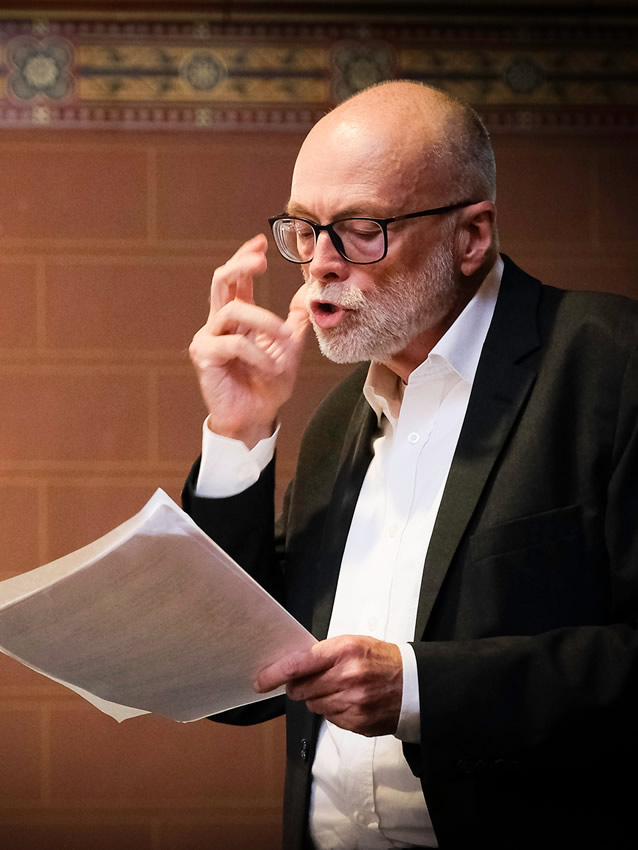
Theo Dirix, Author and Taphophile
It is a truism that commemorations generate more attention for those being celebrated: since the quincentenary of 2014, the bibliography of the Flemish anatomist Andreas Vesalius (1514-1564) exceeds 3000 entries, and counting (1). Has the moment also come when hoaxes in his biography, some that were refuted over fifty or a hundred years ago, finally cease to circulate? (2) The Quest for his Lost Grave is entering a second crucial phase, but will we ever find his remains and learn the cause of his death?
There is a consensus of opinion that his early work "De Humani Corporis Fabrica Libri Septem" marks the transition to empiric research. His academic career and his advancement to the position of family physician at the court of Charles V, Emperor of the Holy Roman Empire, and at that of his successor Philip II, are well documented. His last months, days and moments become clearer too but obstinate pranks survive. Indeed, there is absolutely no proof that he ever ran into the otherwise so well documented Inquisition (3).
Recently rediscovered letters are evidence that Vesalius left Spain as a pious pilgrim: a laissez-passer by Philip II, notes from the Spanish Embassy in Venice and even the letter of thanks written by the Custodian of the Holy Places in Jerusalem, which Vesalius was to hand over to Philip II (4) The latter unequivocally refutes the other prank that a shipwreck during his return was the cause of his death.
In the running up to the quincentenary, medical artist, artisan and curator, Pascale Pollier has launched a romantic quest for his grave. Keen to make his facial reconstruction, she went looking for his cranium. When the Embassy of Belgium in Athens incorporated her project in its public diplomacy, the Quest had become cross-disciplinary.
First some contradictions about his final resting place had to be cleared up. Prominent Vesalius biographers, Omer Steeno, Maurits Biesbrouck and Theodoor Goddeeris have provided the research that convincingly points to the catholic church of Santa Maria delle Grazie in Zakynthos. Unfortunately the church, constructed in 1488, disappeared under the rubble of a major earthquake in 1953. The trio also documented the fact that several eyewitnesses had visited his sepulchre and copied the epitaph, Christoph Fürer von Haimendorf being the first in August 1565. In May 1566 Reiner Solenander quotes a merchant from Nuremberg who had been travelling with Vesalius. Is he the goldsmith or jeweller, mentioned in other literature? The grave was also seen in 1586 by Jean Zuallart and Filippo Pigafetta. As early as 1574 Johannes Sambucus states that Vesalius was buried in Zakynthos and in 1603 he added the name of the church: “D.[omus] Mariae” (5).
Once the spot had been defined, the research team, now calling itself Vesalius Continuum (6), turned to archaeologists: Prof. Jan Driessen, Université Catholique de Louvain (UCL) and Director of the Belgian School in Athens, EBSA, and Apostolos Sarris, Deputy Director of the Institute for Mediterranean Studies - Foundation for Research and Technology, Hellas (IMS-FORTH).
In 2014, Dr. Sylviane Déderix (UCL/IMS-FORTH) checked the presumed location of the church through the spatial analysis of a Geographical Information System (GIS). Her comparison of historical maps with modern cartographic data shows that the ruins are to be found on the northwest corner of the intersection of Kolyva Street and Kolokotroni Street, partly below the asphalt and partly under private property.
During construction works on that exact spot, funerary slabs have already been excavated, and provide yet further proof that there was a cemetery at this location. A geophysical approach to the further examination of anomalies under the surface is imperative. With the necessary official permission and funding, a team of researchers could collect and process data through non-destructive methods such as ground penetrating radar (GPR) and electrical resistivity tomography (ERT). If this was to prove conclusive, a third phase of small-scale excavations in search of remains may follow.
One of the unearthed funerary slabs dates from the sixteenth century: it belonged to a certain Bevilaqua who was given the position of Public Physician in 1593. Vesalius is not the only traveller who has been buried there. Other high profile guests may be Bishop Balthassar, Maria Remondini (1698-1777) and the French philhellene and author of acclaimed travel books, Pierre-Augustin Guys who was buried in the church on 27 September 1799.
It is obvious that if human remains were exhumed genetic identification is a must. Vesalius Continuum turned to Dr. Maarten Larmuseau of the Laboratory of Forensic Genetics and Molecular Archaeology of the KULeuven. He is a Specialist in the genetic identification of old-DNA and will compare potential mitochondrial DNA and/or Y-chromosomes of remains in the Santa Maria delle Grazie with those of living relatives who are in direct maternal or pattern line. In the case of Vesalius, his direct descendants, and those of his wife, cannot contribute to the identification, but maternal relatives of his mother, Elisabeth Crabbé, can.
This romantic quest for the lost bones of the father of modern anatomy, which has turned into a cross-disciplinary search, ostensibly does not end in death, but rather in curiosity, understanding, beauty, love, passion, life (7).
You too can join in the adventure by contributing to the crowd funding campaign to sponsor the next step in the archaeological campaign: www.gofundme.com/VesaliusContinuum
Note: This article was originally published in Theo Dirix's blog. Published here with his permission. Theo Dirix is a Vesaliana contributor to Medical Terminology Daily.
Sources:
1. Maurits Biesbrouck upgraded Dr. Harvey Cushing’s list of publications on Vesalius to more than 3000 records: http://www.andreasvesalius.be , accessed 8 January 2017.
2. DIRIX, Theo: Andreas Vesalius and his hoaxes, con variazioni, in: Vesalius, Journal of the International Society of the History of Medicine, Vol. XXII, nr. 1, June 2016, Special Issue, Proceedings of A Tribute to Andreas Vesalius, Padua, Italy - December 2015, pp. 103 - 111.
3. The source is post-mortem gossip spread in January 1565 by the French diplomat, Hubertus Languetus, in a note of 24 lines opening with: “rumour has it”. See: BIESBROUCK, Maurits, Theodoor GODDEERIS, Omer STEENO. ‘Post Mortem’ Andreae Vesalii (1514-1564), Deel I. De laatste reis van Andreas Vesalius en de omstandigheden van zijn dood), in: A.Vesalius, nr. 3 september 2015, Alfagen, Leuven, pp 154-161.
4. In total four letters have been discovered by José Baron Fernandez in the archives of Simancas, described and published since 1965, brought back to light by Steeno, Biesbrouck and Goddeeris.
5. Primary sources about the epitaphs are shown in:https://vimeo.com/album/4256560/video/190461188, accessed 15/01/2017
6. Within the initial ad hoc organising committee of the Vesalius Continuum Conference in September 2014 in Zakynthos, medical artist Pascale Pollier and the author, then Consul at the Embassy of Belgium in Athens, formed the Search team.
7. Closing lines of the “Conclusion, to be continued” in: DIRIX, Theo, In Search of Andreas Vesalius, The Quest for the Lost Grave, LannooCampus, Leuven, 2014, p.140.