
Medical Terminology Daily (MTD) is a blog sponsored by Clinical Anatomy Associates, Inc. as a service to the medical community. We post anatomical, medical or surgical terms, their meaning and usage, as well as biographical notes on anatomists, surgeons, and researchers through the ages. Be warned that some of the images used depict human anatomical specimens.
You are welcome to submit questions and suggestions using our "Contact Us" form. The information on this blog follows the terms on our "Privacy and Security Statement" and cannot be construed as medical guidance or instructions for treatment.
We have 428 guests online
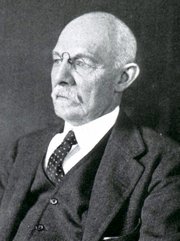
William S. Halsted, MD
(1852 – 1922)
American anatomist, teacher, and surgeon, William Stewart Halsted was born in New York City, USA to a wealthy family of English origin. His father was involved in charitable work and Governor and trustee to a city hospital. Not a brilliant student initially, Halsted took an undergraduate in Liberal Arts in Yale, CT., after which he entered the Medical College of Physicians at the Columbia College, where he excelled.
As a second-year medical student Halsted applied and obtained a position in surgery at a local hospital. In here he learned about Lister’s antiseptic technique and became an adamant proponent of it to reduce infection. In 1877 Halsted obtained his MD. After a short time as House Physician at the New York Hospital, Halsted traveled to Europe to further his education studying for two years at the Universities of Vienna, Leipzig, and W?rzburg.
Besides being at the forefront of surgical and antiseptic techniques (introducing the use of rubber gloves in surgery), Halsted was extremely concerned with the way medical students were taught in the US. He pioneered bedside clinical round discussions with the medical students after two years of basic sciences studies. Halsted developed the idea of a patient chart; he also developed the residency program for medical students in use today.
Halsted is probably the most influential researcher and surgeon at the turn of the century. He dedicated time to the study of intestinal anastomoses and the use of silk as a suture material. His experimental work in 1887 proved that the inclusion of the submucosa layer in an anastomosis was mandatory, as well that a single layered anastomosis was enough to attain closure. Perhaps Halsted’s most important contribution was the application and use of the scientific method to surgical questions. Halsted’s principles, also known as "Halsted's Rules of Surgery", set the standards used today in surgical suturing and surgical stapling.
He also pioneered the development and surgical techniques for radical mastectomy as a treatment for breast cancer.
As a side effect of this studied in anesthesia and the use of cocaine for anesthesia, Halsted became addicted to this substance, a problem that followed him through the years. Without impairing his capacity as a researcher and a surgeon, Halsted eventually recovered. He died in Baltimore in 1922 as a complication to surgery.
Sources:
1. Dubay, A. D., & Franz, G. M. (2003). Acute Wound Healing: The Biology of Acute Wound Failure. Surg Clin NA, 83, 463-481.
2. Halsted, W. S. (1887). Circular Suture of the Intestine - An Experimental Study. Am J Med Sci, 436-461.
3. “William Stewart Halsted: his life and contributions to surgery” Osborne, P. Lancet Oncol 2007; 8: 256–65
4. “William Stewart Halsted: Surgical pioneer” Burress, P Endoc Today (2010), 8: (2) 22
5. “William Stewart Halsted (1852–1922) Neurological stamp” Haas, LF J Neurol Neurosurg Psych 2000;69:641
Original image courtesy of "Images from the History of Medicine" at www.nih.gov

"Clinical Anatomy Associates, Inc., and the contributors of "Medical Terminology Daily" wish to thank all individuals who donate their bodies and tissues for the advancement of education and research”.
Click here for more information


- Details
Click for a larger image
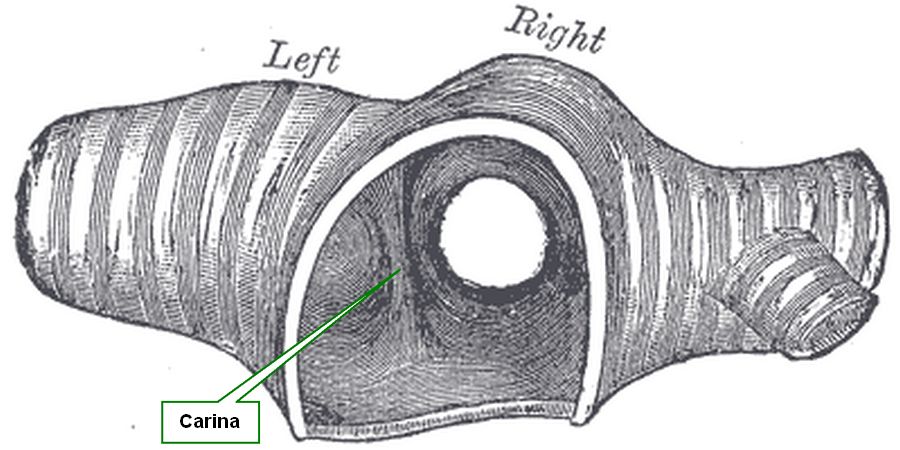
The word [carina] is Greek, from [καρίνα] meaning “keel”, as in the keel of a boat.
The carina is an anteroposterior elevation found at the point of bifurcation of the trachea into the left and right bronchi. When looking at it from the superior aspect, it does look as if you were looking at the keel of boat from the bottom up, and this is the image that endoscopists see when looking at this area. See the accompanying image.
The bifurcation of the trachea and the carina are usually found at the level of the sternal angle (of Louis), which is about the level of the superior border of the 5th thoracic vertebra.
Since the right bronchus is slightly wider than the left bronchus, the carina is usually slightly displaced to the left of the midline.
The lymph nodes that surround the area of the bifurcation of the trachea, and inferior to the bifurcation are called the carinal nodes.
- Details
Although not a medical term per se, we use the word [vernacular] constantly on this blog to refer to terms used commonly or colloquially by non-health care professionals.
Merriam-Webster’s definitions of [vernacular] are multiple, all pointing to common usage by a group:
• of, relating to, or using the language of ordinary speech rather than formal writing
• of, or relating to the common style of a particular time, place, or group
• using a language or dialect native to a region or country rather than a literary, cultured, or foreign language
• of, relating to, or being a nonstandard language or dialect of a place, region, or country
• of, relating to, or being the normal spoken form of a language
• applied to a plant or animal in the common native speech as distinguished from the Latin nomenclature of scientific classification
This last definition is the one that applies mostly to what we mean in this blog. While we may use the anatomical term “rectus abdominis” , most people would say “six-pack” – which is wrong on two aspects: it is vernacular, and it is not a “six pack”, if you count them, you will see that a well-developed rectus abdominis has eight bellies, four on each side, making it really an “eight pack”!
Another one would be the vernacular term "pinky" to refer to the fifth digit of the hand. Yet another one would be the use of the vernacular term “stomach” to refer to the abdomen, that is one of my pet peeves!
- Details
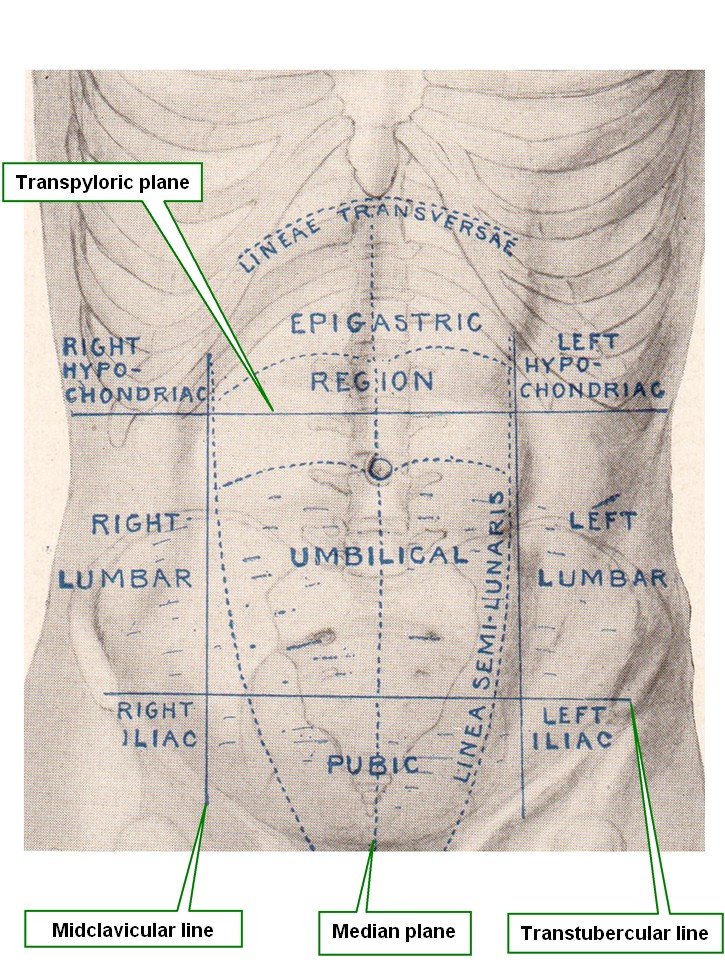
Abdominal regions
UPDATED: The word [hypochondriac] is formed by the prefix [hypo-], meaning "below", the root term [-chondr-], meaning "cartilage", and the adjectival suffix [-iac], meaning "pertaining to". A literal translation would be "pertaining to (the area) below the cartilage"; this does nothing to explain what we understand as a "hypochondriac" patient.
The word [hypochondrium], was first used by Hippocrates of Cos (460 BC - 370 BC) to denote the anterior bilateral areas below the lower costal cartilages of the thorax, what we known today as two of the abdominal regions, the hypochondriac regions.
These two areas contain on the right, the liver and gallbladder, and on the left, the spleen, part of the stomach, and the left flexure of the colon. Because of the visceral sensations referred by some patients in these areas without any apparent problems, these symptoms started to be called "hypochondriac symptoms". It did not take much time to refer to a patient that refers pathological symptoms without being sick as an "hypochondriac". The first one to actually use this term in a publication was Robert Whytt (1714 - 1766), a Scottish physician.
- Details
This article is part of the series "A Moment in History" where we honor those who have contributed to the growth of medical knowledge in the areas of anatomy, medicine, surgery, and medical research.
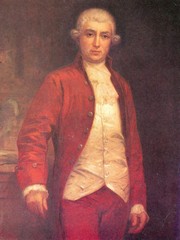
Don Antonio de Gimbernat i Arbos
UPDATED: Don Antonio de Gimbernat y Arbós (1734-1816). Spanish anatomist and surgeon. His complete name was Don Manuel Luis Antonio de Gimbernat y Arbós. He was born to a farmer’s family in 1734 in Cambrils (Tarragona), in what today is Cataluña. Gimbernat studied Latin and Philosophy at the University of Cervera, continuing his studies at the School of Surgery in Cádiz, where he graduated in 1762.
Gimbernat joined the Spanish Navy, but because of this capabilities, in 1765 he was offered the position of Anatomy Professor at the Royal School of Surgery in Barcelona. In 1768 he made an anatomical discovery that would render him immortal: he demonstrated the presence of the lacunar ligament. Furthermore he applied his knowledge of this ligament to improve on the surgical technique to reduce a strangulated femoral hernia. Gimbernat also discovered the lymph node found deep in the femoral ring (later to be known as Cloquet’s or Rosenmueller’s node)
In 1774 Gimbernat traveled through Europe to learn the latest surgical techniques. This trip was sponsored by King Carlos III. During his stay in London Gimbernat studied with John Hunter (1728 – 1793). In an attitude not common for a student at the time, at the end of one of Hunter's anatomical lectures on hernia, Gimbernat asked to go to the cadaver and demonstrate his findings. With approval of the teacher, he demonstrated for Hunter the lacunar ligament as well as his strangulated femoral hernia technique. Hunter watched the demonstration and at the end of it he just said "You are correct, sir".
Hunter was so impressed that from that day on he referred to the lacunar ligament as “Gimbernat’s ligament" and adopted his surgical technique. Gimbernat also showed Hunter his studies and technique to repair diaphragmatic hernias.
Manuel Gimbernat participated in the creation of the Spanish Royal School of Surgery, became a professor of surgery and orthopedics, and in 1789 he was named First Royal Surgeon and president of all the surgical schools in Spain.
In 1793, Gimbernat published his “ Nuevo Método de Operar en la Hernia Crural” dedicated to King Charles IV, which was translated as “A New Method of Operating for the Femoral Hernia”, into English in 1795.
In 1803 the Spanish king Carlos IV commissioned Don Francisco Javier de Balmis i Berenguer (1753 – 1819), a Spanish physician, to find a solution to the smallpox problem in the Spanish colonies in South America. While planning what was later to be known as the “Royal Philanthropic Vaccine Expedition” Balmis received critical contributions from Don Manuel Gimbernat.
All of his titles and positions were removed by King Fernando VII because Gimbernat was a supporter of Napoleon during his invasion of Spain in 1808. Sick, poor, blind, and with ailing mental faculties, Don Manuel Gimbernat died in Madrid on November 17, 1816.
Gimbernat was also a pioneer in ophthalmology, vascular surgery and urology. As for his incredible anatomical dissection capabilities, Gimbernat often said “mi autor más favorito es el cadaver humano" (my favorite author is the human body”
Personal note: My thanks to Dr. José Luis Bueno-López for his correction of the name of Gimbernat: "Although don Antonio de Gimbernat y Arbós was born in a town in Catalonia, Spain, he never wrote his name nor his contemporaries did, with the particle 'i' between his two family names (in the manner of the Catalan language) but with particle 'y' in the way of the Spanish language". There are many articles where Gimbernat's last name is written "Gimbernat i Arbos" (see link #3 on the Source section) which according to Dr. Bueno-López is incorrect. To read the article co-authored by Dr. Bueno-López on Gimbernat (#6 in our Sources section) click here.
Sources:
1. “Manuel Antonio de Gimbernat y Arbós. 1734-1816” Trauma (2012) 23: (1)
2. ” Gimbernat y Arbós, Antonio de (1734-1816) Loukas M et al World J Surg 2007; 31: 855-7
3. “Epónimos médicos: Ligamento de Gimbernat” Febrer JLF 1999 (Link)
4. “Antonio de Gimbernat (1734- 1816). Anatomist and surgeon” Puig-LaCalle J, Mart?-Pujol R. Arch Surg 1995; 130: 1017- 20
5. “Antonio de Gimbernat, 1734-1816” Matheson NM. Proc R Soc Med 1949; 42: 407-10.
6. "Antonio Gimbernat y Arbós: An Anatomist-surgeon of the Enlightenment (In the 220th Anniversary of his ‘‘A New Method of Operating the Crural Hernia’" Arraez-Aybar LA, Bueno-Lopez JL. Clin Anat (2013) 26:800–809
- Details

Click for a larger image
The [subarachnoid space] is the region or interval found between the deeply situated pia mater and the more superficial arachnoid mater. Extending between these two layers there is a fine meshwork or trabeculae of connective tissue strand. Also, between these two layers we find the CSF or cerebrospinal fluid. The subarachnoid space extends all around the brain and the spinal cord.
Where these two layers are in almost direct contact or apposition, the subarachnoid space is small, but there are areas deep in the sulci of the brain, where there can be slightly larger spaces. In fact, there are specific areas of the brain where the subarachnoid space is large enough (with consequent larger accumulations of CSF) that these areas are know as subarachnoid cisterns.
At the level of the posterior and lateral aspects of the medulla oblongata the subarachnoid space has communications with the internal cavities of the brain known as the ventricular system. The cerebrospinal fluid is produced deep within the ventricular system in a series of structures known as the choroid plexuses.
- Details
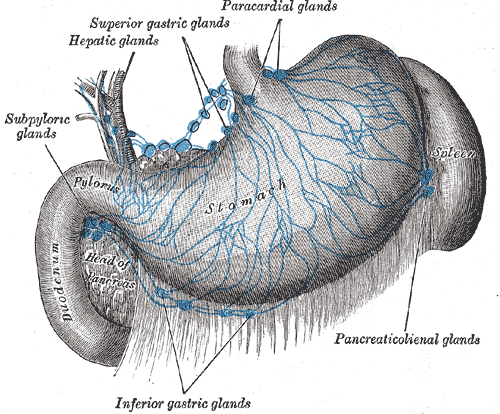
Lymphatics of the stomach
UPDATED: The Latin word [viscus] refers to an "internal organ". A better definition is that a [viscus] is a "single internal organ contained in a body cavity". Since there are three body cavities: craniospinal, thoracic, and abdominopelvic, each one of the organs in these cavities can be called a [viscus].
The plural form of [viscus] is [viscera]. It is a common mistake to use the plural form instead of the singular form when referring to a viscus. The sentence "the stomach is an abdominal viscera" is wrong. The correct sentence would be "the stomach is an abdominal viscus".
The adjective form [visceral] means "related to", or "pertaining to" a viscus or viscera.
The term [visceral] is also used to denote membranes that are related to a viscus. The [visceral] peritoneum is the portion of the peritoneal membrane that is found away from the abdominal wall and in relation to a viscus or viscera.
Original image courtesy of bartleby.com