
Medical Terminology Daily (MTD) is a blog sponsored by Clinical Anatomy Associates, Inc. as a service to the medical community. We post anatomical, medical or surgical terms, their meaning and usage, as well as biographical notes on anatomists, surgeons, and researchers through the ages. Be warned that some of the images used depict human anatomical specimens.
You are welcome to submit questions and suggestions using our "Contact Us" form. The information on this blog follows the terms on our "Privacy and Security Statement" and cannot be construed as medical guidance or instructions for treatment.
We have 2011 guests online
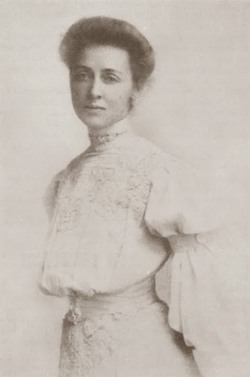
Marcia Crocker Noyes
(1869 – 1946)
Further to my comment on old books and research that started with an interesting bookplate (Ex-Libris). I continued my research and found that the person in charge of the Osler library bookplate was a fascinating individual that today maybe a ghost in the MedChi library and building in Baltimore... This is certainly an article that can be called "A Moment in History"
Marcia Crocker Noyes was the librarian at The Maryland State Medical Society from 1896 to 1946 and was a founding member of the Medical Library Association.[1][2][3]
Sir William Osler, MD. a famous Johns Hopkins surgeon was a noted bibliophile and had a large personal collection of books on various topics. When he became the President of MedChi in 1896, he was dismayed at the condition of the library and knew that with the right person and some stewardship, it could become a significant collection. Sir William asked his friend, Dr. Bernard Steiner, a physician and President of the Enoch Pratt Free Library in Baltimore for suggestions of a librarian, and Dr. Steiner recommended Marcia Crocker Noyes. A native of New York, and a graduate of Hunter College, Marcia had moved to Baltimore for a lengthy visit with her sister, and took a “temporary” position at the Pratt Library, which turned into three years. Although she had no medical experience or background, she was enthusiastic, and most importantly, she was willing to move into the apartment provided for the librarian, who needed to be available 24 hours a day.
The image in this article is Ms. Noyes on her first year on the job. Marcia developed a book classification system for medical books, based on the Index Medicus, and called it the Classification for Medical Literature. The system uses the alphabet with capital letters for the major divisions of medicine and lower-case ones for the sub-sections. The system was used for many years, but it's now dated and the Faculty's original shelving scheme was never changed. The card catalogs still reflect her classification and many of the cards are written in Marcia's back-slanting handwriting.
Marcia knew enough to ask the Faculty's members about medical questions, terminology and literature. She gradually won over the predominantly male membership and they became her greatest allies; Sir William at the start, and then for nearly 40 years, Dr. John Ruhräh, a wealthy pediatrician with no immediate family of his own. She made a point of attending almost every Faculty function, and in 1904, under guidelines from the American Medical Association, Marcia was made the Faculty Secretary. For much of her first 10 years, she was the Faculty's only full-time employee, only being assisted by Mr. Caution, the Faculty's janitor. Later in life Marcia would say that she hired him because of his name!
Within ten years, the library had outgrown its space, and plans, spearheaded by Marcia and Sir William before his move to Oxford, were made to build a headquarters building, mainly to house the library's growing collection of medical books and journals.
Marcia was instrumental in the design and building of the new headquarters. She travelled to Philadelphia, New York and Boston to look at their medical society buildings, and eventually, the Philadelphia architectural firm, Ellicott & Emmart was selected to design and build the new Faculty building. Every detail of the building held her imprimatur, from the graceful staircase, to the light-filled reading room, and all of the myriad details of the millwork, marble tesserae, and most of all, the four-story cast iron stacks. She was on-site, climbing up unfinished staircases, checking out the progress of the building, which was built in less than one year at a cost of $90,000.
Among the features of the new building was a fourth-floor apartment for her. She referred to it as the "first penthouse in Baltimore" and it had a garden and rooftop terrace. The library collection eventually grew to more than 65,000 volumes from medical and specialty societies around the world. Journals were traded back and forth, and physicians eagerly anticipated the arrival of each new issue. At the same time, Marcia was involved in the Medical Library Association as one of eight founding members. The MLA promotes medical libraries and the exchange of information. One of the earliest mandates of the MLA was the Exchange, a distribution and trade service for those who had duplicates or little-used books in their collections. Initially, the Exchange was run out of the Philadelphia medical society, but in 1900 it was moved to Baltimore and Marcia oversaw it. Several hundred periodicals and journals were received and sent each month, a huge amount of work for a tiny staff. In 1904, the Faculty had run out of room to manage the Exchange, so it was moved to the Medical Society of the Kings County (Brooklyn). But without Marcia's excellent administrative skills, it floundered and in 1908, the MLA asked Marcia to take charge once again.
In 1909, when the new Faculty building opened, there was enough room to run the Exchange and with the help of MLA Treasurer, noted bibliophile and close friend, Dr. John Ruhräh, it once again became successful. Additionally, Marcia and Dr. Ruhräh combined forces to revive the MLA's bulletin, which had all but ceased publication in 1908, taking the Exchange with it. This duo maintained editorial control from 1911 until 1926. In 1934, around the time of Dr. Ruhräh's death, Marcia became the first “unmedicated” professional to head the MLA. During her tenure, the MLA incorporated, the first seal was adopted, and the annual meeting was held in Baltimore. Marcia wanted to write the history of the MLA once she retired from full-time work at the Faculty, but her health was beginning to fail. She had back problems and had suffered a serious burn on her shoulder as a young woman, possibly from her time running a summer camp, Camp Seyon, for young ladies in the Adirondack Mountains. In 1946, a celebration was planned to honor Marcia's 50 years at the Faculty. But she was adamant that the physicians wait until November, the actual date of her 50 years. However, they knew she was gravely ill, and might not make it until then, so a huge party was held in April. More than 250 physicians attended the celebration, but the ones she was closest to in the early years, were long gone. She was presented with a suitcase, a sum of money to use for travelling, and her favorite painting of Dr. John Philip Smith, a founder of the Medical College in Winchester, Virginia. It was painted by Edward Caledon Smith, a Virginia painter who had been a student of the painter Thomas Sully.[4] She adored this painting and vowed, jokingly, to take it with her wherever she went.
The painting was not to stay with her for very long, for she died in November 1946, and left it to the Faculty in her will. Her funeral was held in the Faculty's Osler Hall, named for her dear friend. More than 60 physicians served as her pallbearers, and she was buried at Baltimore's Green Mount Cemetery. In 1948, the MLA decided to establish an award in the name of Marcia Crocker Noyes. It was for outstanding achievement in medical library field and was to be awarded every two years, or when a truly worthy candidate was submitted. In 2014, the Faculty began giving a bouquet of flowers to the winner of the award in Marcia's name, and in honor of her work. Much evidence exists for this tradition, as we know that the physicians, especially Drs. Osler and Ruhräh, frequently gave her bouquets of flowers. Marcia also cultivated flower gardens at the Faculty and decorated the rooms with her work.
Today, the MedChi building is open for tours and if the rumors are to be believed Ms. Marcia Crocker Noyes is still at work in her beloved library as the "resident ghost" [1][5]
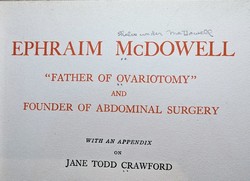
NOTE: This article has been modified from the original Wikipedia article on Marcia Crocker Noyes. The article itself is well-written with interesting images of the subject. I would encourage you to visit it. The second insert is from book 00736 in my personal library and shows in pencil, the incredibly small handwriting of Marsha C. Noyes.
Sources:
1. "Marcia, Marcia, Marcia" MedChi Archives blog.
2. "Marcia C. Noyes, Medical Librarian" (PDF). Bulletin of the Medical Library Association. 35 (1): 108–109. 1947. PMC 194645
3. Smith, Bernie Todd (1974). "Marcia Crocker Noyes, Medical Librarian: The Shaping of a Career" (PDF). Bulletin of the Medical Library Association. 62 (3): 314–324. PMC 198800Freely accessible. PMID 4619344.
4. Edward Caledon BRUCE (1825-1901)"
5. Behind the scenes tour MedChiBuilding
"Clinical Anatomy Associates, Inc., and the contributors of "Medical Terminology Daily" wish to thank all individuals who donate their bodies and tissues for the advancement of education and research”.
Click here for more information


- Details

Click for a larger image
The term [intervertebral] means "between vertebrae", and [foramen] means "opening". The intervertebral foramina are bilateral openings between adjacent vertebrae. Each intervertebral foramen is found between adjacent pedicles ("P" in the large image), bound by the inferior vertebral notch and the superior vertebral notch of adjacent pedicles.
Although the term [intervertebral foramen] has been used for a long time, the concept has evolved to a more modern "intervertebral canal" or as some clinicians call it, the "lateral canal". The reason for this is that the intervertebral foramen is actually a tunnel whose length is determined by the width of the pedicles. This intervertebral canal has marked differences between the lateral, middle, and medial structures contained in the intervertebral canal.
Some of these structure are nerve roots, the dorsal root ganglion, the initial portion of the spinal nerve, dural sac, arteries, veins, recurrent nerves, fat, and a complex system of transforaminal and intraforaminal ligaments1. The structures contained in the intervertebral foramen can be compressed if the height of the intervertebral discs is compromised, or by a herniation of the intervertebral disc. The diameter of the intervertebral canal can also be reduced by bone and joint pathology.
If you hover over the image, the intervertebral foramen will be highlighted. For a larger version click on the image.
Images property of: CAA.Inc. Photographer: D.M. Klein
1 Thoracic and lumbar intraforaminal ligaments Akdemir, G.; J Neurosurg Spine 13:351-355, 2010
- Details
Click for a larger image
A cyst is a sac-like structure filled with fluid. One of the many types of cysts that can be present in the human body is a Nabothian cyst.
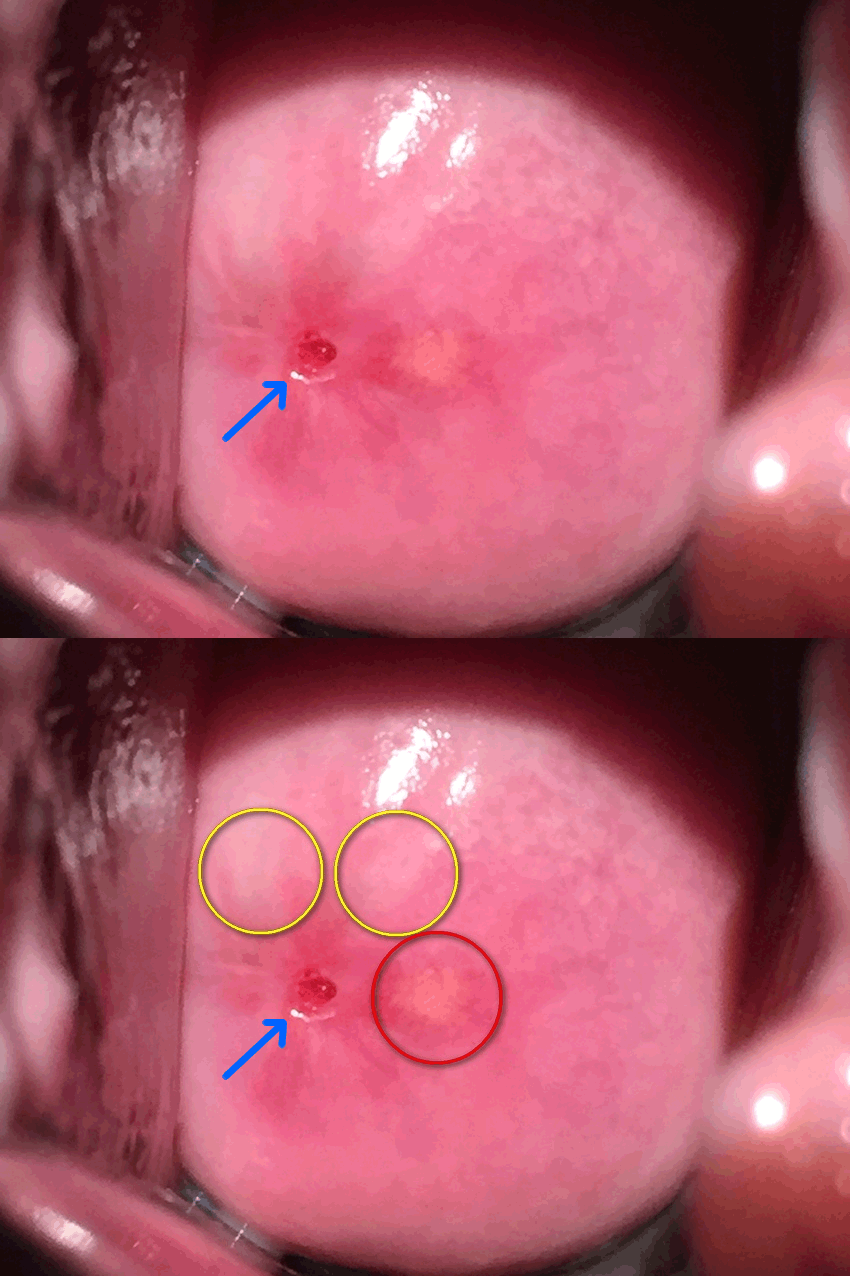
Nabothian cysts are found on the uterine cervix, and are caused by the clogging of the cervical glands, also referred to as the Nabothian glands. These small cysts are usually found in two types of presentations. The first are serous filled cysts, and are seen as clear fluid-filled sacs on the surface of the cervix. In the accompanying image, these are depicted with a yellow circle.
The second type of Nabothian cysts are sacs filled with a yellowish, more dense and mucous-like fluid on the surface of the cervix. In the accompanying image, there is only one of these cysts and is depicted with a red circle.
The presence of Nabothian cysts is quite normal, they are not dangerous and are not cancerous. When present and when large, they may impede a gynecological exam and obscure the cervical os, the entrance to the uterus through the cervical canal. In the image the cervical os is indicated by a blue arrow. A gynecologist may need to open and drain these cysts prior to performing a Pap smear (named after Dr. George Papanicolau).
Nabothian cysts are named after Dr. Martin Naboth (1675 - 1721), a German physician and anatomist. His main publication in 1707 was “De Sterilitate Mulierum” (On Sterility in Women). In this book he refers to small pearl-like transparent structures found in the uterine cervix. Believing that he had discovered the way women store eggs, he called these “ovarium novum” (new ovaries). His discovery was accepted by many and these structures came to be known as “Ovula Nabothii“. Today we know this is not true, but his name remains attached eponymically to these structures.
My personal thanks toDr. Sanford Osher and his patient who volunteered and provided the image for this article. Dr. Miranda
- Details
This prefix originates from the Greek word [περί] (per?) meaning “about” or “around”. In medical terminology we use it to mean “around”.
Some uses of the term are:
- Pericardium: The root term [-card-] means “heart”, while the suffix [-ium] means “layer” or “membrane”. The layer or membrane around the heart.
- Periodontal: The root term [-odont-] means “tooth”, while the adjectival suffix [-al] means “pertaining to”. Around a tooth.
- Perineurium: The root term [-neur-] means “nerve”, while the suffix [-ium] means “layer” or “membrane”. The layer or membrane around a nerve. Also known as the epineurium.
- Details
[UPDATED] These two terms are synonyms, but they have different etymology. [Stenosis] arises from the Greek [στενός] (stenos) meaning "narrow". Since the suffix [-osis] means "condition of", the word [stenosis] means a "condition of narrowing".
The synonym [stricture] arises from the Latin term [strictus] meaning "narrow", "restricted" or "constriction". Both terms refer to the narrowing of an anatomical structure, as in "coronary artery stenosis", or the "stenosis of an anastomosis".
A common mistake is to confuse [stenosis] and [stricture] with "blockage" or "obstruction". Although an stenotic vessel is partially obstructed, there is still flow and it is not a complete obstruction.
Sources:
1. "The Language of Medicine" John H. Dirckx Pub: Harper & Row 1976
2. "Medical Meanings" Haubrich, William S. Am Coll Phys Philadelphia 1997
3. "The origin of Medical Terms" Skinner, AH, 1970
Note: The links to Google Translate in these articles include an icon that will allow you to hear the Greek or Latin pronunciation of the word.
- Details
UPDATED: The root term [-gnos-] has origin in the Greek word [γνώση] (gn??si?) meaning "knowledge". Here are two terms that use this root in medical terminology:
- Diagnosis: the prefix [dia-] means "complete" or "total". The suffix [-(o)sis] means "condition" or "situation". The word means "a situation of complete knowledge", referring to the clear identification of a pathology that ails a patient.
- Prognosis: the prefix [-pro-] means "forward". The terms means "forward knowledge" and refers to the clinical pathway of a pathology and/or treatment.
- Details
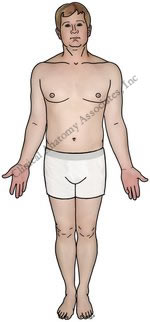
Anatomical position
The use of directions when working with the human body can be problematic, if not critical. When a surgeon indicates to his assistant to "cut towards the left", whose left is he referring to? the assistant's left? the anesthesiologist's left? the surgeon's left?. This is even life-threatening if we are talking about a pneumonectomy, a nephrectomy, or any surgical manipulation of a bilateral organ.
The situation is complicated by the position of the patient on the surgical table. If the patient is prone (face down) where is "down"? What if the patient is placed in a reverse Trendelenburg position? The examples of directional mistakes can go on and on, and they are in many cases cause for problems.
The need for specific directional terminology for the human body is critical. This is why physicians and anatomists refer to the human body as if the patient was in a standard position: the anatomical position (see image).
In the anatomical position the subject is standing, face forward, with the heels together and the palms of the hands facing forward. Have you ever wondered why it is called the "back" of your hand, although it is almost always facing forward or up?
If you hover your mouse over the image, you will see the midline or median plane.
Image property of:CAA.Inc.Artist:Victoria G. Ratcliffe