
Medical Terminology Daily (MTD) is a blog sponsored by Clinical Anatomy Associates, Inc. as a service to the medical community. We post anatomical, medical or surgical terms, their meaning and usage, as well as biographical notes on anatomists, surgeons, and researchers through the ages. Be warned that some of the images used depict human anatomical specimens.
You are welcome to submit questions and suggestions using our "Contact Us" form. The information on this blog follows the terms on our "Privacy and Security Statement" and cannot be construed as medical guidance or instructions for treatment.
We have 943 guests online
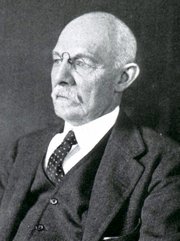
William S. Halsted, MD
(1852 – 1922)
American anatomist, teacher, and surgeon, William Stewart Halsted was born in New York City, USA to a wealthy family of English origin. His father was involved in charitable work and Governor and trustee to a city hospital. Not a brilliant student initially, Halsted took an undergraduate in Liberal Arts in Yale, CT., after which he entered the Medical College of Physicians at the Columbia College, where he excelled.
As a second-year medical student Halsted applied and obtained a position in surgery at a local hospital. In here he learned about Lister’s antiseptic technique and became an adamant proponent of it to reduce infection. In 1877 Halsted obtained his MD. After a short time as House Physician at the New York Hospital, Halsted traveled to Europe to further his education studying for two years at the Universities of Vienna, Leipzig, and W?rzburg.
Besides being at the forefront of surgical and antiseptic techniques (introducing the use of rubber gloves in surgery), Halsted was extremely concerned with the way medical students were taught in the US. He pioneered bedside clinical round discussions with the medical students after two years of basic sciences studies. Halsted developed the idea of a patient chart; he also developed the residency program for medical students in use today.
Halsted is probably the most influential researcher and surgeon at the turn of the century. He dedicated time to the study of intestinal anastomoses and the use of silk as a suture material. His experimental work in 1887 proved that the inclusion of the submucosa layer in an anastomosis was mandatory, as well that a single layered anastomosis was enough to attain closure. Perhaps Halsted’s most important contribution was the application and use of the scientific method to surgical questions. Halsted’s principles, also known as "Halsted's Rules of Surgery", set the standards used today in surgical suturing and surgical stapling.
He also pioneered the development and surgical techniques for radical mastectomy as a treatment for breast cancer.
As a side effect of this studied in anesthesia and the use of cocaine for anesthesia, Halsted became addicted to this substance, a problem that followed him through the years. Without impairing his capacity as a researcher and a surgeon, Halsted eventually recovered. He died in Baltimore in 1922 as a complication to surgery.
Sources:
1. Dubay, A. D., & Franz, G. M. (2003). Acute Wound Healing: The Biology of Acute Wound Failure. Surg Clin NA, 83, 463-481.
2. Halsted, W. S. (1887). Circular Suture of the Intestine - An Experimental Study. Am J Med Sci, 436-461.
3. “William Stewart Halsted: his life and contributions to surgery” Osborne, P. Lancet Oncol 2007; 8: 256–65
4. “William Stewart Halsted: Surgical pioneer” Burress, P Endoc Today (2010), 8: (2) 22
5. “William Stewart Halsted (1852–1922) Neurological stamp” Haas, LF J Neurol Neurosurg Psych 2000;69:641
Original image courtesy of "Images from the History of Medicine" at www.nih.gov

"Clinical Anatomy Associates, Inc., and the contributors of "Medical Terminology Daily" wish to thank all individuals who donate their bodies and tissues for the advancement of education and research”.
Click here for more information


- Details

Click for a larger image
The term [intervertebral] means "between vertebrae", and [foramen] means "opening". The intervertebral foramina are bilateral openings between adjacent vertebrae. Each intervertebral foramen is found between adjacent pedicles ("P" in the large image), bound by the inferior vertebral notch and the superior vertebral notch of adjacent pedicles.
Although the term [intervertebral foramen] has been used for a long time, the concept has evolved to a more modern "intervertebral canal" or as some clinicians call it, the "lateral canal". The reason for this is that the intervertebral foramen is actually a tunnel whose length is determined by the width of the pedicles. This intervertebral canal has marked differences between the lateral, middle, and medial structures contained in the intervertebral canal.
Some of these structure are nerve roots, the dorsal root ganglion, the initial portion of the spinal nerve, dural sac, arteries, veins, recurrent nerves, fat, and a complex system of transforaminal and intraforaminal ligaments1. The structures contained in the intervertebral foramen can be compressed if the height of the intervertebral discs is compromised, or by a herniation of the intervertebral disc. The diameter of the intervertebral canal can also be reduced by bone and joint pathology.
If you hover over the image, the intervertebral foramen will be highlighted. For a larger version click on the image.
Images property of: CAA.Inc. Photographer: D.M. Klein
1 Thoracic and lumbar intraforaminal ligaments Akdemir, G.; J Neurosurg Spine 13:351-355, 2010
- Details
Click for a larger image
A cyst is a sac-like structure filled with fluid. One of the many types of cysts that can be present in the human body is a Nabothian cyst.
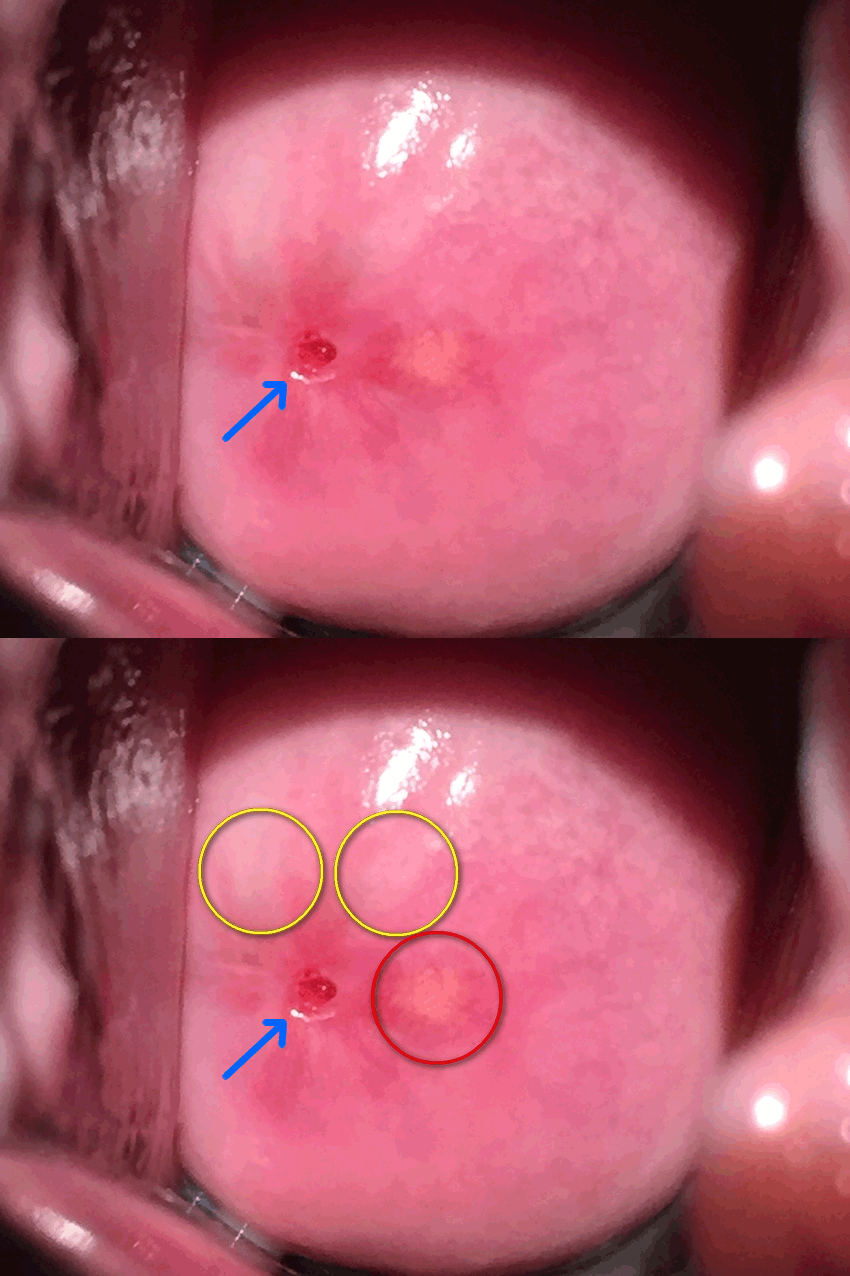
Nabothian cysts are found on the uterine cervix, and are caused by the clogging of the cervical glands, also referred to as the Nabothian glands. These small cysts are usually found in two types of presentations. The first are serous filled cysts, and are seen as clear fluid-filled sacs on the surface of the cervix. In the accompanying image, these are depicted with a yellow circle.
The second type of Nabothian cysts are sacs filled with a yellowish, more dense and mucous-like fluid on the surface of the cervix. In the accompanying image, there is only one of these cysts and is depicted with a red circle.
The presence of Nabothian cysts is quite normal, they are not dangerous and are not cancerous. When present and when large, they may impede a gynecological exam and obscure the cervical os, the entrance to the uterus through the cervical canal. In the image the cervical os is indicated by a blue arrow. A gynecologist may need to open and drain these cysts prior to performing a Pap smear (named after Dr. George Papanicolau).
Nabothian cysts are named after Dr. Martin Naboth (1675 - 1721), a German physician and anatomist. His main publication in 1707 was “De Sterilitate Mulierum” (On Sterility in Women). In this book he refers to small pearl-like transparent structures found in the uterine cervix. Believing that he had discovered the way women store eggs, he called these “ovarium novum” (new ovaries). His discovery was accepted by many and these structures came to be known as “Ovula Nabothii“. Today we know this is not true, but his name remains attached eponymically to these structures.
My personal thanks toDr. Sanford Osher and his patient who volunteered and provided the image for this article. Dr. Miranda
- Details
This prefix originates from the Greek word [περί] (per?) meaning “about” or “around”. In medical terminology we use it to mean “around”.
Some uses of the term are:
- Pericardium: The root term [-card-] means “heart”, while the suffix [-ium] means “layer” or “membrane”. The layer or membrane around the heart.
- Periodontal: The root term [-odont-] means “tooth”, while the adjectival suffix [-al] means “pertaining to”. Around a tooth.
- Perineurium: The root term [-neur-] means “nerve”, while the suffix [-ium] means “layer” or “membrane”. The layer or membrane around a nerve. Also known as the epineurium.
- Details
[UPDATED] These two terms are synonyms, but they have different etymology. [Stenosis] arises from the Greek [στενός] (stenos) meaning "narrow". Since the suffix [-osis] means "condition of", the word [stenosis] means a "condition of narrowing".
The synonym [stricture] arises from the Latin term [strictus] meaning "narrow", "restricted" or "constriction". Both terms refer to the narrowing of an anatomical structure, as in "coronary artery stenosis", or the "stenosis of an anastomosis".
A common mistake is to confuse [stenosis] and [stricture] with "blockage" or "obstruction". Although an stenotic vessel is partially obstructed, there is still flow and it is not a complete obstruction.
Sources:
1. "The Language of Medicine" John H. Dirckx Pub: Harper & Row 1976
2. "Medical Meanings" Haubrich, William S. Am Coll Phys Philadelphia 1997
3. "The origin of Medical Terms" Skinner, AH, 1970
Note: The links to Google Translate in these articles include an icon that will allow you to hear the Greek or Latin pronunciation of the word.
- Details
UPDATED: The root term [-gnos-] has origin in the Greek word [γνώση] (gn??si?) meaning "knowledge". Here are two terms that use this root in medical terminology:
- Diagnosis: the prefix [dia-] means "complete" or "total". The suffix [-(o)sis] means "condition" or "situation". The word means "a situation of complete knowledge", referring to the clear identification of a pathology that ails a patient.
- Prognosis: the prefix [-pro-] means "forward". The terms means "forward knowledge" and refers to the clinical pathway of a pathology and/or treatment.
- Details
Anatomical position
The use of directions when working with the human body can be problematic, if not critical. When a surgeon indicates to his assistant to "cut towards the left", whose left is he referring to? the assistant's left? the anesthesiologist's left? the surgeon's left?. This is even life-threatening if we are talking about a pneumonectomy, a nephrectomy, or any surgical manipulation of a bilateral organ.
The situation is complicated by the position of the patient on the surgical table. If the patient is prone (face down) where is "down"? What if the patient is placed in a reverse Trendelenburg position? The examples of directional mistakes can go on and on, and they are in many cases cause for problems.
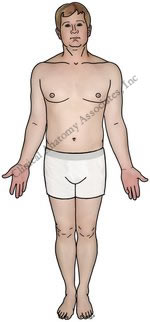
The need for specific directional terminology for the human body is critical. This is why physicians and anatomists refer to the human body as if the patient was in a standard position: the anatomical position (see image).
In the anatomical position the subject is standing, face forward, with the heels together and the palms of the hands facing forward. Have you ever wondered why it is called the "back" of your hand, although it is almost always facing forward or up?
If you hover your mouse over the image, you will see the midline or median plane.
Image property of:CAA.Inc.Artist:Victoria G. Ratcliffe