
Medical Terminology Daily (MTD) is a blog sponsored by Clinical Anatomy Associates, Inc. as a service to the medical community. We post anatomical, medical or surgical terms, their meaning and usage, as well as biographical notes on anatomists, surgeons, and researchers through the ages. Be warned that some of the images used depict human anatomical specimens.
You are welcome to submit questions and suggestions using our "Contact Us" form. The information on this blog follows the terms on our "Privacy and Security Statement" and cannot be construed as medical guidance or instructions for treatment.
We have 891 guests online
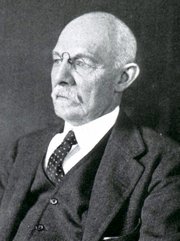
William S. Halsted, MD
(1852 – 1922)
American anatomist, teacher, and surgeon, William Stewart Halsted was born in New York City, USA to a wealthy family of English origin. His father was involved in charitable work and Governor and trustee to a city hospital. Not a brilliant student initially, Halsted took an undergraduate in Liberal Arts in Yale, CT., after which he entered the Medical College of Physicians at the Columbia College, where he excelled.
As a second-year medical student Halsted applied and obtained a position in surgery at a local hospital. In here he learned about Lister’s antiseptic technique and became an adamant proponent of it to reduce infection. In 1877 Halsted obtained his MD. After a short time as House Physician at the New York Hospital, Halsted traveled to Europe to further his education studying for two years at the Universities of Vienna, Leipzig, and W?rzburg.
Besides being at the forefront of surgical and antiseptic techniques (introducing the use of rubber gloves in surgery), Halsted was extremely concerned with the way medical students were taught in the US. He pioneered bedside clinical round discussions with the medical students after two years of basic sciences studies. Halsted developed the idea of a patient chart; he also developed the residency program for medical students in use today.
Halsted is probably the most influential researcher and surgeon at the turn of the century. He dedicated time to the study of intestinal anastomoses and the use of silk as a suture material. His experimental work in 1887 proved that the inclusion of the submucosa layer in an anastomosis was mandatory, as well that a single layered anastomosis was enough to attain closure. Perhaps Halsted’s most important contribution was the application and use of the scientific method to surgical questions. Halsted’s principles set the standards used today in surgical suturing and surgical stapling.
He also pioneered the development and surgical techniques for radical mastectomy as a treatment for breast cancer.
As a side effect of this studied in anesthesia and the use of cocaine for anesthesia, Halsted became addicted to this substance, a problem that followed him through the years. Without impairing his capacity as a researcher and a surgeon, Halsted eventually recovered. He died in Baltimore in 1922 as a complication to surgery.
Sources:
1. Dubay, A. D., & Franz, G. M. (2003). Acute Wound Healing: The Biology of Acute Wound Failure. Surg Clin NA, 83, 463-481.
2. Halsted, W. S. (1887). Circular Suture of the Intestine - An Experimental Study. Am J Med Sci, 436-461.
3. “William Stewart Halsted: his life and contributions to surgery” Osborne, P. Lancet Oncol 2007; 8: 256–65
4. “William Stewart Halsted: Surgical pioneer” Burress, P Endoc Today (2010), 8: (2) 22
5. “William Stewart Halsted (1852–1922) Neurological stamp” Haas, LF J Neurol Neurosurg Psych 2000;69:641
Original image courtesy of "Images from the History of Medicine" at www.nih.gov

"Clinical Anatomy Associates, Inc., and the contributors of "Medical Terminology Daily" wish to thank all individuals who donate their bodies and tissues for the advancement of education and research”.
Click here for more information


- Details
This article is part of the series "A Moment in History" where we honor those who have contributed to the growth of medical knowledge in the areas of anatomy, medicine, surgery, and medical research.

Click for a larger image
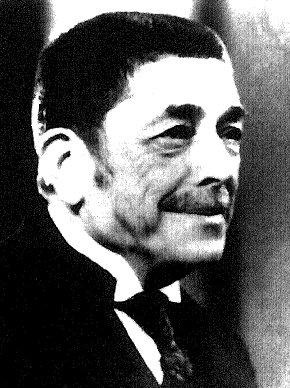
Dr. Húmer Hültl (1868 – 1940) Hungarian surgeon, Húmer Hültl was born in 1868 in Felsobanya. Hültl studied in Budapest, earning his medical degree in 1891, and after surgical training he started to work as a surgeon in 1893.
By 1900, Dr. Hültl was the chief surgeon at the St. Stephen’s Hospital and later at the Sr. Rokus Hospital, and during WWI he was a commander of a Hungarian military hospital. Dr. Hültl’s attention to detail, careful asepsis (after Ignaz Semmelweis) and superb surgical technique earned him the moniker “The Paganini of the Knife”. Hültl was the first in his country to introduce the use of face masks, gloves, sterile cotton, and rubber gloves.
Dr. Hültl was very concerned about the consequences of spillage of gastrointestinal contents in the peritoneal cavity during surgery, covering all the walls of the cavity with sterile towels. At that time some surgical instruments had been invented to keep the edges of the intestines together while suturing. In 1907 Dr. Hültl envisioned a mechanical instrument that could place rows of staples transversely in the intestines thus avoiding spillage. With the aid of Victor Fisher, a German mechanical engineer, the first surgical stapler was constructed.
This original instrument was very bulky and heavy, weighing close to 11 pounds, and used a “bicycle-chain” type of mechanism to push a crankshaft that would push the staples into the anvil to form “B” shaped staples. It placed four rows or staggered staples. This device was first used in surgery on May 9th, 1908. A later, lighter variation of the instrument was later created, with a different crankshaft and weighing 8 pounds. Images of these instruments are available here.
Not many of these instruments were sold, but Dr. Hültl had set the stage for the development of the modern surgical stapler. Even today we still use the basic principles of his surgical stapler: “B" shaped staples, staggered rows of staples, and attention to the avoidance of leakage through the staple line. All of this makes Dr. Hültl an integral part of the history of surgical stapling.
Sources:
1. "Húmer Hültl: The Father of the Surgical Stapler" Robicsek, F.& Konstantinov, I. J Med Biogr February 2001 9: 16-19
2. “Current Practice of Surgical Stapling" Ravitch, MM; Steichen, FM, 1991.
Original image courtesy of "Surgical Stapler Museum" at www.surgicalstaplermuseum.com
- Details
The root term [-mur-] has its origin in the Latin word [murus] and means "wall". In medical terminology it is used mostly as [-mural] meaning "pertaining to a wall". It can be used in the following terms:
• Transmural: Through a wall
• Extramural: Outside a wall
• Intramural: Within a wall
Another term meaning "wall" is [parietal] from the Greek word [paries].
- Details
Click for a larger image
In medical terms a [sign] is an objective, observable, measurable expression of a pathology. To a physician, the combination of a patient's clinical and familial history (anamnesis), combined with the patient's symptoms and signs allows for a proper diagnosis. Some signs are so subtle and specific that they can only be observed and understood by a trained health care professional. Furthermore, some signs are pathognomonic, that is, by their presence they define a pathology. Furthermore
Contrary to symptoms (which are subjective), signs are not only objective, but comparable between individuals of the same species. Therefore we can compare the heart rate bmp (beats per minute) between normal and sick individuals allowing us to chart a range from normal to abnormal. The same is true for most signs such as body temperature, respiratory capacity, breathing rate, weight, height, etc.
Some signs are particular to a pathology, although they may not be pathognomonic. These specific signs are usually eponymic, such as:
• McMurray's sign: A click caused by the meniscus during manipulation of the knee; indicative of meniscal injury.
• Blumberg's sign: Sharp piercing pain on the abrupt release of steady pressure over the site of a suspected abdominal lesion, indicative of peritonitis. When used to diagnose appendicitis over McBurney's point it may be called Aaron's sign.
• Musset's sign: Rhythmical jerking of the head following the heart pulsations in aortic aneurysm and aortic insufficiency.
• Cardarelli's sign: An abnormal pulsation of the trachea that may be found in patients with an aneurysm of the aortic arch that causes left tracheal displacement.
• Caput medusae: A ring of dilated varicose veins radiating from the umbilicus, usually indicative of portal hypertension.
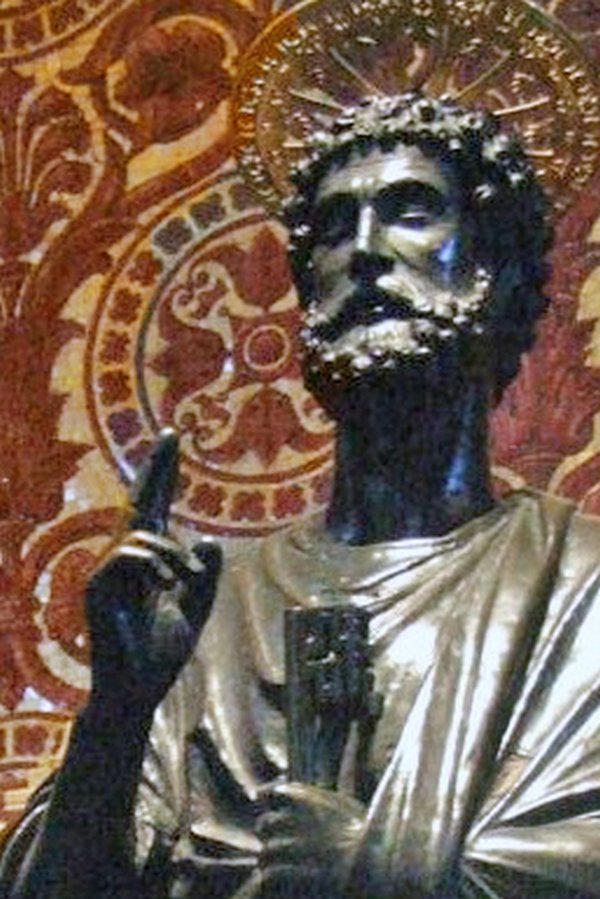
• Papal Benediction Sign: A contraction of the fourth and fifth digits, as in benediction (see image).
There are many more medical signs, this list is only an illustration of the concept
- Details
The medical term [symptom] has many definitions, as shown in this article. A good definition follows: A symptom is that what a patient refers, it is subjective, and cannot be measured or standardized (between patients). Examples of symptoms are thermal sensation ("I feel hot or feverish"), visceral sensations ("I feel a lump on my throat"), etc. In all cases the main characteristic of a symptom is that is subjective and patient-dependent. It is only relevant to a particular patient and cannot be compared from one patient to another.
Symptoms are part of the clinical study or history of a patient that help lead to a diagnosis.
• Merrian-Webster: "subjective evidence of disease or physical disturbance", "something that indicates the existence of something else"
• Memidex: "any sensation or change in bodily function that is experienced by a patient and is associated with a particular disease"
• Pandora World: "Feelings and perceptions reported by a patient indicative or that can be correlated with a disease process"
• Oxford Dictionaries: "A physical or mental feature that is regarded as indicating a condition of disease, particularly such a feature that is apparent to the patient"
Pain is a subjective entity, as it is characteristic to an individual. We all feel and respond to pain differently, as there are people with higher and lower thresholds to pain. Although I understand the need to have some type of standard, I dread the question posed by many..."From one to ten, can you tell me what your pain level is?. If the answer allows the physician or nurse to compare levels of pain within the same patient and see the evolution of a pathology, I am OK with that. But you cannot use that measurement to compare pain levels between patients!
The latest advances test for nerve activity following a noxa, but this just indicates that pain is being detected. Some say that the higher the recording the higher the pain. Possibly; but since pain is subjective we cannot use that measurement to compare pain levels between patients... at least that is my opinion. Dr. Miranda
- Details
The medical term [tenesmus] originates from the Greek [τεινεσμός], itself derivation from [τέντωμα] meaning "stretch", "distend", or to "strain". It refers to a symptom where the patient refers a constant urge to evacuate, with no or ineffective results. There are two types of tenesmus: rectal tenesmus and vesical tenesmus.
Because of the constant straining, tenesmus patients can have pain and cramping. Tenesmus can be one of the symptoms associated with the distal empty segment of colon or rectum found in a temporary or permanent diverting colostomy.
Note: The links to Google Translate in these articles include an icon that will allow you to hear the Greek or Latin pronunciation of the word.
- Details
This article is part of the series "A Moment in History" where we honor those who have contributed to the growth of medical knowledge in the areas of anatomy, medicine, surgery, and medical research.
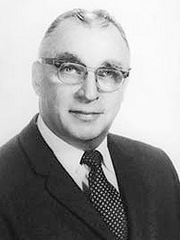
Mark M. Ravitch, MD
Mark M. Ravitch M.D.(1910-1989) American surgeon, historian, teacher, author, innovator, and visionary, Mark Mitchell Ravitch was born in 1910 in New York City. His parents were Russian immigrants, allowing to be fluent in Russian, which opened the doors to one of his many contributions to medicine and surgery: modern surgical stapling.
In 1934, Dr. Ravitch obtained his MD from Johns Hopkins, continuing in the same institution as a surgical intern, and later as a pediatrics resident, where he worked with Dr. Alfred Blalock, eventually becoming a professor of Surgery at Johns Hopkins, moving later to the Baltimore City Hospital. From 1943 to 1946 Dr. Ravitch was a surgeon in the Army.
He moved to the University of Chicago where from 1966 to 1969 he was professor of pediatric surgery and chief of pediatric surgery. His later and last move was to Pittsburgh, where he was professor of surgery at the University of Pittsburgh, and surgeon-in-chief at the Montefiore Hospital in Pittsburgh.
Dr. Ravitch is known for many important contributions to surgery, especially pediatric surgery, where he pioneered a procedure (the eponymic Ravitch procedure) to repair pectum excavatum in children, as well as research and develop a of nonoperative procedure to reduce intussuception using hydrostatic pressure reduction with barium enema. For this and many contributions he is known as one of the founding fathers of pediatric surgery.
A prolific writer and visionary, Dr. Ravitch authored 453 papers, 101 book chapters, 22 books, and served as editor of nearly 20 medical journals. In some of his writings he presented his vision for the development of surgery, even to the point of predicting heart transplantation surgery. Dr. Ravitch also was a surgical historian, with a wonderful library that was donated to the University of Pittsburgh upon his death.
In the medical industry Dr. Mark Ravitch is probably best know for bringing to the USA from the then USSR, the technology of surgical stapling. In 1958, while visiting Kiev, Dr. Ravitch and three other American physicians were shown the use in surgery of a bronchial surgical stapler developed in the USSR. They were able to procure one of these devices and bring it back to the USA. An American entrepreneur, Leon Hirsch, obtained the patents for these devices, founded the United States Surgical Corporation (now the Covidien Surgical Devices Division) and continued the development of the reusable and later the disposable surgical staplers. During the research Dr. Ravitch was joined by Dr. Felicien Steichen (1926 - 2011). Both Drs. Ravitch and Steichen were instrumental in the research and development of these modern surgical devices, making them part of the history of surgical stapling. Their work set the stage for the development of surgical stapling in minimally invasive procedures, so common today.
Dr. Ravitch died in 1989, still teaching students from his own hospital bed. His son Dr. Michael M. Ravitch (1943-2004) followed in his steps in medical education as an educational psychologist at Northwestern University's Feinberg School of Medicine.
Personal notes: I regret not having had the opportunity to meet Dr. Ravitch. In 2006 I spent several hours talking with Dr. Felicien Steichen about his trip to the USSR with Dr. Ravitch and the research and development that happened afterwards. When concluding my visit, Dr. Steichen presented me with a signed copy of his and Dr. Ravitch's book that reads:"Mark Ravitch would have enthusiastically applauded your efforts to teach the science of Anatomy that is the basis of the Art of Surgery". With the loss of both Drs. Ravitch and Steichen a wonderful chapter of the history of surgical stapling has closed.
A few years ago I was contacted by the Ravitch family. Knowing of my interest in Medical History, they donated a series of books signed by Dr. Ravitch. Recently the family also donated the personally typed diary of his trip tp Russia in 1958. They will be well cared and hopefully I will be able to have them printed as a book in the future. Dr. Miranda.
Sources:
1. "Naissance des sutures mecaniques modernes en chirurgie: petites et grandes histoires, en hommage a Mark Ravitch" Steichen,FM Chirurgie 1998,123 (6), 616.
2. "The Peaks of Excitement" Ann Surg 192: (1980) 3, 282 - 287
3. "A Century of Surgery, 1880-1980" Ravitch, Mark M.. Philadelphia
4. "Current Practice of Surgical Stapling" Ravitch, W & Steichen, F. 1991 Lea & Febiger USA
5. "Mark Ravitch (1910 - 1989) Editors, "Current Problems in Surgery" 1989
6. "All heart - Mark Ravitch" O'Donell B. J Ped Surg 25:1 (1990) 184
7. "Mark M. Ravitch: Historian and Innovator" Fingerete, AL, et al. J Surg Ed (2011) 155-158
8. "Reduction of intussusception by barium enema : A clinical and experimental study" Ravitch MM, McCune RM.Ann Surg. 1948;128:904-91
9. "The Surgical Curmudgeon" Pittmed, Spring 2013. 18-23