



Nota: Este artículo se publicó originalmente en Inglés en Octubre de 2025. Por correos electrónicos y comentarios recibidos, hemos decidido traducirlo al idioma español.
Durante el último año, la cantidad de imágenes anatómicas y quirúrgicas generadas por inteligencia artificial (IA) en sitios web y redes sociales (Facebook, Instagram, TikTok, etc.) ha crecido exponencialmente. Lo mismo ha sucedido con publicaciones y artículos de supuestos expertos dirigidos al público en general, estudiantes de medicina y profesionales de la salud. Desafortunadamente, muchos de estos contienen errores anatómicos evidentes (1). La razón de esta tendencia es una carrera sin escrúpulos por obtener más seguidores, lo que lleva a la monetización de sitios web, publicaciones, individuos o grupos.
Los autores que utilizan IA para crear estas imágenes las publican tan rápido como se producen, sin considerar la exactitud de lo que la IA crea. Sus seguidores, también sin considerar ni cuestionar el contenido o la imagen, les dan "me gusta", las comparten, copian y distribuyen en internet. Un ejemplo es la publicación científica (ahora retractada) de células madre de rata utilizando imágenes de IA. La imagen generada es de muy mal gusto, a pesar de haber sido revisada por pares y publicada. La imagen muestra una rata con genitales grandes. No puedo, en conciencia, publicarla aquí. Para más información, consulte los “Recursos” 2 y 3 (un artículo periodístico sobre el problema) y la retractación del editor.
Otro ejemplo evidente es este video que muestra las válvulas cardíacas en acción. No es preciso. El movimiento y la sincronización de las válvulas son incorrectos; no se abren; la válvula pulmonar, que normalmente tiene tres valvas, muestra cuatro. Las arterias coronarias están en la ubicación incorrecta y hay una coronaria adicional en el lado derecho. ¡Nadie podría vivir con esa válvula aórtica! Sin embargo, esta imagen tiene 10 .000 «me gusta» y se ha compartido 2500 veces! Se está compartiendo ignorancia. ¡Que parezca atractiva no significa que sea correcta! (1).
El problema es que estos sitios web e imágenes están siendo utilizados por profesionales de la salud, estudiantes y grupos de capacitación de la industria médica sin cuestionar la exactitud de la información que se copia y redistribuye externa e internamente en los documentos de capacitación. Esta no es una afirmación desinformada. Lo he visto personalmente, no en una, sino en varias empresas.
La presión que tienen los grupos de capacitación en el ámbito médico y en otras industrias es reducir costos y tiempo de capacitación. Quienes me conocen y a quienes he capacitado, recordarán que hace dos décadas, la capacitación para un representante de dispositivos quirúrgicos podía durar seis, diez semanas e incluso más. ¡Conozco una empresa que exigía una pasantía de seis meses antes de considerar a alguien listo! Muchos de quienes recibieron esta capacitación ocupan hoy altos cargos corporativos o se han jubilado muy bien.
Hoy en día, se busca reducir el tiempo de capacitación presencial porque se percibe como costosa, pero el costo de una capacitación deficiente e imprecisa para una empresa es muchísimo mayor. Otras tendencias son el uso de capacitación digital (reduce costos) y la reducción de la cantidad de información que se transmite al aprendiz (reduce tiempo). Lo interesante es que dentro de estas empresas hay quienes no están interesados en aprender más, solo en capacitarse lo suficiente para realizar un trabajo básico.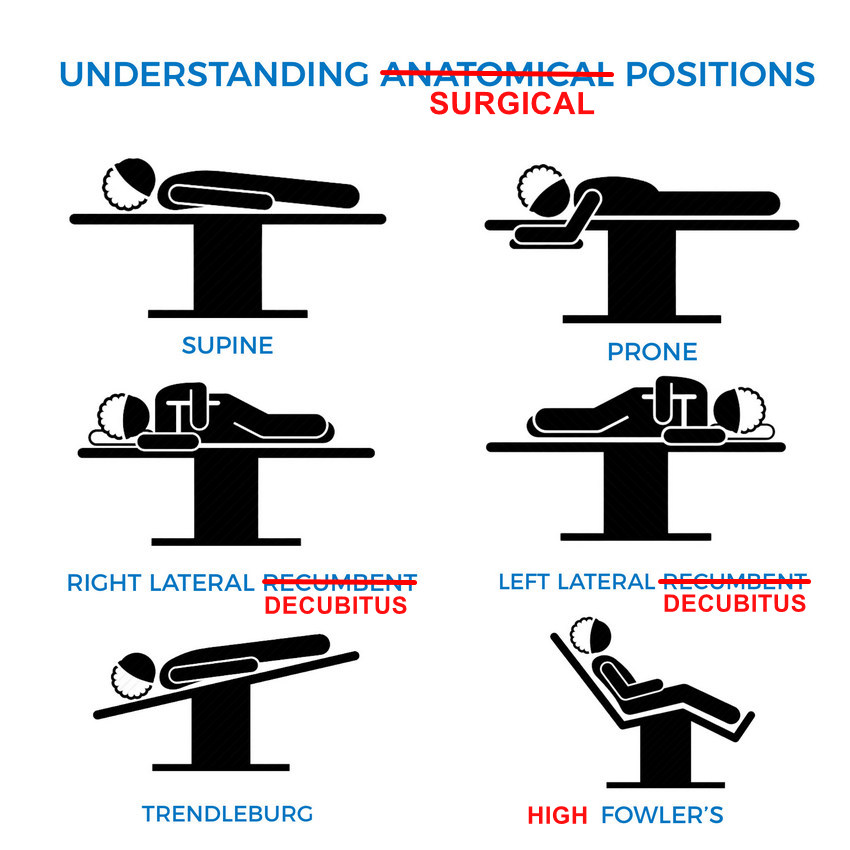
Otra tendencia alarmante es que los conocimientos adquiridos en la formación se orientan a aprobar los tests internos (cumplir con los requisitos) y no necesariamente a su aplicación práctica al interactuar con un profesional médico.
La necesidad de generar material de formación obliga a muchos a copiar y pegar imágenes y conceptos desde la Internet. Que un concepto esté disponible en Internet no significa que sea correcto. De hecho, existen muchos sitios web y libros de buena reputación que contienen información errónea. Aquí hay un ejemplo de una empresa de dispositivos médicos que muestra "posiciones anatómicas" (solo hay una posición anatómica) cuando la imagen debería estar etiquetada como "posiciones quirúrgicas". Si hace clic en la imagen, verá una imagen más grande con correcciones (en inglés).
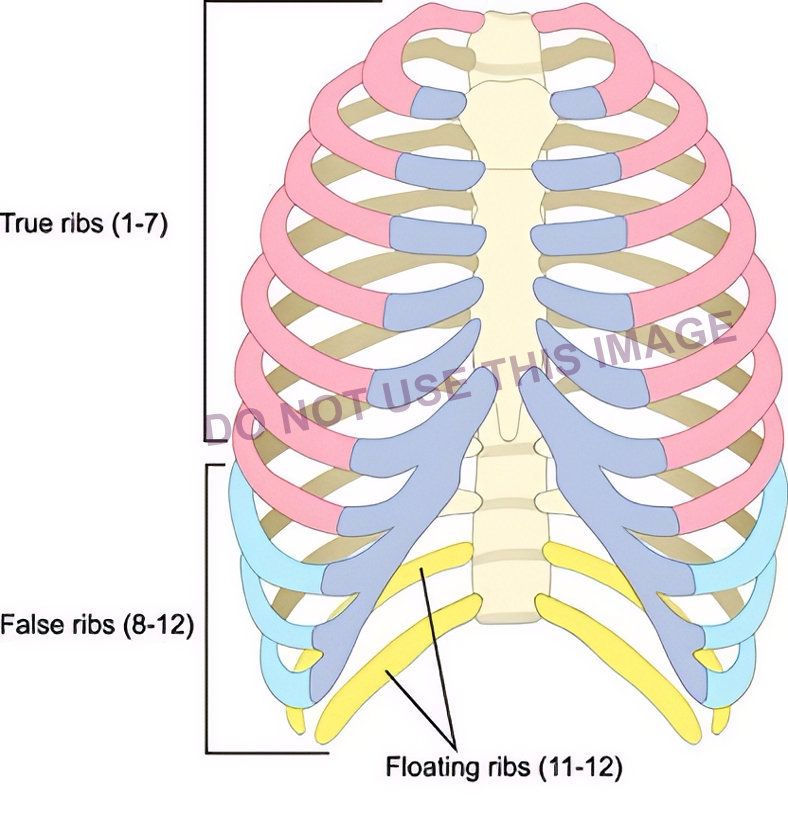
La siguiente imagen, de un ilustrador médico de buena reputación, muestra los grupos de costillas, pero hay un error: ¡Las costillas falsas son solo del 8 al 10, no del 8 al 12! Sin embargo, esta imagen se está utilizando para entrenamiento. Desconozco si fue etiquetada incorrectamente por un tercero.
He visto a muchas empresas asignar a un representante de ventas, gerente, ingeniero u otro empleado la responsabilidad de desarrollar presentaciones y capacitación en informática, ¿y qué hacen? Buscan información en internet. Aquí es donde ese acrónimo informático se convierte en una dolorosa realidad: GIGO (Garbage In – Garbage Out) basura que entra, basura que sale. Para mí, esto es inaceptable, ya que podría afectar a un paciente.
La única manera de garantizar que la información sea correcta es recurrir a un experto (aunque esto , por supuesto, no es gratis). Esto conduce a otro problema: el efecto Dunning-Kruger. Se trata de un fenómeno en el que algunas personas se creen mucho más competentes, con más conocimientos o capaces de lo que realmente son. Además, convencen a sus compañeros y a su empresa de ello. David Dunning y Justin Kruger, en su artículo de 1999, acuñaron el término "incompetente e inconsciente de ello", que lamentablemente se está volviendo común hoy en día.
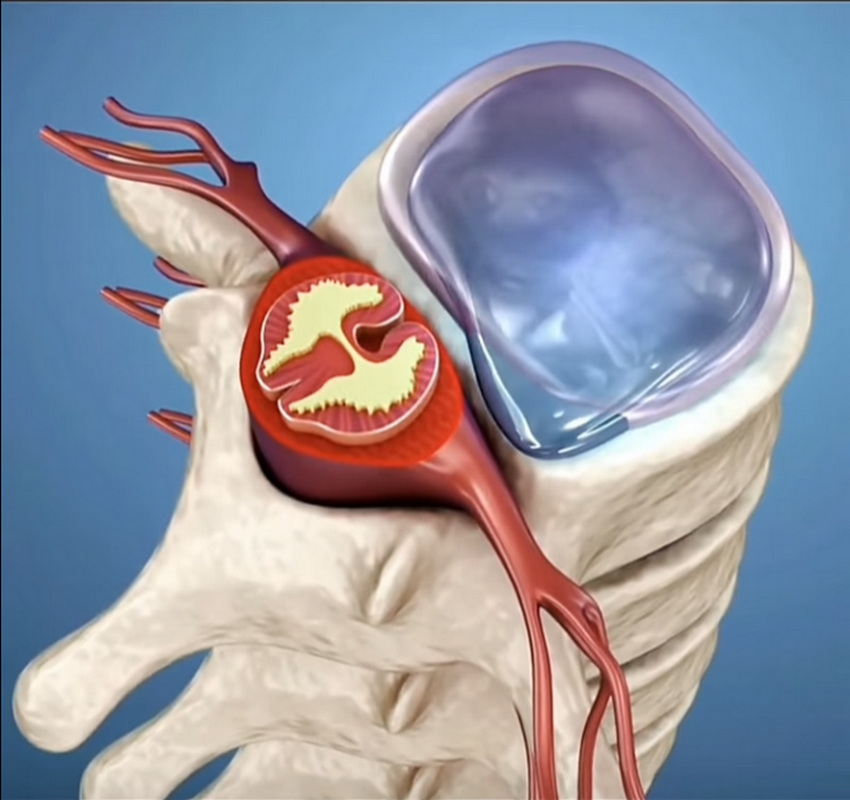
Click for a larger image
Otro ejemplo de estas imágenes generadas por IA es esta vista de la columna vertebral, la médula espinal, los nervios raquídeos y sus ramas. Las articulaciones cigopofisarias parecen fusionadas (no lo están), el saco dural (tecal) llena el canal vertebral (no lo hace), el nervio raquídeo y sus ramas están mal dibujadas. Curiosamente, cuando le comenté los errores de la imagen al autor. La respuesta que recibí fue: "Cuanto más fácil sea la ilustración, más les interesará a los estudiantes. Un video complejo y con mucha información puede asustar a los estudiantes de primer año. Por eso publico las cosas de forma sencilla". Entonces, ¿es correcto enseñar algo incorrecto? Llámenme anticuado, pero no lo creo.
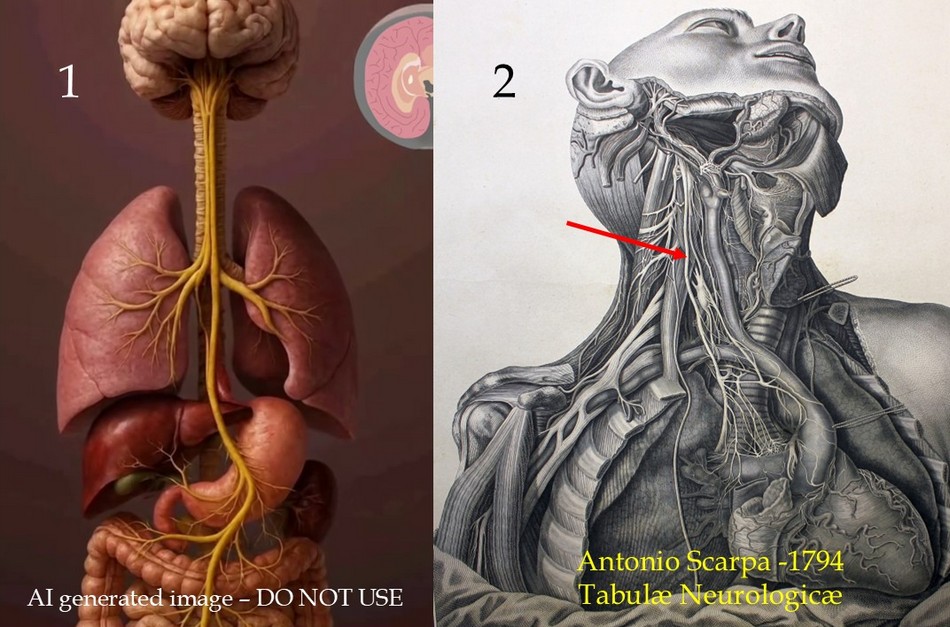
Podría seguir con estos ejemplos. Por ejemplo: La Imagen 1 es una imagen generada por IA del nervio vago. ¡Es un error en muchos sentidos! Compárese con la imagen 2, que es de dominio público y pertenece a las “Tabulae Neurologicae” de 1794 de Antonio Scarpa. La flecha muestra el nervio vago derecho..
El texto disponible en línea no debe copiarse sin asegurarse de que sea correcto. Un ejemplo: “Los pulmones están rodeados por los sacos pleurales, que están unidos al mediastino”. La primera parte es correcta: cada pulmón está contenido en un saco pleural separado (solo el 86 % de las veces; el resto de nosotros podemos tener comunicación entre ambos sacos pleurales). ¡Pero los sacos pleurales no están unidos al mediastino! El mediastino es un concepto, un espacio. La región entre los sacos pleurales no es una estructura real.
Por último, existen problemas de derechos de autor, donde se ha vuelto tan fácil resaltar, copiar y pegar que muchos no dudan en usar texto e imágenes de propiedad intelectual sin considerar las consecuencias de esta actividad. Uno de los libros más usados y abusados es el Atlas de Anatomía Humana de Frank Netter. Se puede ver por todo Internet en publicaciones diarias. Esta es una técnica para aumentar el tráfico y los clics. El hecho de que se haya publicado en una de estas redes sociales no significa que podamos usarlo libremente en materiales de formación. Este abuso es rampante en redes sociales, donde supuestos expertos copian y pegan imágenes de libros y otros sitios web.
Además, estos "expertos" generan vídeos (cuyo único objetivo es obtener un clic) que utilizan pistas de audio (probablemente también generadas por IA a partir de texto) para asustar y engañar a la gente en redes sociales.
La Internet es una herramienta extremadamente poderosa, pero es importante recordar que no todo lo que hay en Internet es verdadero, preciso, ni está fácilmente disponible para copiar y pegar. No toda la información debe creerse al pie de la letra. Espero sinceramente que esta tendencia cambie.
¿Por qué creo que esto es tan importante? En la industria de dispositivos médicos, nuestra principal responsabilidad es con el paciente y poder brindar la mejor atención. Una sana desconfianza hacia toda la información que usamos, así como la inversión de tiempo y recursos en lograr precisión, nos ayudarán a alcanzar este objetivo.
A continuación, se presentan algunos ejemplos adicionales, algunos tan falsos que resultan risorios, pero alguien los observa y cree lo que ve y oye.
El primer video muestra estructuras inferiores al colon transverso que no existen; además, los movimientos peristálticos no son así... ¡parecen más bien contracciones cardíacas! El segundo video muestra una glándula tiroides en movimiento, ¡y las estructuras vasculares y nerviosas están completamente equivocadas! ¡El tercero es ridículamente erróneo! Estos videos tienen subtítulos en español, pero se pueden encontrar en cualquier otro idioma.
Nota personal: He intentado evitar identificar a personas, sitios web, empresas, etc. al escribir este artículo. También he decidido añadir los conceptos en este articulo a lista de disgustos personales. Si quiere leer este articulo en Ingles haga clic aqui.
"El problema del mundo es que los tontos y los fanáticos siempre están tan seguros de sí mismos, mientras que la gente más sabia está llena de dudas."
Bertrand Russel
Sources:
1. “It looks sexy, but it is wrong. Tensions in creativity and accuracy using genAi for biomedical visualization” Zimman, R; Saharan, S; McGill, G; Garrison, L. 2025 https://arxiv.org/pdf/2507.14494
2. “RETRACTED “Cellular functions of spermatogonial stem cells in relation to JAK/STAT signaling pathway” Guo,X; Dong, L; Hao, D. Frontiers in Cell and Developmental Biology. 2024 PDF Link here
3. “AI-generated nonsense about rat with giant penis published by leading scientific journal” The Telegraph, 2024.
4. “Emotionally unskilled, unaware, and uninterested in learning more: Reactions to feedback about deficits in emotional intelligence” Sheldon, O. J., Dunning, D., & Ames, D. R. (2014). Journal of Applied Psychology, 99(1), 125–137. https://doi.org/10.1037/a0034138
5. “Unskilled and unaware of it: How difficulties in recognizing one's own incompetence lead to inflated self-assessments” Kruger, J., & Dunning, D. (1999). Journal of Personality and Social Psychology, 77(6), 1121–1134. https://doi.org/10.1037/0022-3514.77.6.1121
6. “Chapter 5- The Dunning–Kruger Effect: On Being Ignorant of One's Own Ignorance” Olson, HM; Zanna, MP. Advances in Experimental Social Psychology (2011) – 44: 247-296 https://doi.org/10.1016/B978-0-12-385522-0.00005-6 (these are snippets, not the whole chapter)
7. "How people are being tricked by deepfake doctor videos on social media" New York Post July 17, 2024
8. "Positioning in Anesthesia and Surgery" Martin, JT; Warner, MA 3rd Ed. 1997 USA W.B. Saunders
9. https://elearningdoc.com/the-hidden-costs-of-inadequate-training/