


Medical Terminology Daily - Est. 2012

Medical Terminology Daily (MTD) is a blog sponsored by Clinical Anatomy Associates, Inc. as a service to the medical community. We post anatomical, medical or surgical terms, their meaning and usage, as well as biographical notes on anatomists, surgeons, and researchers through the ages. Be warned that some of the images used depict human anatomical specimens.

You are welcome to submit questions and suggestions using our "Contact Us" form. The information on this blog follows the terms on our "Privacy and Security Statement" and cannot be construed as medical guidance or instructions for treatment.


We have 434 guests online


A Moment in History

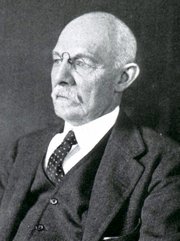
William S. Halsted, MD

William S. Halsted, MD
(1852 – 1922)

American anatomist, teacher, and surgeon, William Stewart Halsted was born in New York City, USA to a wealthy family of English origin. His father was involved in charitable work and Governor and trustee to a city hospital. Not a brilliant student initially, Halsted took an undergraduate in Liberal Arts in Yale, CT., after which he entered the Medical College of Physicians at the Columbia College, where he excelled.

As a second-year medical student Halsted applied and obtained a position in surgery at a local hospital. In here he learned about Lister’s antiseptic technique and became an adamant proponent of it to reduce infection. In 1877 Halsted obtained his MD. After a short time as House Physician at the New York Hospital, Halsted traveled to Europe to further his education studying for two years at the Universities of Vienna, Leipzig, and W?rzburg.

Besides being at the forefront of surgical and antiseptic techniques (introducing the use of rubber gloves in surgery), Halsted was extremely concerned with the way medical students were taught in the US. He pioneered bedside clinical round discussions with the medical students after two years of basic sciences studies. Halsted developed the idea of a patient chart; he also developed the residency program for medical students in use today.

Halsted is probably the most influential researcher and surgeon at the turn of the century. He dedicated time to the study of intestinal anastomoses and the use of silk as a suture material. His experimental work in 1887 proved that the inclusion of the submucosa layer in an anastomosis was mandatory, as well that a single layered anastomosis was enough to attain closure. Perhaps Halsted’s most important contribution was the application and use of the scientific method to surgical questions. Halsted’s principles set the standards used today in surgical suturing and surgical stapling.

He also pioneered the development and surgical techniques for radical mastectomy as a treatment for breast cancer.

As a side effect of this studied in anesthesia and the use of cocaine for anesthesia, Halsted became addicted to this substance, a problem that followed him through the years. Without impairing his capacity as a researcher and a surgeon, Halsted eventually recovered. He died in Baltimore in 1922 as a complication to surgery.

Sources:
1. Dubay, A. D., & Franz, G. M. (2003). Acute Wound Healing: The Biology of Acute Wound Failure. Surg Clin NA, 83, 463-481.
2. Halsted, W. S. (1887). Circular Suture of the Intestine - An Experimental Study. Am J Med Sci, 436-461.
3. “William Stewart Halsted: his life and contributions to surgery” Osborne, P. Lancet Oncol 2007; 8: 256–65
4. “William Stewart Halsted: Surgical pioneer” Burress, P Endoc Today (2010), 8: (2) 22
5. “William Stewart Halsted (1852–1922) Neurological stamp” Haas, LF J Neurol Neurosurg Psych 2000;69:641
Original image courtesy of "Images from the History of Medicine" at  www.nih.gov


 "Clinical Anatomy Associates, Inc., and the contributors of "Medical Terminology Daily" wish to thank all individuals who donate their bodies and tissues for the advancement of education and research”.

Click here for more information


bookplateink.com


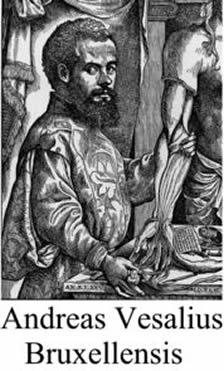
Andreas Vesalius Bruxellensis
Click for Vesalius' biography 

UPDATED: We have discussed many times on this blog the importance of Andreas Vesalius (1514 – 1564), his impact on modern science and anatomy, and the influence of his opus magnum publication in 1543, the Fabrica. The complete name of this publication is “De Humani Corporis Fabrica, Libri Septem” (Seven books on the structure of the human body).

Harvey Cushing wrote in his Vesalius bio-bibliography of 1943:”As a book, the Fabrica has been probably more admired and less read than any publication of equal significance in the history of science”.

The first (1543) and second (1555) editions of the Fabrica were published in Basel, Switzerland by Johannes Oporinus (1507 – 1568). With few exceptions, the Fabrica was sold as an unbound book and it was the owner’s responsibility to bind the book. One of the exceptions was the sumptuous purple silk-bound presentation copy delivered to the Emperor Charles V. As an interesting note, a Fabrica was discovered in Canada that was heavily annotated and as such had a low value. Who wants a book that of this importance that is so heavily hand-written? Analysis of the writing and style indicate that this copy belonged to Vesalius himself and was most probably the basis for a third edition that was never published. The annotations are used in the "New Fabrica" and if you are interested,  here is a PDF file of a 2014 article on this topic.

Today we do not know how many books were actually printed as part of the first and the second edition of the Fabrica. Because of the time passed, lost or damaged books, during the last century efforts have been made to inventory the number of Fabricas still in existence, in studies made by Cushing in 1943 and Horowiz and Collins in 1984.The latest effort to account for the total number of these books was made by Stephen N. Joffe, MD, and Veronica Buchanan, MA in 2015 for both the 1543 and the 1555 editions of the Fabrica. Their papers were presented in February 2015 at the interdisciplinary symposium “Vesalius and the Invention of the Modern Body” in St. Louis, MO.

Dr. Joffe  is the author of the book “Andreas Vesalius: The Making, the Madman, and the Myth”. Veronica Buchanan is the Archivist at the University of Cincinnati Henry R. Winkled Center for the History of the Health Professions.

The authors of these papers estimate that there are 64 complete copies surviving of the estimated 300 – 500 first edition printed in 1543. While a similar printing run is estimated for the 1555 edition, only 58 complete copies survive in the USA The papers can be read and downloaded on the following links:

"Updated Census in USA of First Edition of Andreas Vesalius’ ‘De Humani Corporis Fabrica’ of 1543”
READ DOWNLOAD 

 “An Updated Census of the Edition of 1555 of Andreas Vesalius’ De Humani Corporis Fabrica in the United States of America” READ DOWNLOAD

Note: The following link was sent to me by Dr. Elizabeth Murray and refers to the study by Joffe and Buchanan. The article “Accounting for an Historic Text” is from the University of Cincinnati Newsletter. Dr. Miranda

Sources
1. “Updated Census in USA of First Edition of Andreas Vesalius’ ‘De Humani Corporis Fabrica’ of 1543” Joffe, SN; Buchanan V. International Archives of Medicine; 2015: 8:1
2. “An Updated Census of the Edition of 1555 of Andreas Vesalius’ De Humani Corporis Fabrica in the United States of America” International Archives of Medicine; 2015: 8:1
3. Cushing, Harvey: A Bio-bibliography of Andreas Vesalius 2nd edition. Hamden: Conn.
4. Garrison, Daniel H., Hast, Malcom H.: Andreas Vesalius: The Fabric of the Human Body. Published S. Karger, Basel; 2014
5. "Andreas Vesalius; The Making, the Madman, and the Myth" Joffe, Stephen N. Persona Publishing 2009