


Medical Terminology Daily - Est. 2012

Medical Terminology Daily (MTD) is a blog sponsored by Clinical Anatomy Associates, Inc. as a service to the medical community. We post anatomical, medical or surgical terms, their meaning and usage, as well as biographical notes on anatomists, surgeons, and researchers through the ages. Be warned that some of the images used depict human anatomical specimens.

You are welcome to submit questions and suggestions using our "Contact Us" form. The information on this blog follows the terms on our "Privacy and Security Statement" and cannot be construed as medical guidance or instructions for treatment.


We have 1766 guests and no members online


A Moment in History

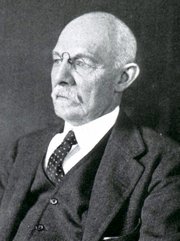
Jean George Bachman

Jean George Bachmann
(1877 – 1959)

French physician–physiologist whose experimental work in the early twentieth century provided the first clear functional description of a preferential interatrial conduction pathway. This structure, eponymically named “Bachmann’s bundle”, plays a central role in normal atrial activation and in the pathophysiology of interatrial block and atrial arrhythmias.

As a young man, Bachmann served as a merchant sailor, crossing the Atlantic multiple times. He emigrated to the United States in 1902 and earned his medical degree at the top of his class from Jefferson Medical College in Philadelphia in 1907. He stayed at this Medical College as a demonstrator and physiologist. In 1910, he joined Emory University in Atlanta. Between 1917 -1918 he served as a medical officer in the US Army. He retired from Emory in 1947 and continued his private medical practice until his death in 1959.

On the personal side, Bachmann was a man of many talents: a polyglot, he was fluent in German, French, Spanish and English. He was a chef in his own right and occasionally worked as a chef in international hotels. In fact, he paid his tuition at Jefferson Medical College, working both as a chef and as a language tutor.

The intrinsic cardiac conduction system was a major focus of cardiovascular research in the late nineteenth and early twentieth centuries. The atrioventricular (AV) node was discovered and described by Sunao Tawara and Karl Albert Aschoff in 1906, and the sinoatrial node by Arthur Keith and Martin Flack in 1907.

While the connections that distribute the electrical impulse from the AV node to the ventricles were known through the works of Wilhelm His Jr, in 1893 and Jan Evangelista Purkinje in 1839, the mechanism by which electrical impulses spread between the atria remained uncertain.

In 1916 Bachmann published a paper titled “The Inter-Auricular Time Interval” in the American Journal of Physiology. Bachmann measured activation times between the right and left atria and demonstrated that interruption of a distinct anterior interatrial muscular band resulted in delayed left atrial activation. He concluded that this band constituted the principal route for rapid interatrial conduction.

Subsequent anatomical and electrophysiological studies confirmed the importance of the structure described by Bachmann, which came to bear his name. Bachmann’s bundle is now recognized as a key determinant of atrial activation patterns, and its dysfunction is associated with interatrial block, atrial fibrillation, and abnormal P-wave morphology. His work remains foundational in both basic cardiac anatomy and clinical electrophysiology.

Sources and references
1. Bachmann G. “The inter-auricular time interval”. Am J Physiol. 1916;41:309–320.
2. Hurst JW. “Profiles in Cardiology: Jean George Bachmann (1877–1959)”. Clin Cardiol. 1987;10:185–187.
3. Lemery R, Guiraudon G, Veinot JP. “Anatomic description of Bachmann’s bundle and its relation to the atrial septum”. Am J Cardiol. 2003;91:148–152.
4. "Remembering the canonical discoverers of the core components of the mammalian cardiac conduction system: Keith and Flack, Aschoff and Tawara, His, and Purkinje" Icilio Cavero and Henry Holzgrefe Advances in Physiology Education 2022 46:4, 549-579.
5. Knol WG, de Vos CB, Crijns HJGM, et al. “The Bachmann bundle and interatrial conduction” Heart Rhythm. 2019;16:127–133.
6. “Iatrogenic biatrial flutter. The role of the Bachmann’s bundle” Constán E.; García F., Linde, A.. Complejo Hospitalario de Jaén, Jaén. Spain
7. Keith A, Flack M. The form and nature of the muscular connections between the primary divisions of the vertebrate heart. J Anat Physiol 41: 172–189, 1907.


 "Clinical Anatomy Associates, Inc., and the contributors of "Medical Terminology Daily" wish to thank all individuals who donate their bodies and tissues for the advancement of education and research”.

Click here for more information


abebooks banner

bookplateink.com


Anteroinferior view of the liver and stomach, the duodenum and stomach are reflected anteriorly
Click for a larger image

The [splenic artery], also known as the [lienal artery] is one of the branches of the celiac trunk, the first unpaired branch of the abdominal aorta. Through its branches the splenic artery provides arterial blood supply to the stomach, pancreas, and spleen.

From its origin at the celiac trunk, the splenic artery goes to the left and then curves posteriorly around the spinal column. It has a very tortuous shape. In 1571 Julius Arantius (1530 -1589) described it as "tortuous, in the manner of a snake". A study by Sylvester et al (1998) measured the uncoiled (straight) lenght of the splenic artery (5.8 - 11.3 cm) as well as the variation in coiling (tortuosity) of the artery.

The splenic artery has several branches: 

  • Pancreatic arteries: Several small perforating branches. The largest of them, usually the first perforator is called either the "middle pancreatic artery",  the "great pancreatic artery", or the "arteria pancratica magna"
  • Left gastroepiploic artery: The largest of the splenic artery branches, this artery forms part of the greater curvature vascular arcade and provides blood supply to the left side of the stomach and part of the greater omentum
  • Short gastric arteries: These are several short branches that course within the gastrosplenic ligament the connects the spleen to the greater curvature and fundus of the stomach. Take down of these branches is critical in certain procedures for esophageal hiatus hernia
  • Splenic branches: The terminal branches of the splenic artery supply the spleen. It usually divides into a superior and an inferior branch, each one giving up to four branches that enter through the hilum of the spleen

Although rare, the splenic artery can be the site for an aneurysm. It is the third most common abdominal aneurysm, after abdominal aorta and iliac artery aneurysms. They are being diagnosed more frequently now as incidental findings in cross-sectional imaging.

Sources:
1. "Tratado de Anatomia Humana" Testut et Latarjet 8 Ed. 1931 Salvat Editores, Spain
2. "Tortuosity of the Human Splenic Artery" Sylvester, PA, Stewart R, Ellis, H. Clin Anat (1996):8:214-218
3. "Splenic artery aneurysms"Trastek VF, et al. Surgery (1982) 91:694-699
9. "Splenic Artery Aneurysms and Pseudoaneurysms: Clinical Distinctions and CT Appearances" Agrawal, GA. Johnson, PT. Fishman EK. Am J Roentg (2007) 188: 4; 992-999